Marino Roberta, Martinez Caridad, Boyd Kelli, Dominici Massimo, Hofmann Ted J, Horwitz Edwin M
Division of Bone Marrow Transplantation, St Jude Children's Research Hospital, Memphis, TN, USA.
Exp Hematol. 2008 Mar;36(3):360-8. doi: 10.1016/j.exphem.2007.11.002. Epub 2008 Jan 7.
Based on the recognition that marrow contains progenitors for bone as well as blood, we undertook the first trial of bone marrow transplantation (BMT) for a genetic disorder of bone, osteogenesis imperfecta. While we documented striking clinical benefit soon after transplantation, the measured level of osteopoietic engraftment was low. To improve the efficacy of BMT for bone disorders, we sought to gain insight into the cellular mechanism of engraftment of transplantable marrow osteoprogenitors.
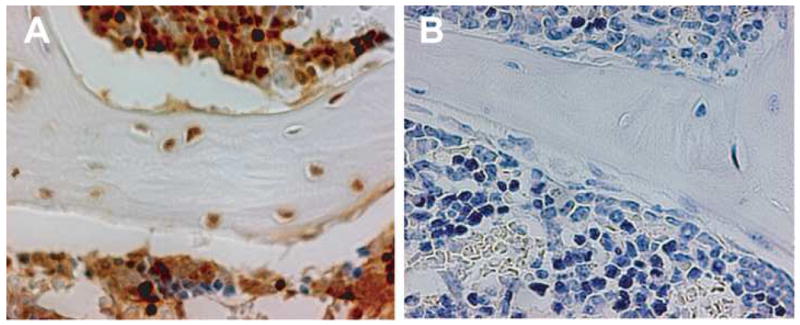
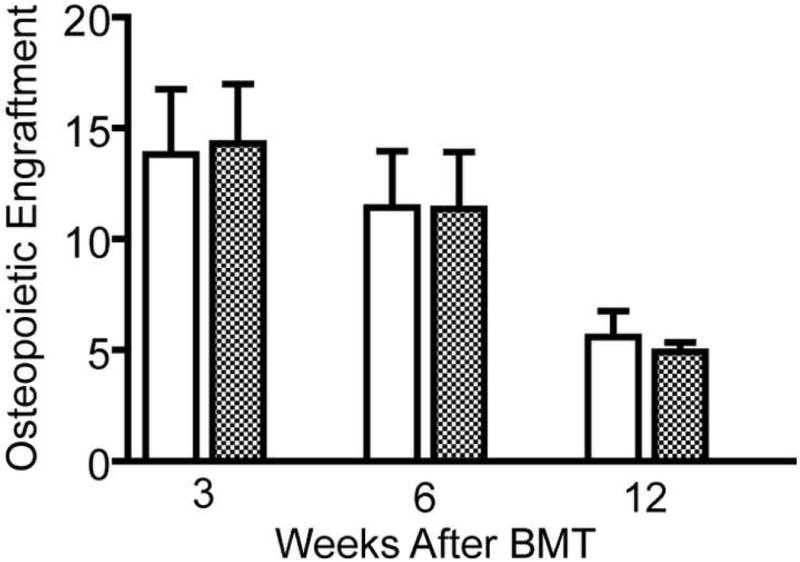
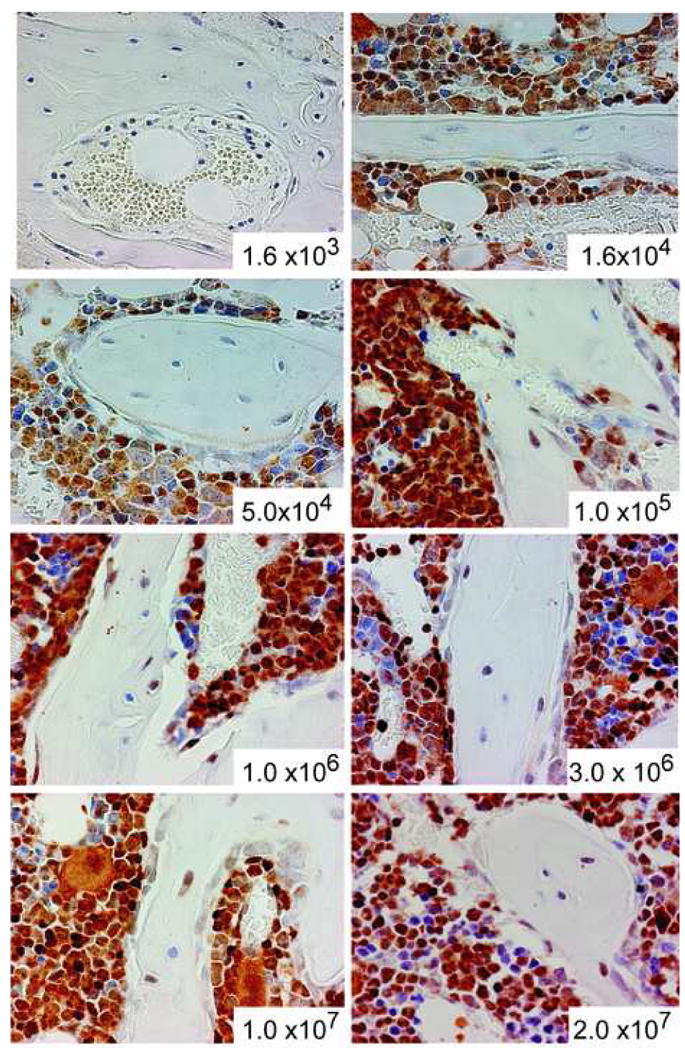
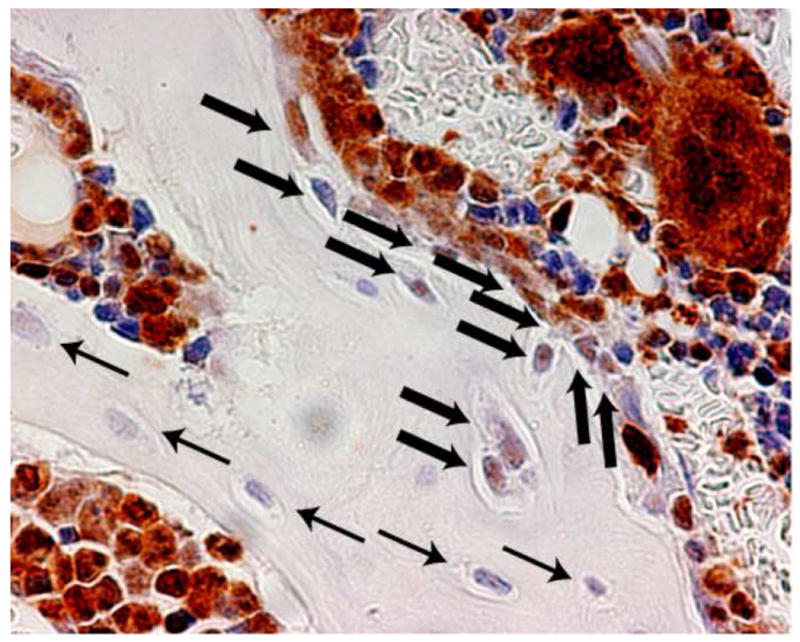
We transplanted unfractionated bone marrow harvested from green fluorescent protein-transgenic FVB/N mice into lethally irradiated FVB/N recipients. At 3 weeks posttransplantation, we assessed hematopoietic engraftment by flow cytometry and osteopoietic engraftment by immunohistochemical staining for the green fluorescent protein.
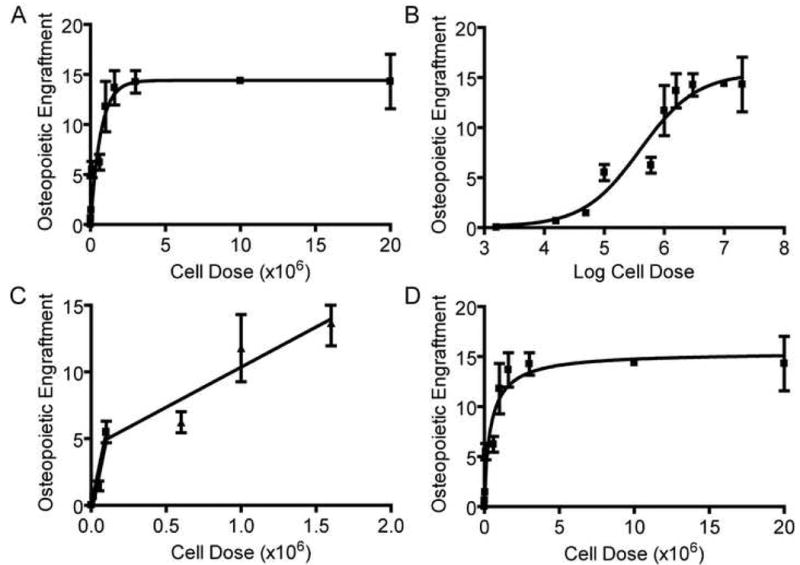
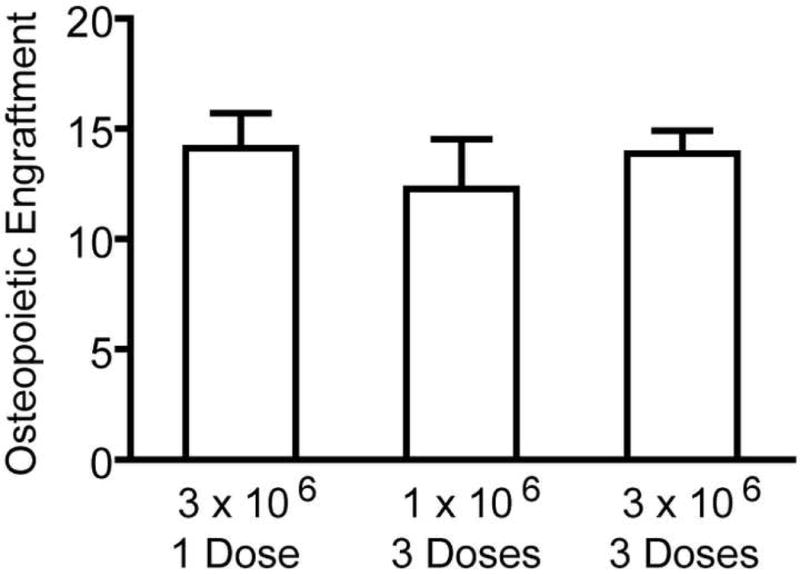
We show that engraftment of transplantable marrow osteoprogenitors is saturable with a maximal engraftment of about 15% of all bone cells in the epiphysis and metaphysis of the femur at 3 weeks after transplantation. The number of engrafting sites is not up- or downregulated in response to initial progenitor cell engraftment, and there is no evidence for clonal succession of osteopoietic differentiation of engrafted progenitors.
Our findings indicate that the capacity for initial osteopoietic engraftment after BMT is limited and "megadose" stem cell transplantation is unlikely to enhance engraftment. Thus, novel strategies to foster osteopoietic chimerism must be developed.
基于骨髓含有骨和血液祖细胞这一认识,我们开展了首例针对遗传性骨疾病——成骨不全症的骨髓移植(BMT)试验。虽然我们记录到移植后不久就有显著的临床益处,但所检测到的骨生成细胞植入水平较低。为提高BMT对骨疾病的疗效,我们试图深入了解可移植骨髓骨祖细胞的植入细胞机制。
我们将从绿色荧光蛋白转基因FVB/N小鼠采集的未分级骨髓移植到经致死剂量照射的FVB/N受体小鼠体内。移植后3周,我们通过流式细胞术评估造血细胞植入情况,并通过对绿色荧光蛋白进行免疫组织化学染色来评估骨生成细胞植入情况。
我们发现,可移植骨髓骨祖细胞的植入是饱和的,移植后3周,在股骨骨骺和干骺端所有骨细胞中,最大植入率约为15%。植入位点的数量不会因初始祖细胞植入而上调或下调,且没有证据表明植入的祖细胞在骨生成分化过程中存在克隆性演替。
我们的研究结果表明,BMT后初始骨生成细胞的植入能力有限,“超大剂量”干细胞移植不太可能增强植入效果。因此,必须开发促进骨生成嵌合体的新策略。