Ramnath Raina Devi, Sun Jia, Adhikari Sharmila, Bhatia Madhav
Department of Pharmacology, National University of Singapore, Singapore.
J Cell Mol Med. 2007 Nov-Dec;11(6):1326-41. doi: 10.1111/j.1582-4934.2007.00086.x.
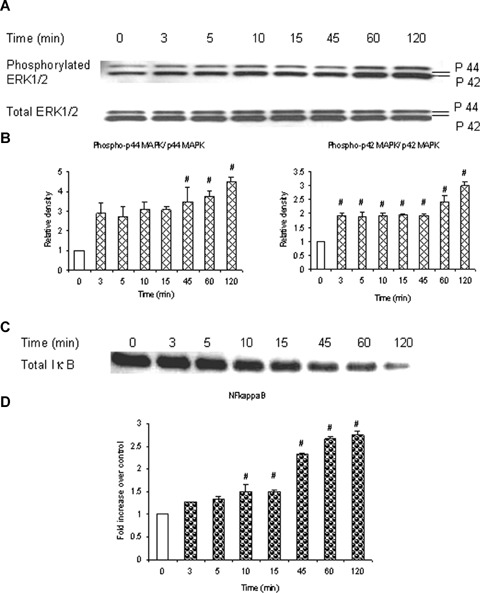
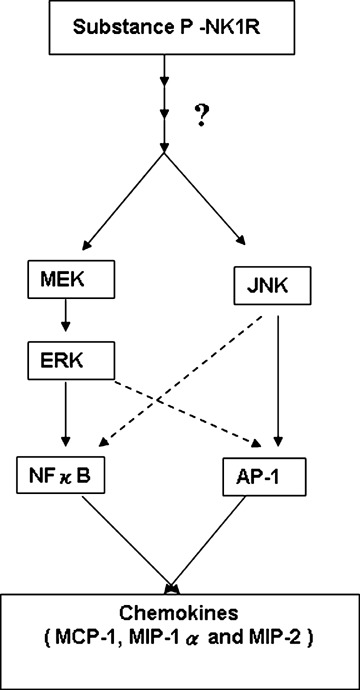
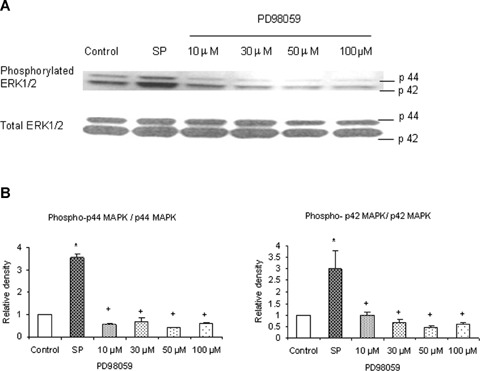
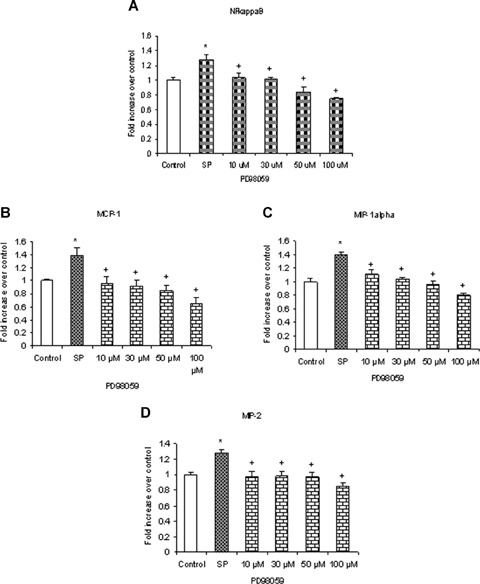
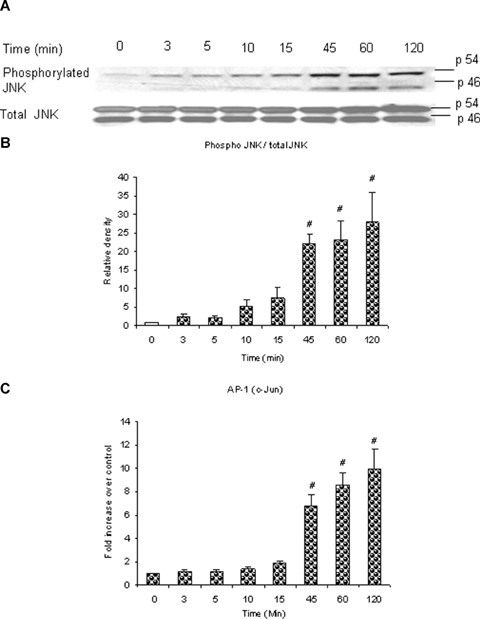
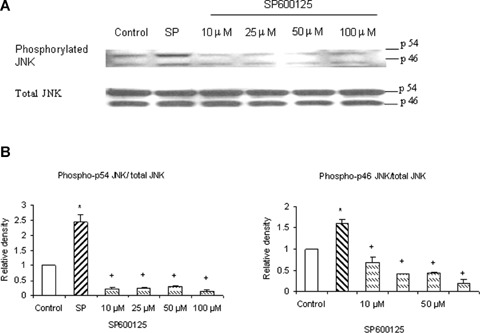
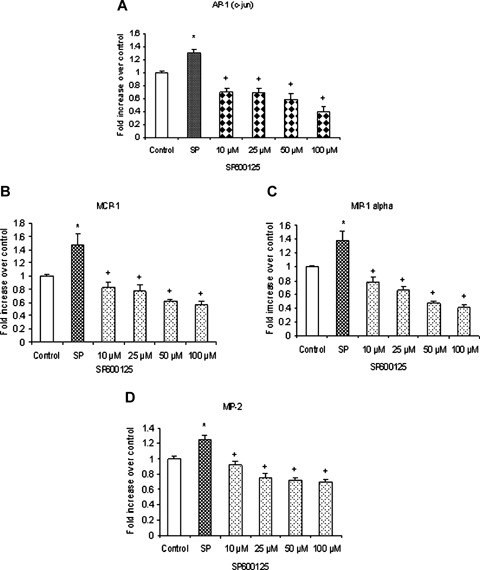
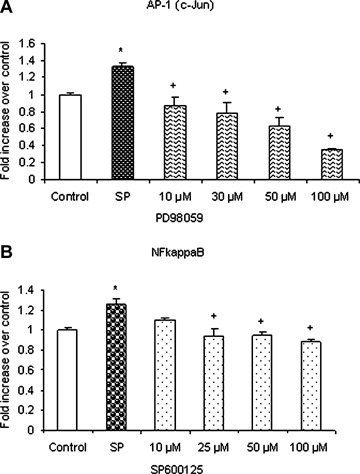
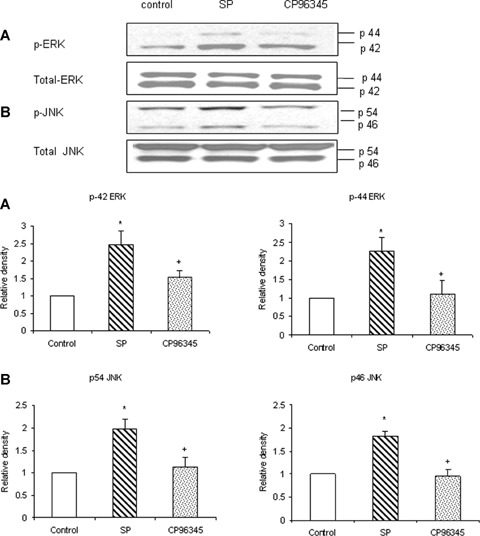
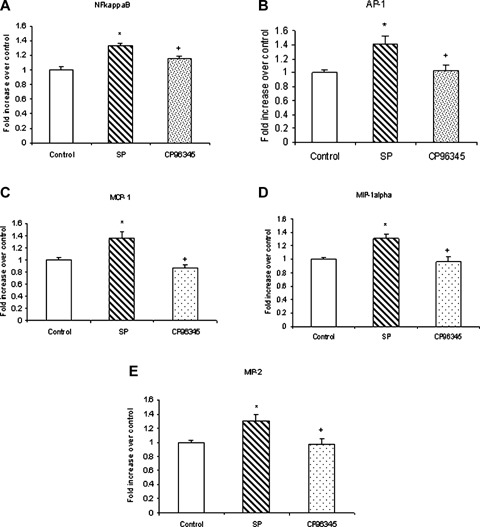
Substance P, acting via its neurokinin 1 receptor (NK1 R), plays an important role in mediating a variety of inflammatory processes. Its interaction with chemokines is known to play a crucial role in the pathogenesis of acute pancreatitis. In pancreatic acinar cells, substance P stimulates the release of NFkappaB-driven chemokines. However, the signal transduction pathways by which substance P-NK1 R interaction induces chemokine production are still unclear. To that end, we went on to examine the participation of mitogen-activated protein kinases (MAPKs) in substance P-induced synthesis of pro-inflammatory chemokines, monocyte chemoanractant protein-1 (MCP-I), macrophage inflammatory protein-lalpha (MIP-lalpha) and macrophage inflammatory protein-2 (MIP-2), in pancreatic acini. In this study, we observed a time-dependent activation of ERK1/2, c-Jun N-terminal kinase (JNK), NFkappaB and activator protein-1 (AP-1) when pancreatic acini were stimulated with substance P. Moreover, substance P-induced ERK 1/2, JNK, NFkappaB and AP-1 activation as well as chemokine synthesis were blocked by pre-treatment with either extracellular signal-regulated protein kinase kinase 1 (MEK1) inhibitor or JNK inhibitor. In addition, substance P-induced activation of ERK 112, JNK, NFkappaB and AP-1-driven chemokine production were attenuated by CP96345, a selective NK1 R antagonist, in pancreatic acinar cells. Taken together, these results suggest that substance P-NK1 R induced chemokine production depends on the activation of MAPKs-mediated NFkappaB and AP-1 signalling pathways in mouse pancreatic acini.
P物质通过其神经激肽1受体(NK1 R)发挥作用,在介导多种炎症过程中起重要作用。已知其与趋化因子的相互作用在急性胰腺炎的发病机制中起关键作用。在胰腺腺泡细胞中,P物质刺激NFκB驱动的趋化因子释放。然而,P物质与NK1 R相互作用诱导趋化因子产生的信号转导途径仍不清楚。为此,我们继续研究丝裂原活化蛋白激酶(MAPKs)在P物质诱导的胰腺腺泡中促炎趋化因子、单核细胞趋化蛋白-1(MCP-1)、巨噬细胞炎性蛋白-1α(MIP-1α)和巨噬细胞炎性蛋白-2(MIP-2)合成中的参与情况。在本研究中,我们观察到用P物质刺激胰腺腺泡时,ERK1/2、c-Jun氨基末端激酶(JNK)、NFκB和活化蛋白-1(AP-1)呈时间依赖性激活。此外,用细胞外信号调节蛋白激酶激酶1(MEK1)抑制剂或JNK抑制剂预处理可阻断P物质诱导的ERK 1/2、JNK、NFκB和AP-1激活以及趋化因子合成。此外,在胰腺腺泡细胞中,选择性NK1 R拮抗剂CP96345可减弱P物质诱导的ERK 112、JNK、NFκB和AP-1驱动的趋化因子产生。综上所述,这些结果表明,P物质-NK1 R诱导的趋化因子产生取决于小鼠胰腺腺泡中MAPKs介导的NFκB和AP-1信号通路的激活。