Smith Johanna A, Wang Feng-Xiang, Zhang Hui, Wu Kou-Juey, Williams Kevin Jon, Daniel René
Division of Infectious Diseases - Center for Human Virology, Kimmel Cancer Center, Thomas Jefferson University, Philadelphia, PA, USA.
Virol J. 2008 Jan 22;5:11. doi: 10.1186/1743-422X-5-11.
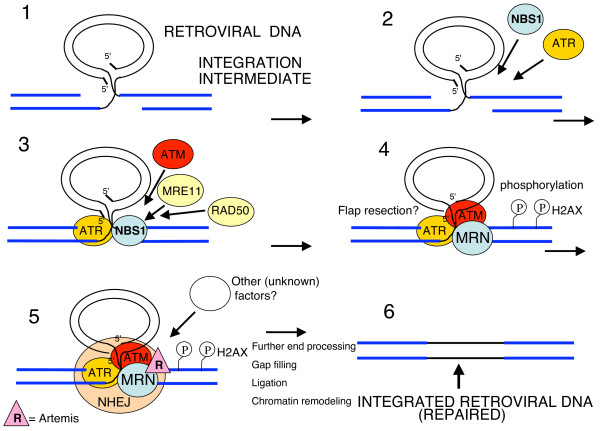
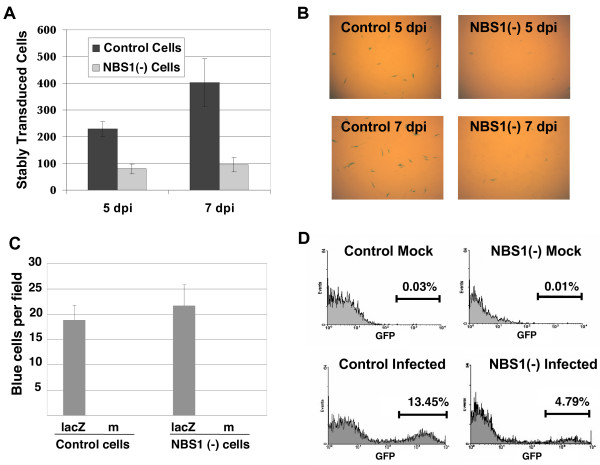
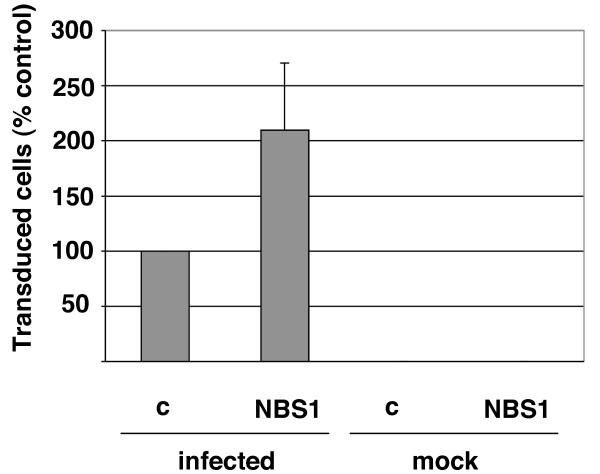
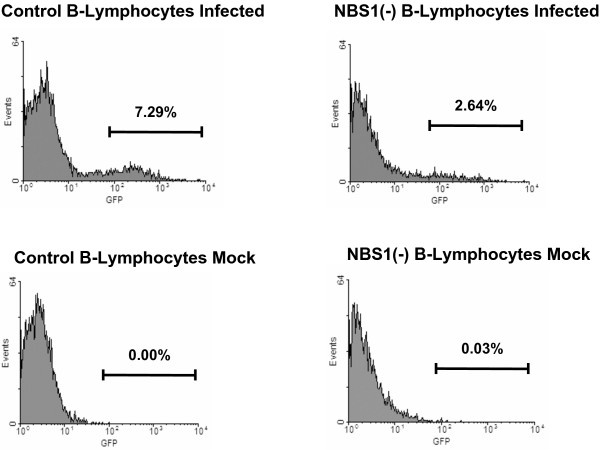
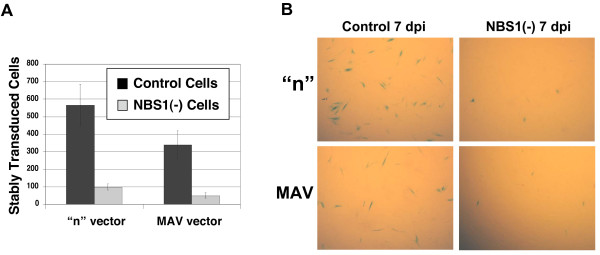
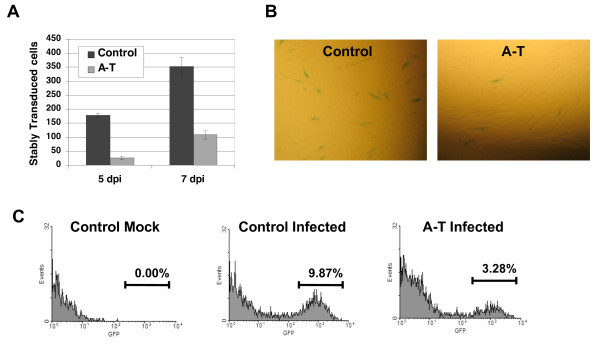
Retroviral transduction involves integrase-dependent linkage of viral and host DNA that leaves an intermediate that requires post-integration repair (PIR). We and others proposed that PIR hijacks the host cell double-strand DNA break (DSB) repair pathways. Nevertheless, the geometry of retroviral DNA integration differs considerably from that of DSB repair and so the precise role of host-cell mechanisms in PIR remains unclear. In the current study, we found that the Nijmegen breakage syndrome 1 protein (NBS1), an early sensor of DSBs, associates with HIV-1 DNA, recruits the ataxia telangiectasia-mutated (ATM) kinase, promotes stable retroviral transduction, mediates efficient integration of viral DNA and blocks integrase-dependent apoptosis that can arise from unrepaired viral-host DNA linkages. Moreover, we demonstrate that the ATM kinase, recruited by NBS1, is itself required for efficient retroviral transduction. Surprisingly, recruitment of the ATR kinase, which in the context of DSB requires both NBS1 and ATM, proceeds independently of these two proteins. A model is proposed emphasizing similarities and differences between PIR and DSB repair. Differences between the pathways may eventually allow strategies to block PIR while still allowing DSB repair.
逆转录病毒转导涉及病毒DNA与宿主DNA的整合酶依赖性连接,会留下一个需要整合后修复(PIR)的中间体。我们和其他人提出,PIR会劫持宿主细胞双链DNA断裂(DSB)修复途径。然而,逆转录病毒DNA整合的几何结构与DSB修复的几何结构有很大不同,因此宿主细胞机制在PIR中的精确作用仍不清楚。在当前研究中,我们发现Nijmegen断裂综合征1蛋白(NBS1),一种DSB的早期传感器,与HIV-1 DNA结合,招募共济失调毛细血管扩张症突变(ATM)激酶,促进稳定的逆转录病毒转导,介导病毒DNA的有效整合,并阻断因未修复的病毒-宿主DNA连接而产生的整合酶依赖性凋亡。此外,我们证明由NBS1招募的ATM激酶本身是有效逆转录病毒转导所必需的。令人惊讶的是,在DSB情况下需要NBS1和ATM的ATR激酶的招募独立于这两种蛋白质进行。我们提出了一个模型,强调PIR和DSB修复之间的异同。这些途径之间的差异最终可能允许采取策略来阻断PIR,同时仍允许DSB修复。