Dipartimento di Biologia e Biotecnologie Chrales Darwin, Sapienza, Università di Roma, Roma, Italy.
PLoS One. 2013 Jul 26;8(7):e69808. doi: 10.1371/journal.pone.0069808. Print 2013.
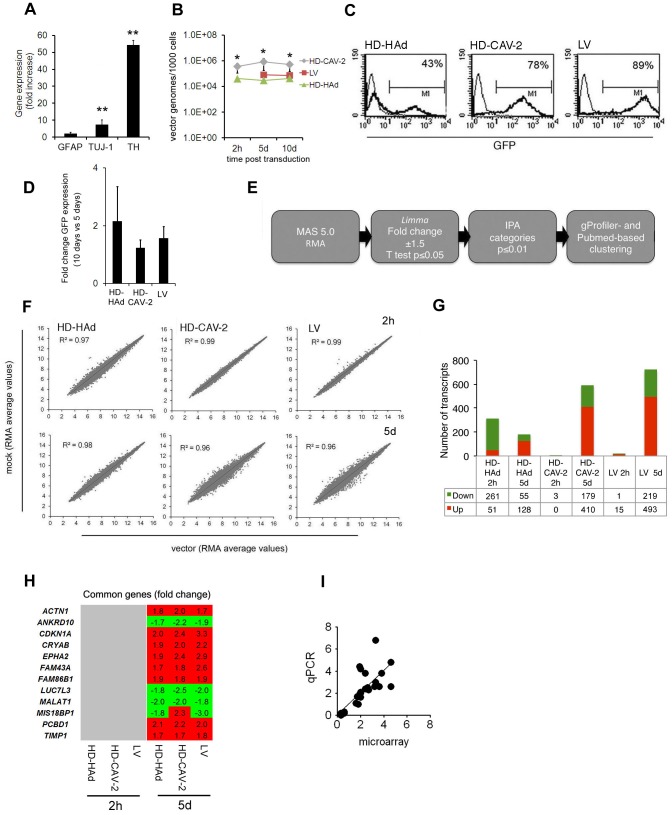
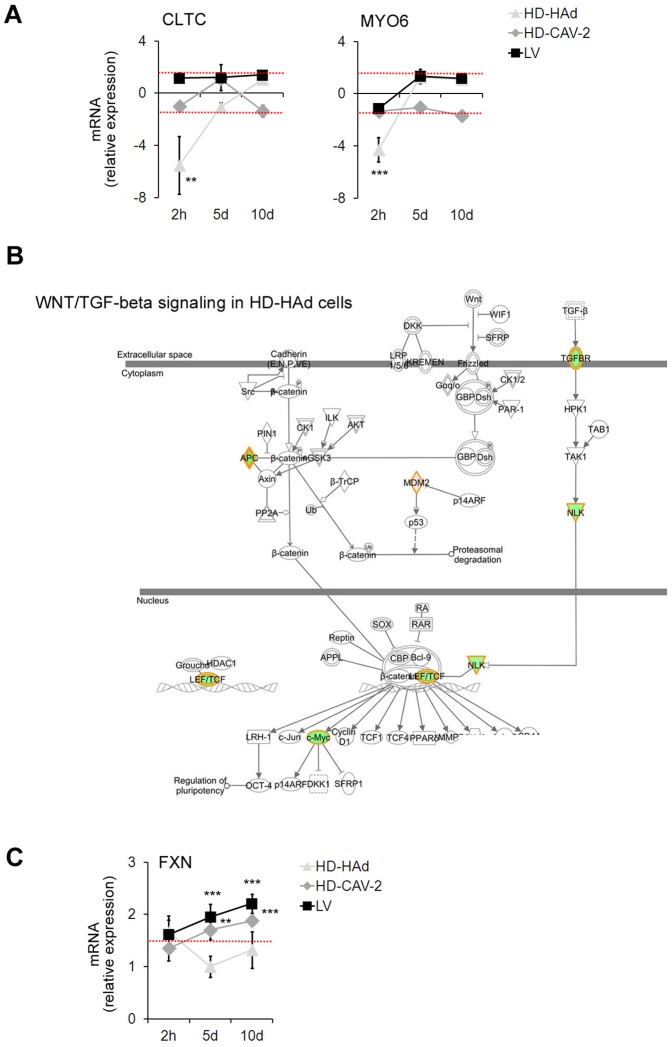
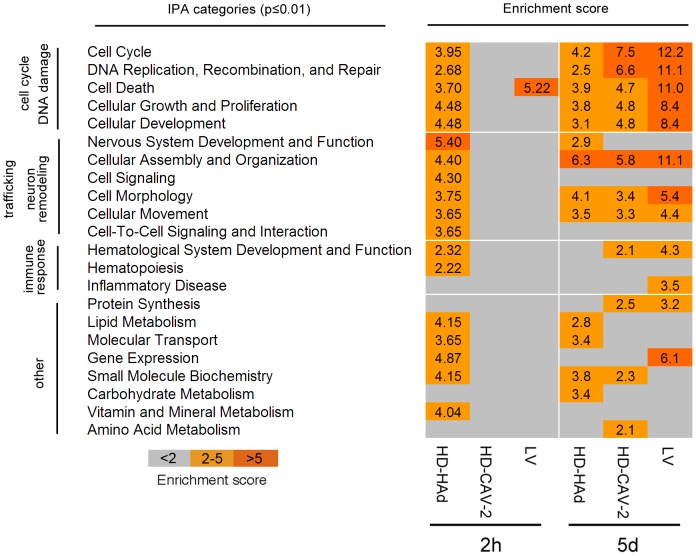
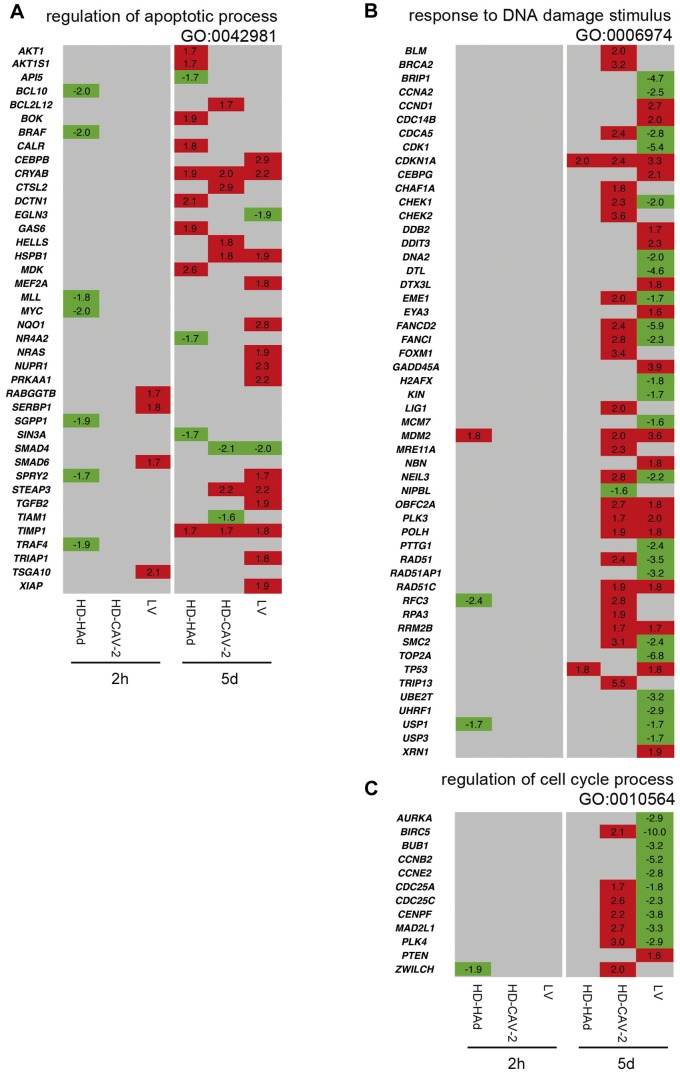
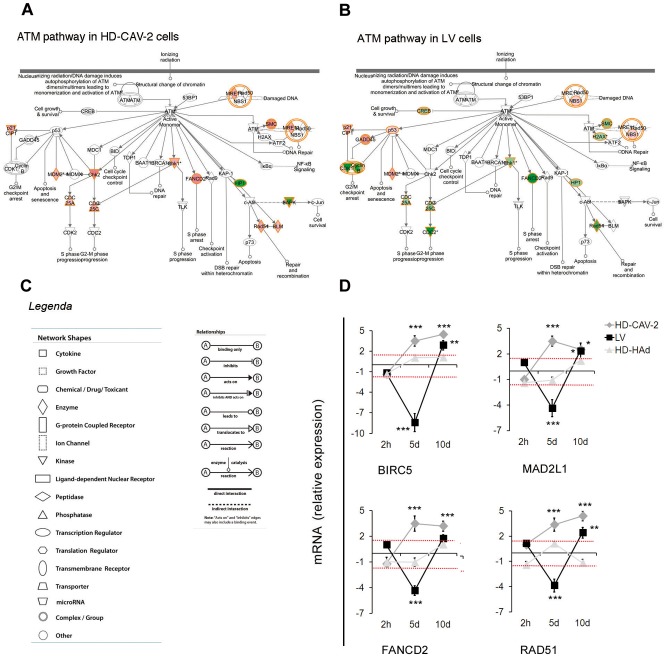
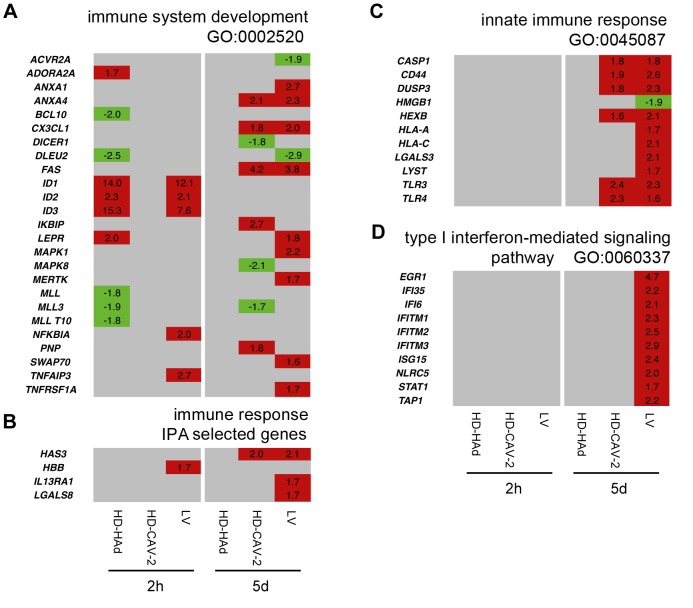
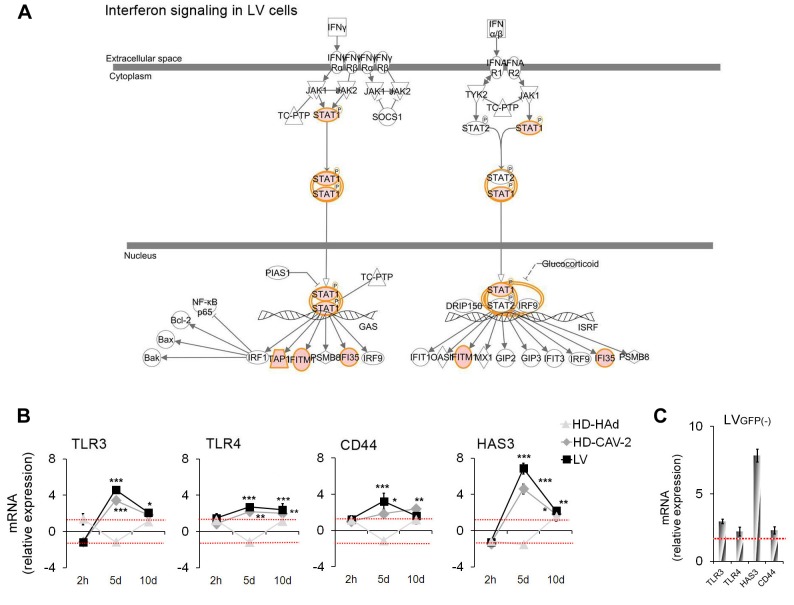
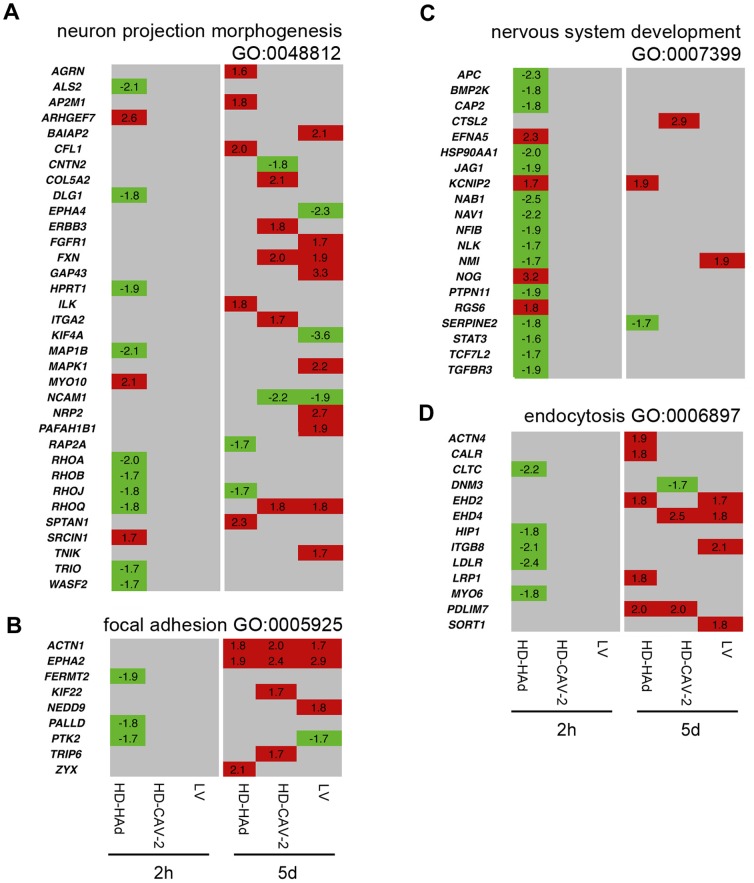
Several studies have demonstrated the potential for vector-mediated gene transfer to the brain. Helper-dependent (HD) human (HAd) and canine (CAV-2) adenovirus, and VSV-G-pseudotyped self-inactivating HIV-1 vectors (LV) effectively transduce human brain cells and their toxicity has been partly analysed. However, their effect on the brain homeostasis is far from fully defined, especially because of the complexity of the central nervous system (CNS). With the goal of dissecting the toxicogenomic signatures of the three vectors for human neurons, we transduced a bona fide human neuronal system with HD-HAd, HD-CAV-2 and LV. We analysed the transcriptional response of more than 47,000 transcripts using gene chips. Chip data showed that HD-CAV-2 and LV vectors activated the innate arm of the immune response, including Toll-like receptors and hyaluronan circuits. LV vector also induced an IFN response. Moreover, HD-CAV-2 and LV vectors affected DNA damage pathways--but in opposite directions--suggesting a differential response of the p53 and ATM pathways to the vector genomes. As a general response to the vectors, human neurons activated pro-survival genes and neuron morphogenesis, presumably with the goal of re-establishing homeostasis. These data are complementary to in vivo studies on brain vector toxicity and allow a better understanding of the impact of viral vectors on human neurons, and mechanistic approaches to improve the therapeutic impact of brain-directed gene transfer.
已有多项研究证明了载体介导的基因向大脑转移的潜力。辅助依赖性(HD)人(HAd)和犬(CAV-2)腺病毒,以及 VSV-G 假型自失活 HIV-1 载体(LV)可有效地转导人脑细胞,并且已经部分分析了其毒性。然而,它们对大脑内稳态的影响还远未完全确定,尤其是由于中枢神经系统(CNS)的复杂性。为了剖析三种载体对人神经元的毒基因特征,我们用 HD-HAd、HD-CAV-2 和 LV 转导了一个真正的人神经元系统。我们使用基因芯片分析了超过 47000 个转录本的转录反应。芯片数据表明,HD-CAV-2 和 LV 载体激活了固有免疫反应的分支,包括 Toll 样受体和透明质酸循环。LV 载体还诱导了 IFN 反应。此外,HD-CAV-2 和 LV 载体影响 DNA 损伤途径——但方向相反——表明 p53 和 ATM 途径对载体基因组的反应不同。作为对载体的一般反应,人神经元激活了生存相关基因和神经元形态发生,推测其目的是重建内稳态。这些数据与脑内载体毒性的体内研究互补,有助于更好地理解病毒载体对人神经元的影响,并为改善脑靶向基因转移的治疗效果提供机制方法。