Department of Radiology, University Hospitals Leuven, Herestraat 49, B-3000 Leuven, Belgium.
Cancer Imaging. 2004 Feb 12;4 Spec No A(Spec No A):S6-S15. doi: 10.1102/1470-7330.2004.0007.
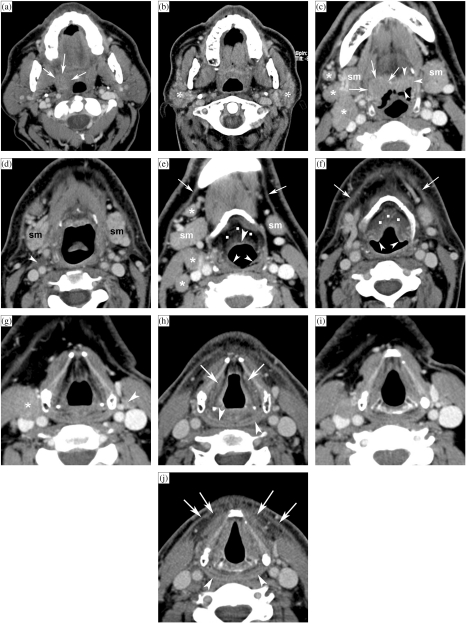
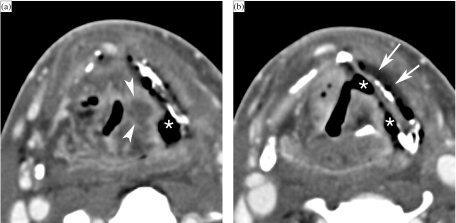
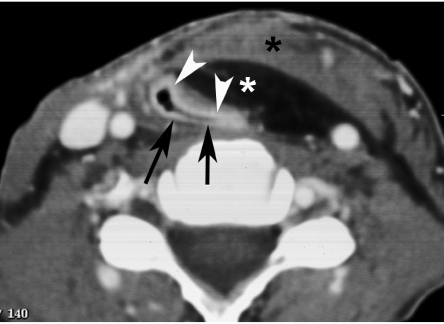
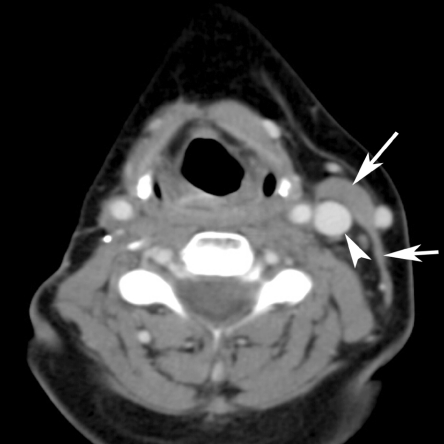
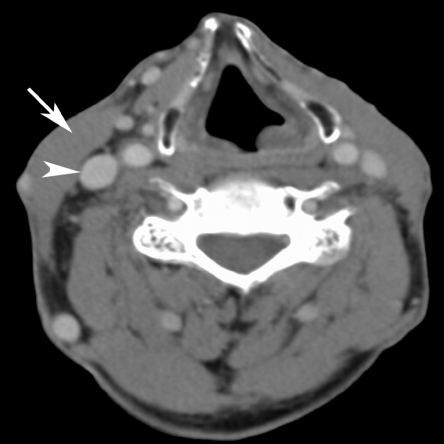
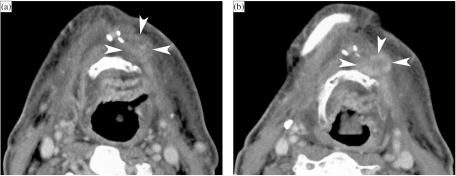
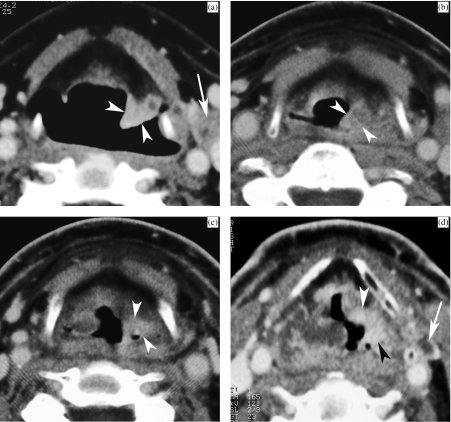
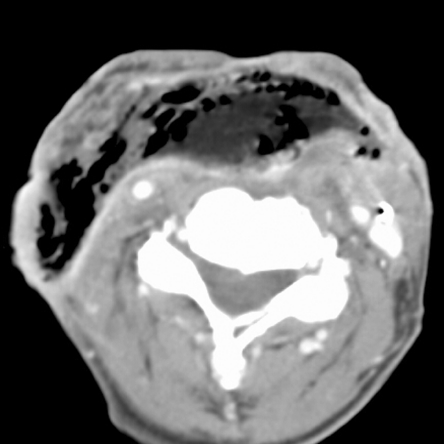
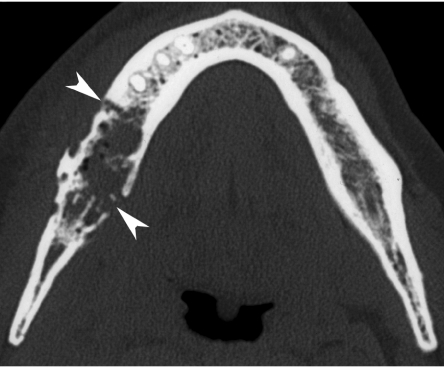
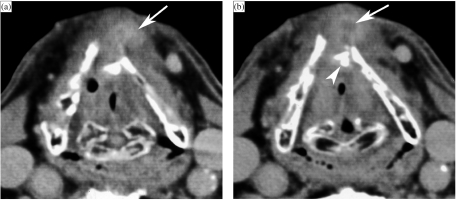
The expected changes on CT or MRI after treatment of a head and neck cancer are described; it is important not to confuse such expected changes with persisting or recurrent tumour, or a treatment complication. Post-treatment CT or MRI is of value when a recurrent tumour is suspected, to confirm the presence of such a lesion and to determine its extent; this is important information for determining the possibility of salvage therapy. More rarely, imaging maybe of use in the differentiation between tumour recurrence and a treatment complication. In patients with a high-risk profile for tumour recurrence after treatment, imaging is of value for surveillance of the patient, as an adjunct to clinical follow-up.The baseline study should be obtained about 3 to 4 months after the end of therapy. There is evidence that tumour recurrences can be detect earlier by systematic follow-up imaging.
治疗头颈部癌症后 CT 或 MRI 的预期变化;重要的是不要将这些预期变化与持续存在或复发的肿瘤或治疗并发症相混淆。当怀疑复发肿瘤时,治疗后的 CT 或 MRI 具有价值,可以确认存在这种病变并确定其范围;这对于确定挽救治疗的可能性很重要。在极少数情况下,影像学检查可能有助于区分肿瘤复发和治疗并发症。在治疗后肿瘤复发风险高的患者中,影像学检查对患者的监测具有价值,可作为临床随访的辅助手段。基线研究应在治疗结束后约 3 至 4 个月进行。有证据表明,系统的随访影像学检查可以更早地检测到肿瘤复发。