Sanders Rogier W, van Anken Eelco, Nabatov Alexei A, Liscaljet I Marije, Bontjer Ilja, Eggink Dirk, Melchers Mark, Busser Els, Dankers Martijn M, Groot Fedde, Braakman Ineke, Berkhout Ben, Paxton William A
Laboratory of Experimental Virology, Dept, Medical Microbiology, Center of Infection and Immunity Amsterdam (CINIMA), Academic Medical Center of the University of Amsterdam, Amsterdam, The Netherlands.
Retrovirology. 2008 Jan 31;5:10. doi: 10.1186/1742-4690-5-10.
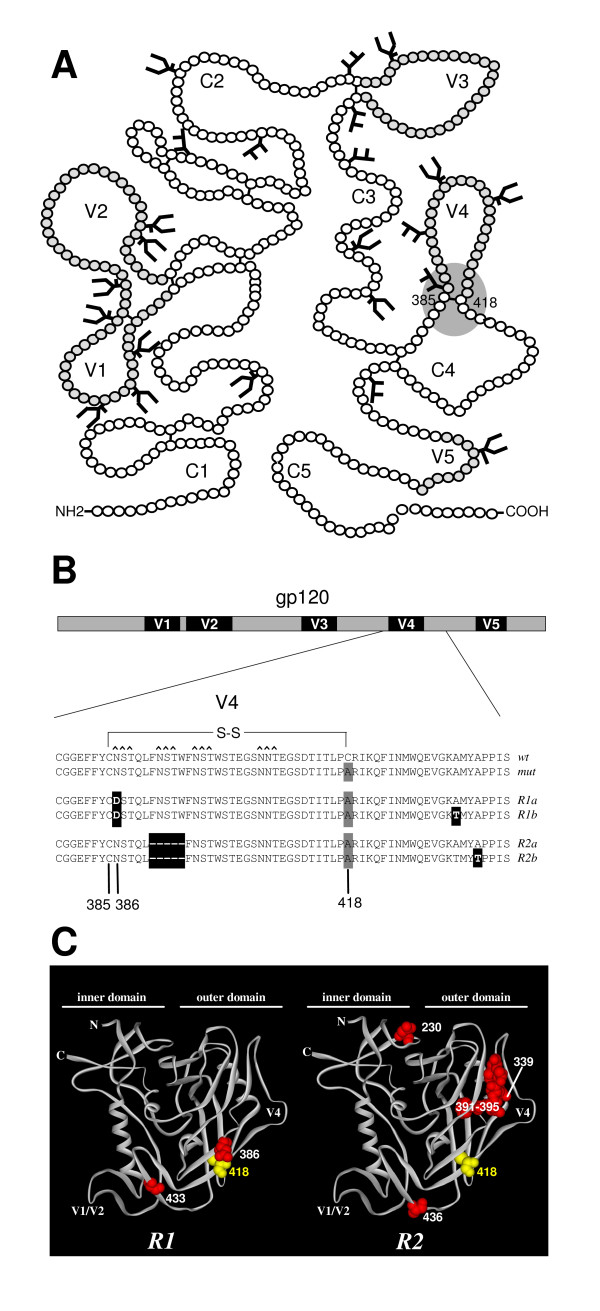
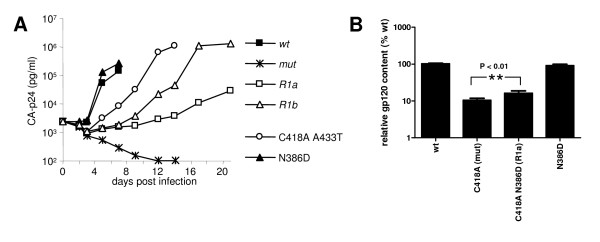
The HIV-1 envelope glycoprotein gp120, which mediates viral attachment to target cells, consists for approximately 50% of sugar, but the role of the individual sugar chains in various aspects of gp120 folding and function is poorly understood. Here we studied the role of the carbohydrate at position 386. We identified a virus variant that had lost the 386 glycan in an evolution study of a mutant virus lacking the disulfide bond at the base of the V4 domain.
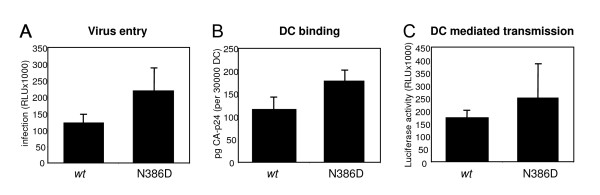
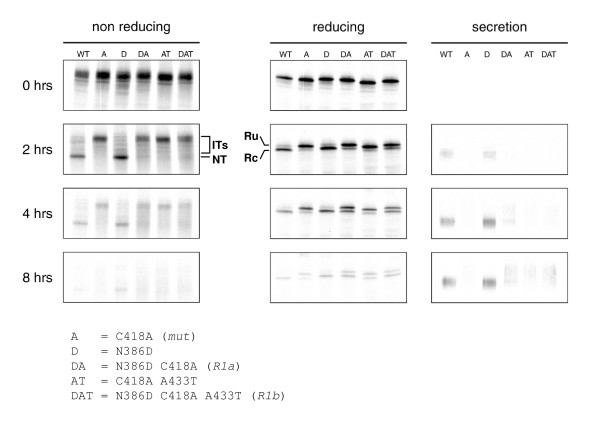
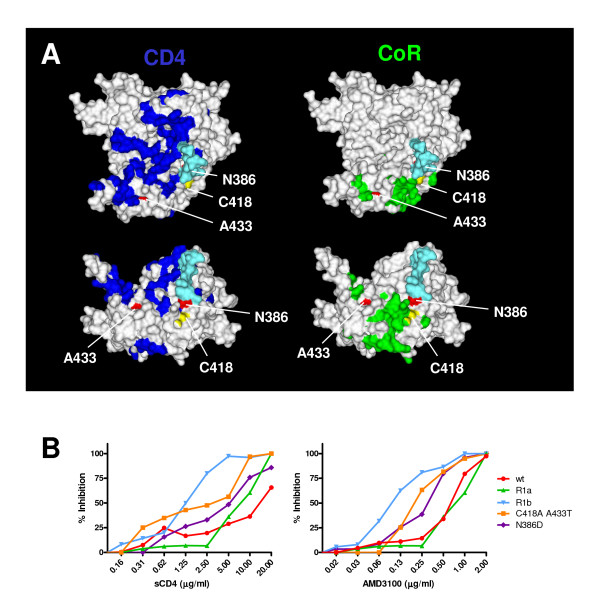
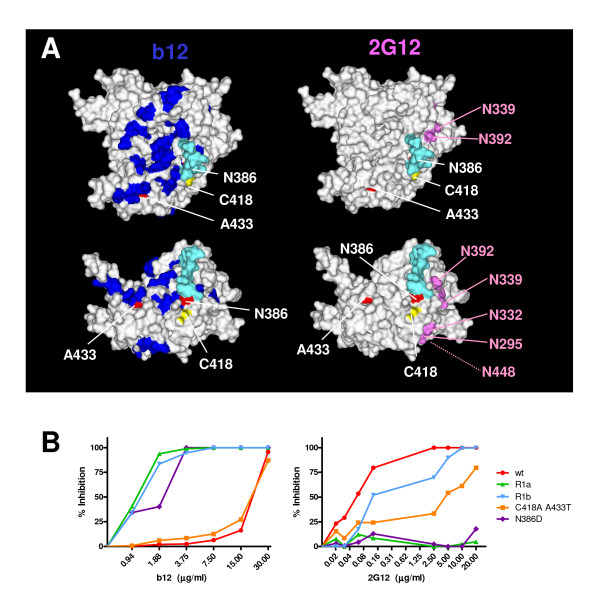
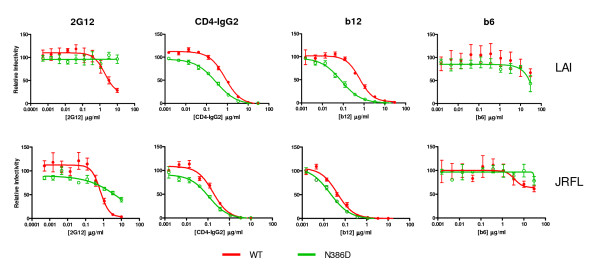
The 386 carbohydrate was not essential for folding of wt gp120. However, its removal improved folding of a gp120 variant lacking the 385-418 disulfide bond, suggesting that it plays an auxiliary role in protein folding in the presence of this disulfide bond. The 386 carbohydrate was not critical for gp120 binding to dendritic cells (DC) and DC-mediated HIV-1 transmission to T cells. In accordance with previous reports, we found that N386 was involved in binding of the mannose-dependent neutralizing antibody 2G12. Interestingly, in the presence of specific substitutions elsewhere in gp120, removal of N386 did not result in abrogation of 2G12 binding, implying that the contribution of N386 is context dependent. Neutralization by soluble CD4 and the neutralizing CD4 binding site (CD4BS) antibody b12 was significantly enhanced in the absence of the 386 sugar, indicating that this glycan protects the CD4BS against antibodies.
The carbohydrate at position 386 is not essential for protein folding and function, but is involved in the protection of the CD4BS from antibodies. Removal of this sugar in the context of trimeric Env immunogens may therefore improve the elicitation of neutralizing CD4BS antibodies.
介导病毒与靶细胞结合的HIV-1包膜糖蛋白gp120约50%由糖组成,但单个糖链在gp120折叠和功能的各个方面所起的作用尚不清楚。在此,我们研究了386位糖基的作用。在一项对V4结构域底部缺乏二硫键的突变病毒进行的进化研究中,我们鉴定出一种缺失386位聚糖的病毒变体。
386位碳水化合物对于野生型gp120的折叠并非必不可少。然而,去除它可改善缺乏385-418二硫键的gp120变体的折叠,这表明在存在该二硫键的情况下,它在蛋白质折叠中起辅助作用。386位碳水化合物对于gp120与树突状细胞(DC)的结合以及DC介导的HIV-1向T细胞的传播并不关键。与先前的报道一致,我们发现N386参与了甘露糖依赖性中和抗体2G12的结合。有趣的是,在gp120其他位置存在特定取代的情况下,去除N386并不会导致2G12结合的废除,这意味着N386的贡献取决于上下文。在没有386位糖的情况下,可溶性CD4和中和性CD4结合位点(CD4BS)抗体b12的中和作用显著增强,表明该聚糖可保护CD4BS免受抗体攻击。
386位碳水化合物对于蛋白质折叠和功能并非必不可少,但参与保护CD4BS免受抗体攻击。因此,在三聚体Env免疫原的背景下去除这种糖可能会改善中和性CD4BS抗体的诱导。