LeBreton Matthew, Yang Otto, Tamoufe Ubald, Mpoudi-Ngole Eitel, Torimiro Judith N, Djoko Cyrille F, Carr Jean K, Tassy Prosser A, Rimoin Anne W, Birx Deborah L, Burke Donald S, Wolfe Nathan D
Johns Hopkins Cameroon Program, Yaoundé, Cameroon.
Emerg Infect Dis. 2007 Oct;13(10):1579-82. doi: 10.3201/eid1310.070338.
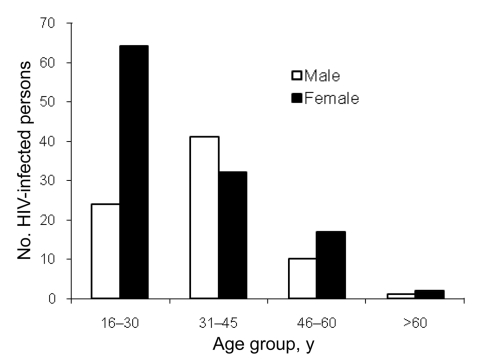
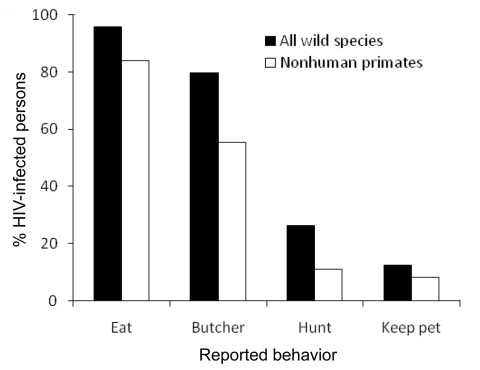
HIV-1 is an immunosuppressive pathogen. Our behavioral data for 191 HIV-1-infected rural Cameroonians show frequent exposure to nonhuman primates through activities such as hunting and butchering. Immunosuppression among persons exposed to body fluids of wild nonhuman primates could favor the process of adaptation and subsequent emergence of zoonotic pathogens.
人类免疫缺陷病毒1型(HIV-1)是一种免疫抑制性病原体。我们对191名感染HIV-1的喀麦隆农村居民的行为数据显示,他们通过狩猎和屠宰等活动频繁接触非人灵长类动物。接触野生非人灵长类动物体液的人群中的免疫抑制可能有利于人畜共患病原体的适应过程及随后的出现。