Janson Peter C J, Winerdal Malin E, Marits Per, Thörn Magnus, Ohlsson Rolf, Winqvist Ola
Department of Medicine, Clinical Allergy Research Unit, Karolinska Institutet, Stockholm, Sweden.
PLoS One. 2008 Feb 20;3(2):e1612. doi: 10.1371/journal.pone.0001612.
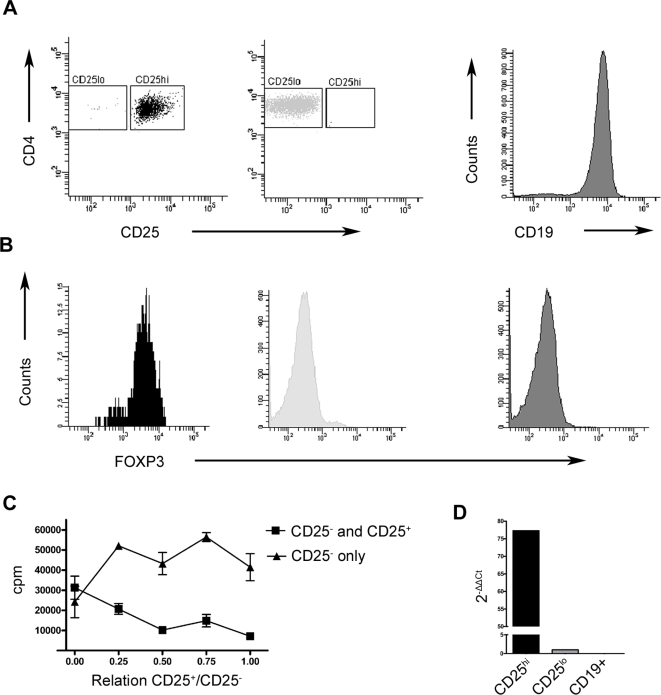
Naturally occurring thymus derived regulatory T cells (Tregs) are central in the maintenance of self-tolerance. The transcription factor FOXP3 is crucial for the suppressive activity of Tregs and is considered the most specific marker for this population. However, human non regulatory T cells upregulate FOXP3 transiently upon activation which calls for other means to identify the Treg population. Since epigenetic mechanisms are involved in the establishment of stable gene expression patterns during cell differentiation, we hypothesized that the methylation profile of the FOXP3 promoter would allow the distinction of truly committed Tregs.
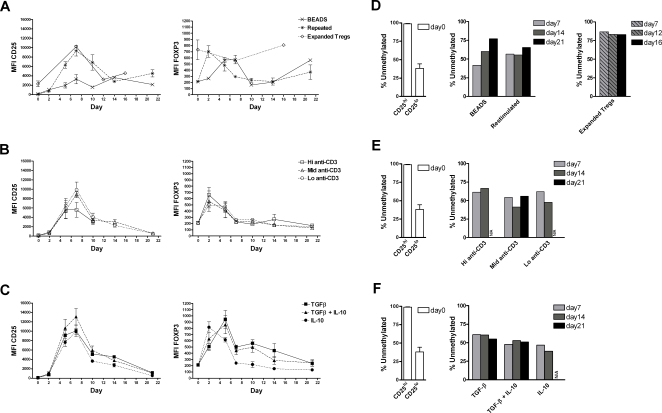
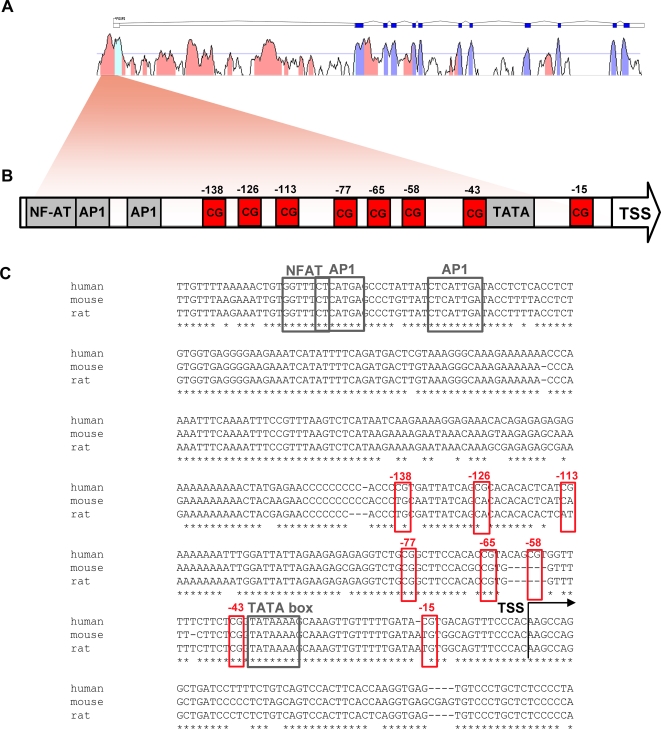
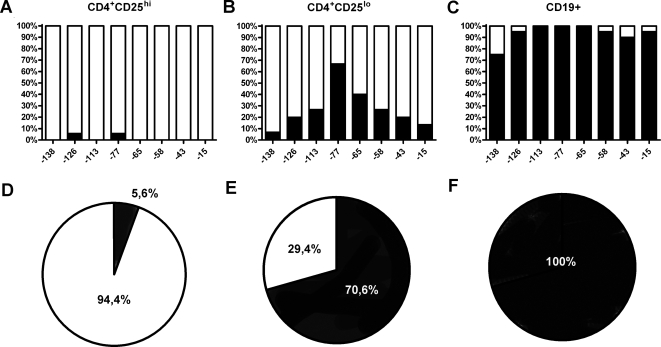
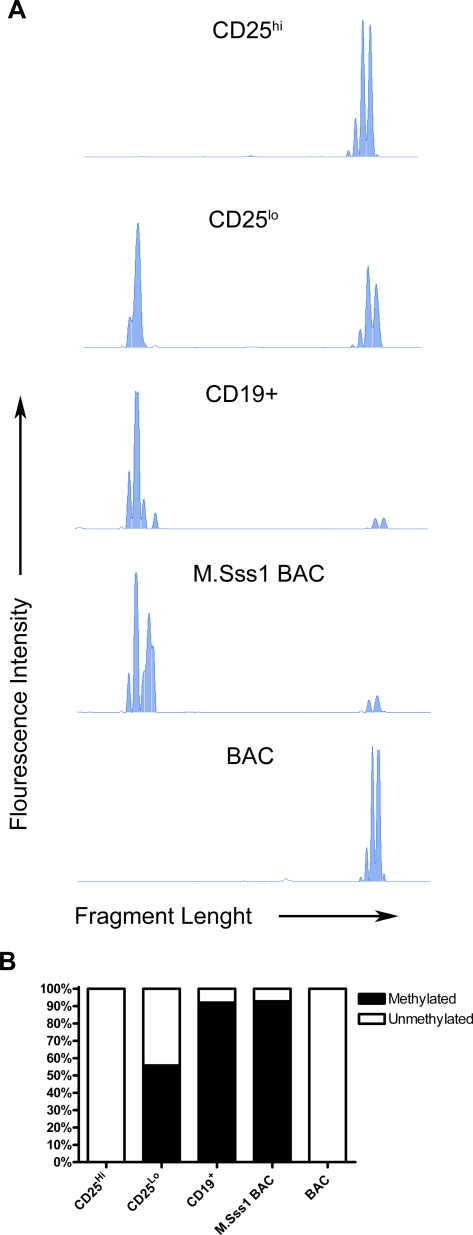
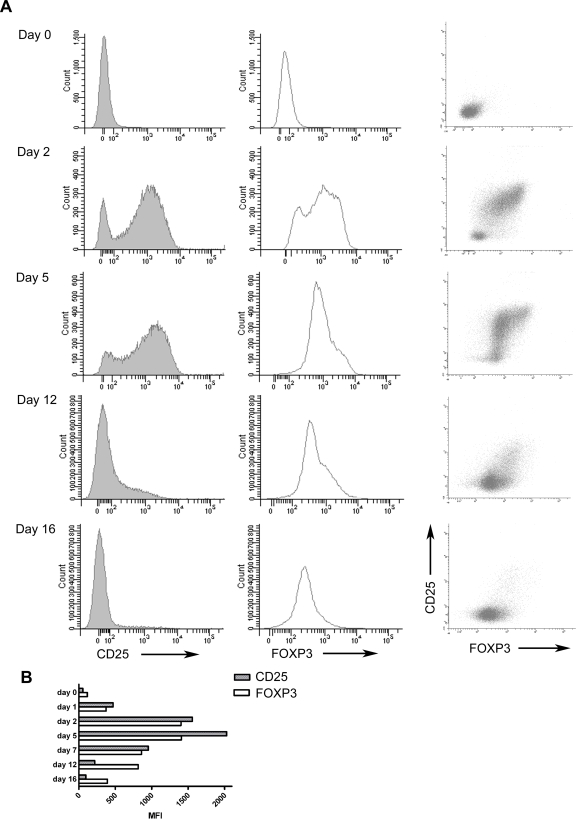
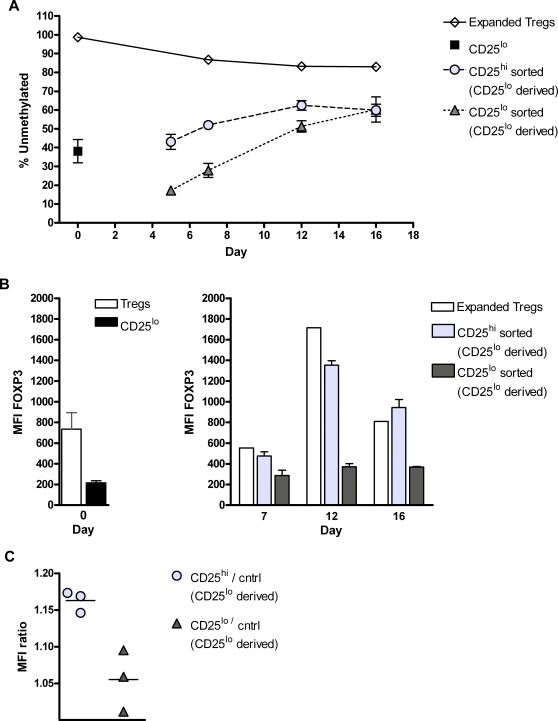
METHODOLOGY/PRINCIPAL FINDINGS: Human CD4(+)CD25(hi) Tregs displayed a demethylated FOXP3 promoter (1.4%+/-0.95% SEM methylated) in contrast to CD4(+)CD25(lo) T cells which were partially methylated (27.9%+/-7.1%). Furthermore, stimulated CD4(+)CD25(lo) T cells transiently expressed FOXP3 but remained partially methylated, suggesting promoter methylation as a mechanism for regulation of stable FOXP3 expression and Treg commitment. In addition, transient FOXP3 expressing cells exhibited suppressive abilities that correlate to the methylation status of the FOXP3 promoter. As an alternative to bisulphite sequencing, we present a restriction enzyme based screening method for the identification of committed Tregs and apply this method to evaluate the effect of various culturing conditions. We show that a partial demethylation occurs in long-term cultures after activation, whereas the addition of TGF-beta and/or IL-10 does not induce any additional change in methylation level.
CONCLUSIONS/SIGNIFICANCE: The unique FOXP3 promoter methylation profile in Tregs suggests that a demethylated pattern is a prerequisite for stable FOXP3 expression and suppressive phenotype. Presently, FOXP3 is used to identify Tregs in several human diseases and there are future implications for adoptive Treg transfer in immunotherapy. In these settings there is a need to distinguish true Tregs from transiently FOXP3(+) activated T cells. The screening method we present allows this distinction and enables the identification of cells suitable for in vitro expansions and clinical use.
天然存在的胸腺来源的调节性T细胞(Tregs)在维持自身耐受性中起核心作用。转录因子FOXP3对Tregs的抑制活性至关重要,被认为是该细胞群体最特异的标志物。然而,人类非调节性T细胞在激活后会短暂上调FOXP3,这就需要其他方法来鉴定Treg群体。由于表观遗传机制参与细胞分化过程中稳定基因表达模式的建立,我们推测FOXP3启动子的甲基化谱可用于区分真正定型的Tregs。
方法/主要发现:人类CD4(+)CD25(hi) Tregs的FOXP3启动子呈去甲基化状态(甲基化水平为1.4%±0.95% SEM),而CD4(+)CD25(lo) T细胞则部分甲基化(27.9%±7.1%)。此外,受刺激的CD4(+)CD25(lo) T细胞短暂表达FOXP3,但仍部分甲基化,提示启动子甲基化是稳定FOXP3表达和Treg定型的一种调节机制。另外,短暂表达FOXP3的细胞表现出与FOXP3启动子甲基化状态相关的抑制能力。作为亚硫酸氢盐测序的替代方法,我们提出一种基于限制性酶的筛选方法来鉴定定型的Tregs,并应用该方法评估各种培养条件的影响。我们发现激活后的长期培养中会发生部分去甲基化,而添加转化生长因子-β(TGF-β)和/或白细胞介素-10(IL-10)不会引起甲基化水平的任何额外变化。
结论/意义:Tregs中独特的FOXP3启动子甲基化谱表明去甲基化模式是稳定FOXP3表达和抑制表型的先决条件。目前,FOXP3用于鉴定多种人类疾病中的Tregs,对免疫治疗中过继性Treg转移具有潜在意义。在这些情况下,需要将真正的Tregs与短暂FOXP3(+)激活的T细胞区分开来。我们提出的筛选方法能够实现这种区分,并能够鉴定适合体外扩增和临床应用的细胞。