Zhao Yu, DeCuypere Michael, LeDoux Mark S
University of Tennessee Health Science Center, Department of Neurology, 855 Monroe Avenue, Link Building, Suite 415, Memphis, Tennessee 38163, USA.
Exp Neurol. 2008 Apr;210(2):719-30. doi: 10.1016/j.expneurol.2007.12.027. Epub 2008 Jan 19.
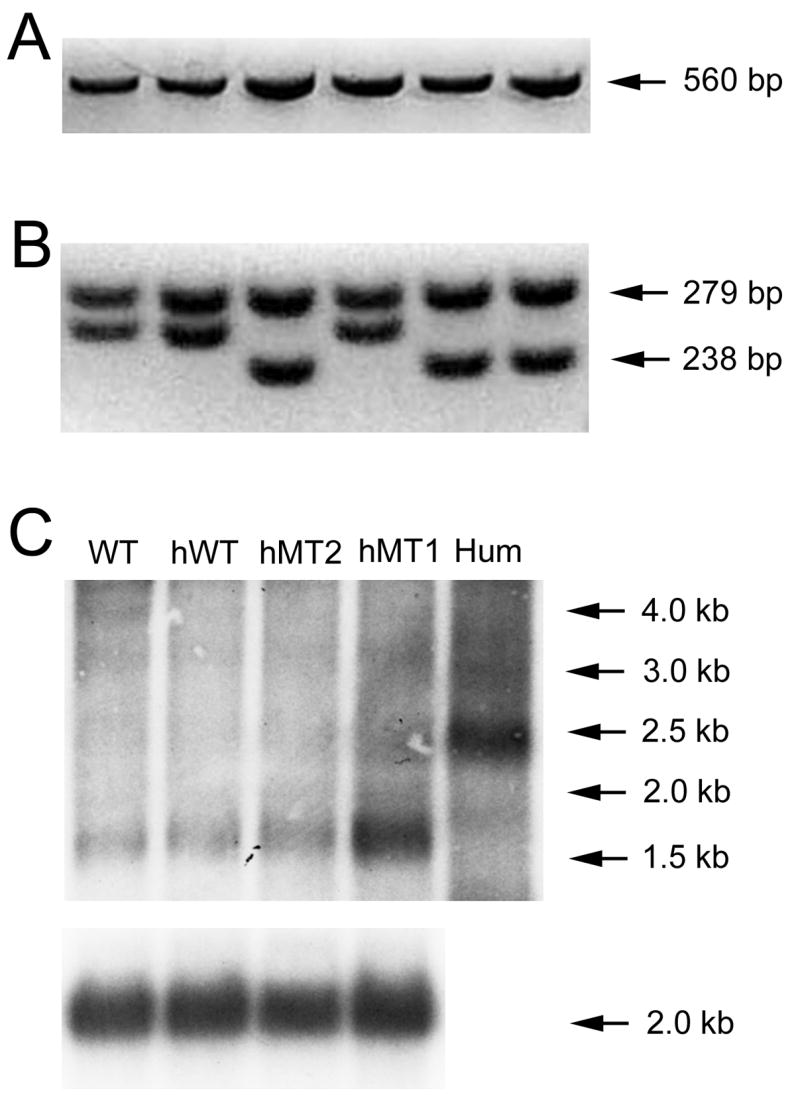
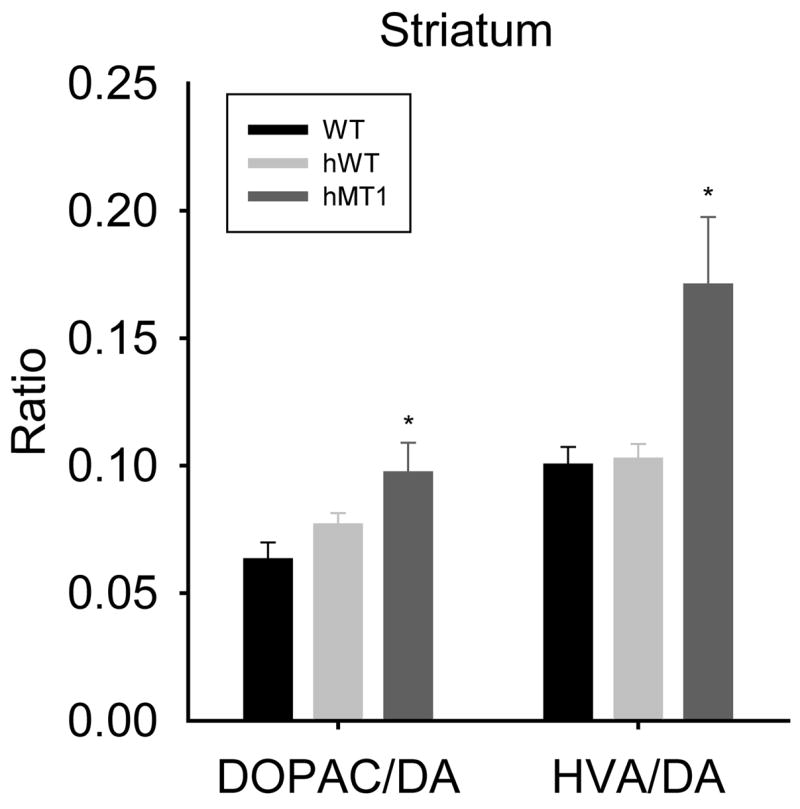
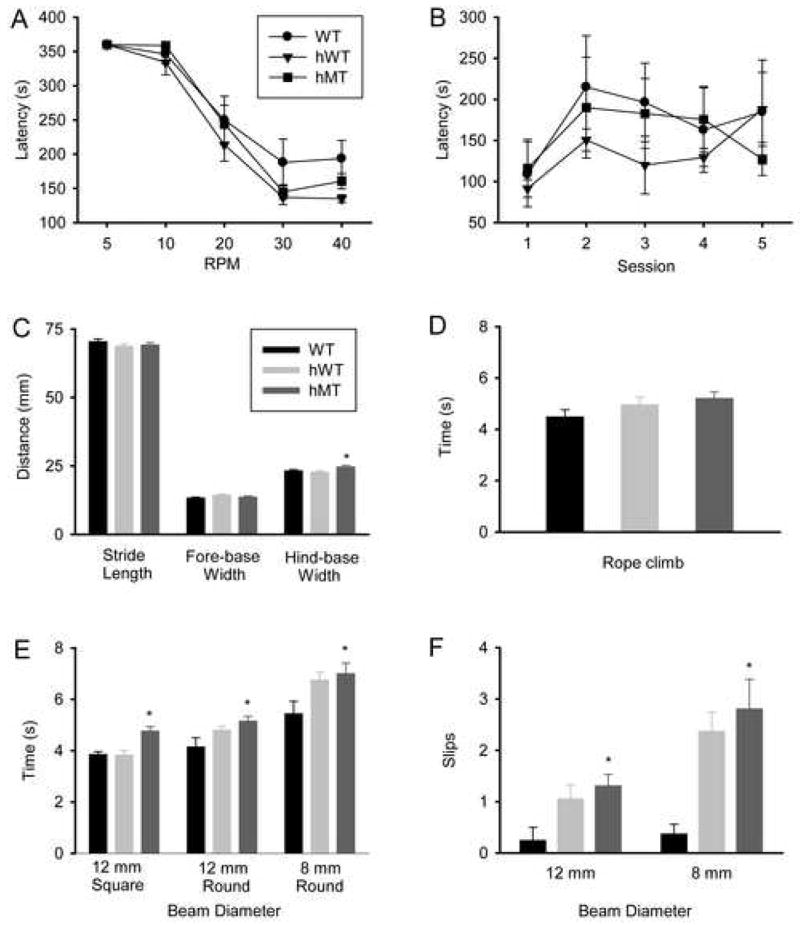
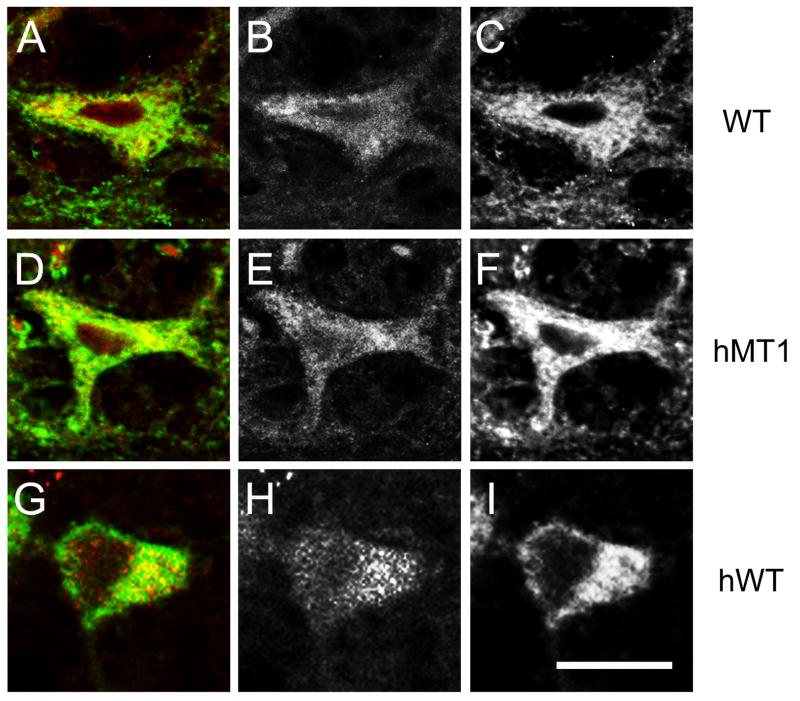
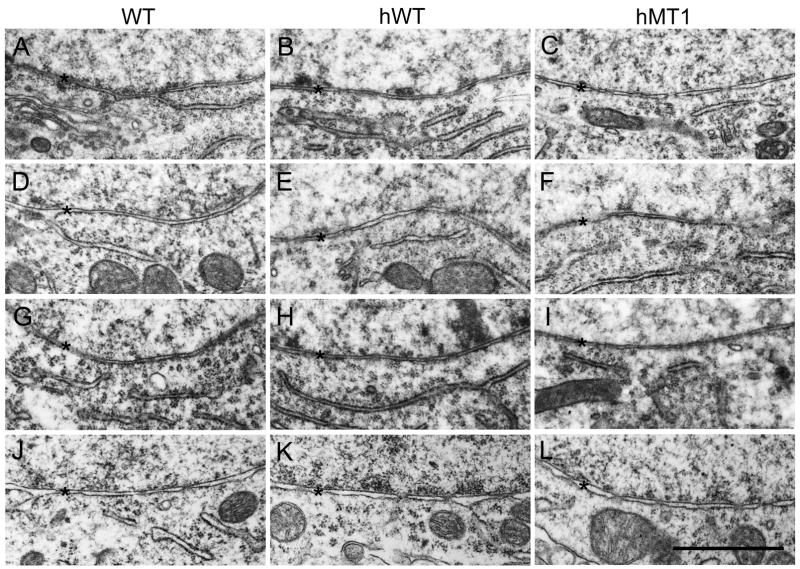
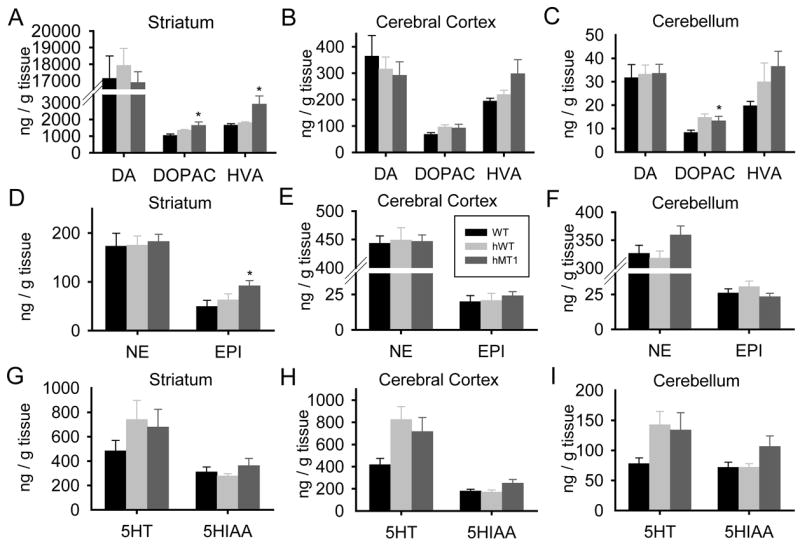
A single GAG deletion in Exon 5 of the TOR1A gene is associated with a form of early-onset primary dystonia showing less than 40% penetrance. To provide a framework for cellular and systems study of DYT1 dystonia, we characterized the genetic, behavioral, morphological and neurochemical features of transgenic mice expressing either human wild-type torsinA (hWT) or mutant torsinA (hMT1 and hMT2) and their wild-type (WT) littermates. Relative to human brain, hMT1 mice showed robust neural expression of human torsinA transcript (3.90x). In comparison with WT littermates, hMT1 mice had prolonged traversal times on both square and round raised-beam tasks and more slips on the round raised-beam task. Although there were no effects of genotype on rotarod performance and rope climbing, hMT1 mice exhibited increased hind-base widths in comparison to WT and hWT mice. In contrast to several other mouse models of DYT1 dystonia, we were unable to identify either torsinA- and ubiquitin-positive cytoplasmic inclusion bodies or nuclear bleb formation in hMT1 mice. High-performance liquid chromatography with electrochemical detection was used to determine cerebral cortical, striatal, and cerebellar levels of dopamine (DA), norepinephrine, epinephrine, serotonin, 3,4-dihydroxyphenylacetic acid (DOPAC), homovanillic acid (HVA) and 5-hydroxyindoleacetic acid. Although there were no differences in striatal DA levels between WT and hMT1 mice, DOPAC and HVA concentrations and DA turnover (DOPAC/DA and HVA/DA) were significantly higher in the mutants. Our findings in DYT1 transgenic mice are compatible with previous neuroimaging and postmortem neurochemical studies of human DYT1 dystonia. Increased striatal dopamine turnover in hMT1 mice suggests that the nigrostriatal pathway may be a site of functional neuropathology in DYT1 dystonia.
TOR1A基因外显子5中的单个糖胺聚糖(GAG)缺失与一种早发性原发性肌张力障碍相关,其外显率低于40%。为了为DYT1肌张力障碍的细胞和系统研究提供一个框架,我们对表达人类野生型扭转蛋白A(hWT)或突变型扭转蛋白A(hMT1和hMT2)的转基因小鼠及其野生型(WT)同窝小鼠的遗传、行为、形态和神经化学特征进行了表征。相对于人类大脑,hMT1小鼠显示出人类扭转蛋白A转录本的强大神经表达(3.90倍)。与WT同窝小鼠相比,hMT1小鼠在方形和圆形高架梁任务中的穿越时间延长,在圆形高架梁任务中滑倒更多。虽然基因型对转棒试验性能和爬绳没有影响,但与WT和hWT小鼠相比,hMT1小鼠的后基宽度增加。与其他几种DYT1肌张力障碍小鼠模型不同,我们在hMT1小鼠中未能识别出扭转蛋白A和泛素阳性的胞质包涵体或核泡形成。采用高效液相色谱-电化学检测法测定大脑皮质、纹状体和小脑的多巴胺(DA)、去甲肾上腺素、肾上腺素、5-羟色胺、3,4-二羟基苯乙酸(DOPAC)、高香草酸(HVA)和5-羟吲哚乙酸水平。虽然WT和hMT1小鼠纹状体DA水平没有差异,但突变体中的DOPAC和HVA浓度以及DA周转率(DOPAC/DA和HVA/DA)显著更高。我们在DYT1转基因小鼠中的发现与先前人类DYT1肌张力障碍的神经影像学和死后神经化学研究结果一致。hMT1小鼠纹状体多巴胺周转率增加表明,黑质纹状体通路可能是DYT1肌张力障碍功能性神经病理学的一个部位。