Hanzel D, Reggio H, Bretscher A, Forte J G, Mangeat P
Department of Molecular and Cell Biology, University of California, Berkeley, 94720.
EMBO J. 1991 Sep;10(9):2363-73. doi: 10.1002/j.1460-2075.1991.tb07775.x.
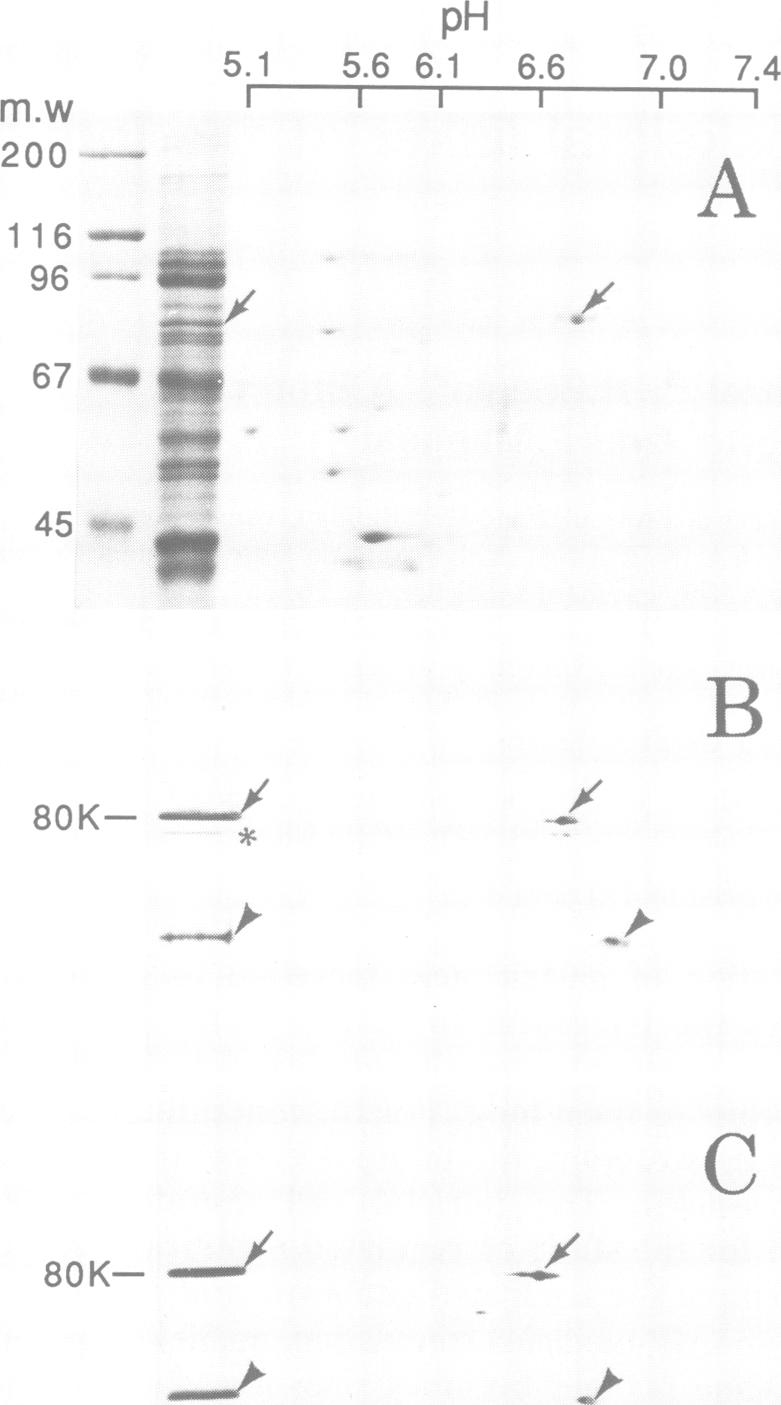
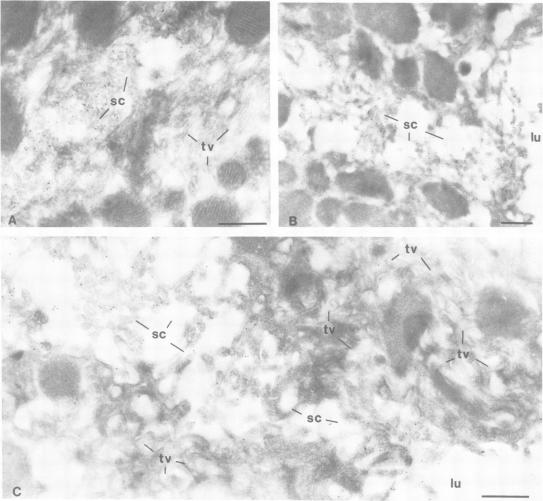
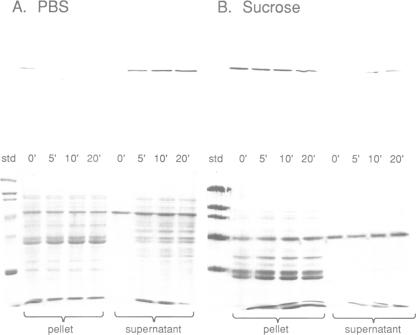
Stimulation of gastric acid secretion in parietal cells involves the translocation of the proton pump (H,K-ATPase) from cytoplasmic tubulovesicles to the apical membrane to form long, F-actin-containing, microvilli. Following secretion, the pump is endocytosed back into tubulovesicles. The parietal cell therefore offers a system for the study of regulated membrane recycling, with temporally separated endocytic and exocytic steps. During cAMP-mediated stimulation, an 80 kDa peripheral membrane protein becomes phosphorylated on serine residues. This protein is a major component, together with actin and the pump, of the isolated apical membrane from stimulated cells, but not the resting tubulovesicular membrane. Here we show that the gastric 80 kDa phosphoprotein is closely related or identical to ezrin, a protein whose phosphorylation on serine and tyrosine residues was recently implicated in the induction by growth factors of cell surface structures on cultured cells [Bretscher, A. (1989) J. Cell Biol., 108, 921-930]. Light and electron microscopy reveal that ezrin is associated with the actin filaments of the microvilli of stimulated cells, but not with the filaments in the terminal web. In addition, a significant amount of ezrin is present in the basolateral membrane infoldings of both resting and stimulated cells. Extraction studies show that ezrin is a cytoskeletal protein in unstimulated and stimulated cells, and its association with the cytoskeleton is more stable in stimulated cells. These studies indicate that ezrin is a membrane cytoskeletal linker that may play a key role in the control of the assembly of secretory apical microvilli in parietal cells and ultimately in the regulation of acid secretion. Taken together with the earlier studies, we suggest that ezrin might be a general substrate for kinases involved in the regulation of actin-containing cell surface structures.
壁细胞中胃酸分泌的刺激涉及质子泵(H,K - ATP酶)从细胞质微管泡转运至顶端膜,形成长的、含F - 肌动蛋白的微绒毛。分泌后,该泵被内吞回微管泡。因此,壁细胞提供了一个用于研究受调控的膜循环的系统,其具有时间上分离的内吞和外排步骤。在cAMP介导的刺激过程中,一种80 kDa的外周膜蛋白在丝氨酸残基上发生磷酸化。该蛋白与肌动蛋白和泵一起,是受刺激细胞分离的顶端膜的主要成分,但不是静息微管泡膜的主要成分。在这里我们表明,胃80 kDa磷蛋白与埃兹蛋白密切相关或相同,埃兹蛋白在丝氨酸和酪氨酸残基上的磷酸化最近被认为与生长因子诱导培养细胞的细胞表面结构有关[布雷茨彻,A.(1989年)《细胞生物学杂志》,108,921 - 930]。光镜和电镜显示,埃兹蛋白与受刺激细胞微绒毛的肌动蛋白丝相关,但与终末网中的丝无关。此外,在静息和受刺激细胞的基底外侧膜内褶中都存在大量的埃兹蛋白。提取研究表明,埃兹蛋白在未刺激和受刺激细胞中都是一种细胞骨架蛋白,并且它与细胞骨架的结合在受刺激细胞中更稳定。这些研究表明,埃兹蛋白是一种膜细胞骨架连接蛋白,可能在壁细胞分泌性顶端微绒毛组装的控制中起关键作用,并最终在胃酸分泌的调节中起关键作用。结合早期研究,我们认为埃兹蛋白可能是参与含肌动蛋白细胞表面结构调节的激酶的一般底物。