Burkitt Kyunghee, Ljungman Mats
Department of Radiation Oncology, Division of Radiation Cancer Biology, University of Michigan Comprehensive Cancer Center, University of Michigan Medical School, Ann Arbor, MI 48109, USA.
Mol Cancer. 2008 Mar 6;7:24. doi: 10.1186/1476-4598-7-24.
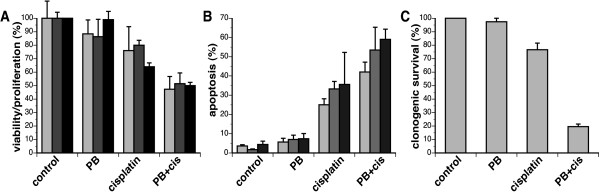
Cisplatin has been widely used to treat head and neck cancer. One of the clinical limitations with this treatment, however, is that tumors that are initially responsive to cisplatin later acquire resistance. We have recently shown that a subset of head and neck cancer cell lines has a defective Fanconi anemia DNA damage response pathway and this defect correlates to cisplatin sensitivity. We have also shown that the histone deacetylase inhibitor phenylbutyrate sensitize human cells to cisplatin. In this study we explored whether phenylbutyrate may sensitize head and neck cancer cells by interfering with the Fanconi anemia pathway.
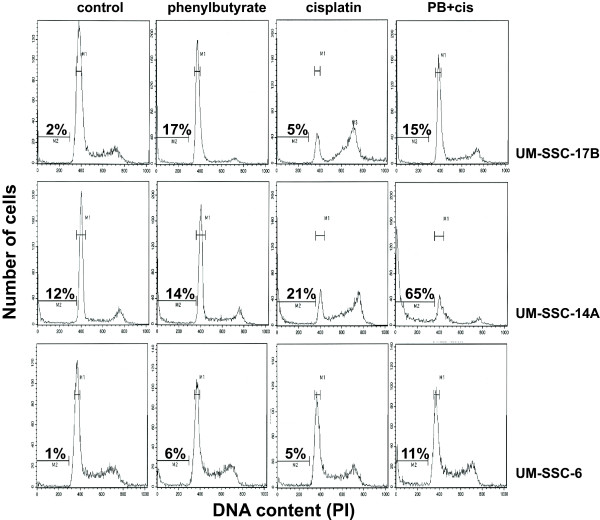
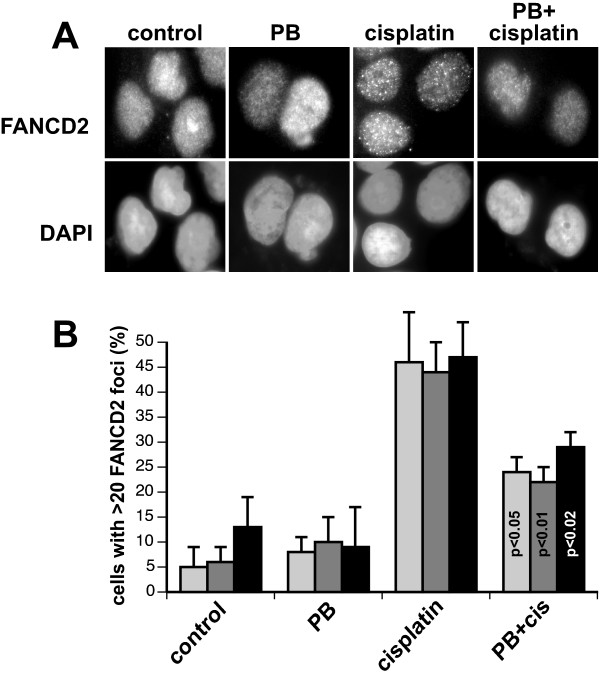
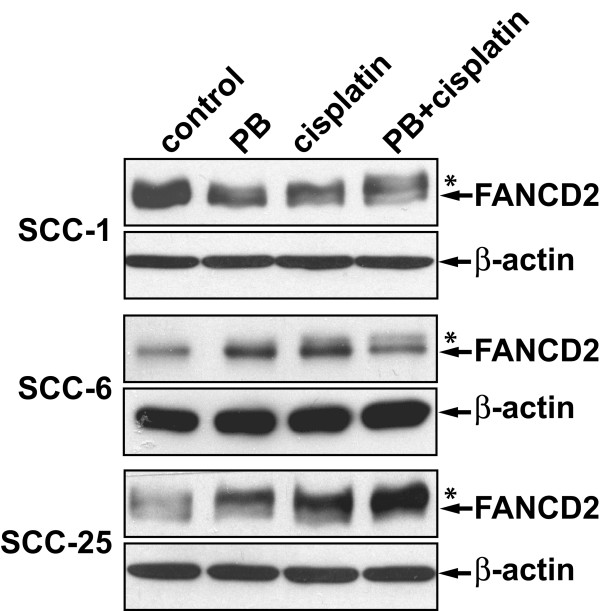
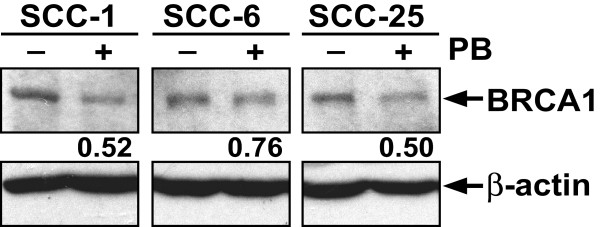
We found that the phenylbutyrate sensitizes head and neck cancer cell lines to cisplatin. This sensitization by phenylbutyrate correlated to a significant decrease in the formation of cisplatin-induced FANCD2 nuclear foci, which is a functional read out of the Fanconi anemia and BRCA (FA/BRCA) pathway. This abrogation of the FA/BRCA pathway by phenylbutyrate was not due to loss of FANCD2 monoubiquitylation but rather correlated to a phenylbutyrate-mediated reduction in the expression of the BRCA1 protein. Furthermore, we found that cancer cells defective in the FA pathway were also sensitized to cisplatin by phenylbutyrate suggesting that phenylbutyrate targets additional pathways.
The results from this study suggest that phenylbutyrate may have therapeutic utility as a cisplatin sensitizer in head and neck cancer by inhibiting the FA/BRCA pathway through the down regulation of BRCA1 as well as by an FA/BRCA-independent mechanism.
顺铂已被广泛用于治疗头颈癌。然而,这种治疗方法的临床局限性之一是,最初对顺铂有反应的肿瘤后来会产生耐药性。我们最近发现,一部分头颈癌细胞系存在范可尼贫血DNA损伤反应途径缺陷,且这种缺陷与顺铂敏感性相关。我们还发现,组蛋白去乙酰化酶抑制剂苯丁酸钠可使人类细胞对顺铂敏感。在本研究中,我们探讨了苯丁酸钠是否可能通过干扰范可尼贫血途径使头颈癌细胞敏感。
我们发现苯丁酸钠可使头颈癌细胞系对顺铂敏感。苯丁酸钠的这种致敏作用与顺铂诱导的FANCD2核灶形成显著减少相关,FANCD2核灶形成是范可尼贫血和BRCA(FA/BRCA)途径的一个功能指标。苯丁酸钠对FA/BRCA途径的这种消除作用并非由于FANCD2单泛素化的丧失,而是与苯丁酸钠介导的BRCA1蛋白表达降低相关。此外,我们发现FA途径缺陷的癌细胞也对苯丁酸钠介导的顺铂敏感,这表明苯丁酸钠靶向其他途径。
本研究结果表明,苯丁酸钠可能作为头颈癌中顺铂致敏剂具有治疗效用,其作用机制是通过下调BRCA1抑制FA/BRCA途径以及通过一种不依赖FA/BRCA的机制。