Myer Gregory D, Ford Kevin R, Paterno Mark V, Nick Todd G, Hewett Timothy E
Cincinnati Children's Hospital Medical Center, Cincinnati, OH 45229, USA.
Am J Sports Med. 2008 Jun;36(6):1073-80. doi: 10.1177/0363546507313572. Epub 2008 Mar 7.
Women who participate in high-risk sports suffer anterior cruciate ligament injury at a 4- to 6-fold greater rate than men.
To prospectively determine if female athletes with decreased passive knee joint restraint (greater joint laxity) and greater side-to-side differences in knee laxity would be at increased risk of anterior cruciate ligament injury.
Case control study; Level of evidence, 3.
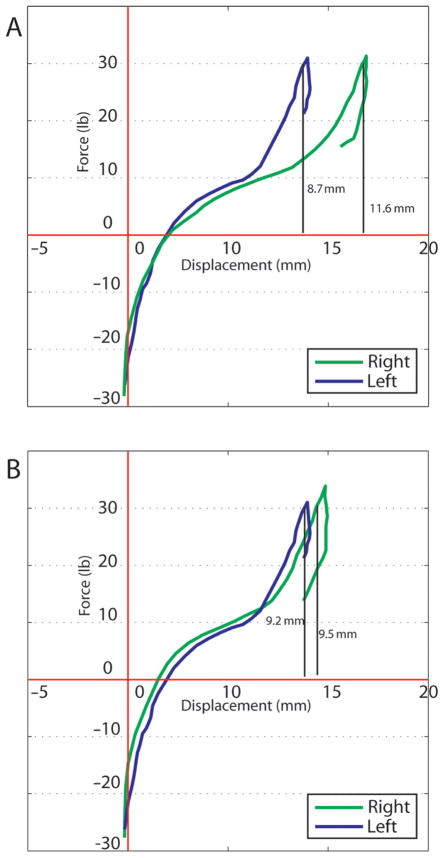
From 1558 female soccer and basketball players who were prospectively screened, 19 went on to tear their anterior cruciate ligaments. Four height- and mass-matched control subjects were selected from the uninjured screened athletes for comparison with each of the 19 injured subjects, making a total of 95 subjects (19 injured; 76 uninjured). Generalized joint-laxity tests and anterior-posterior tibiofemoral translation were quantified using the CompuKT knee arthrometer. A multivariable logistic regression model was constructed to determine predictors of anterior cruciate ligament injury status from recorded laxity measures.
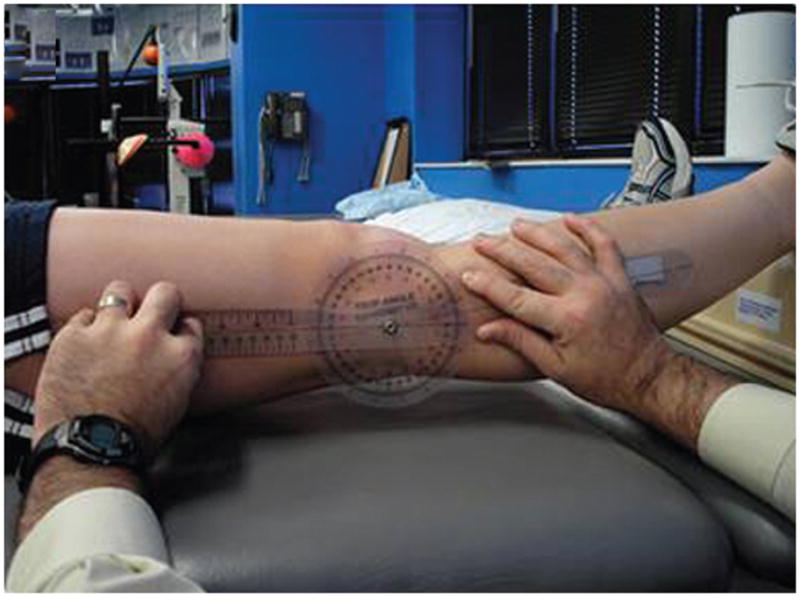
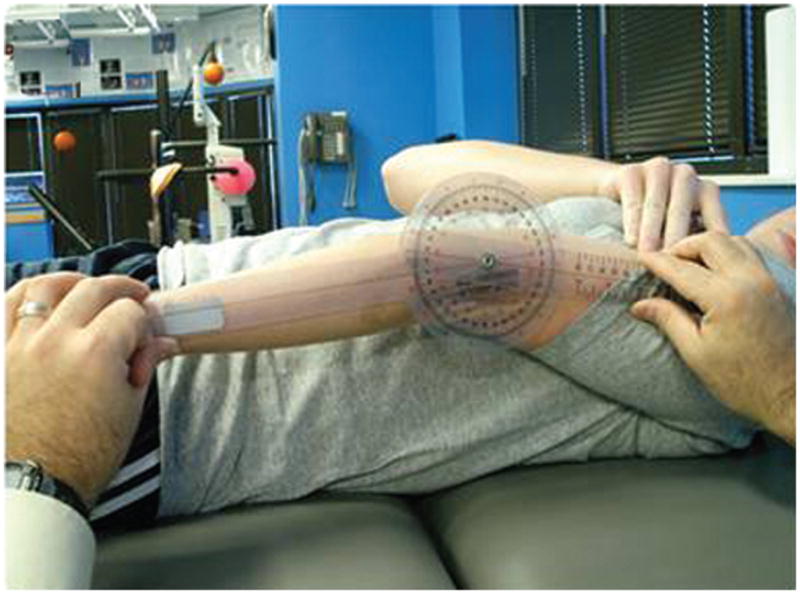
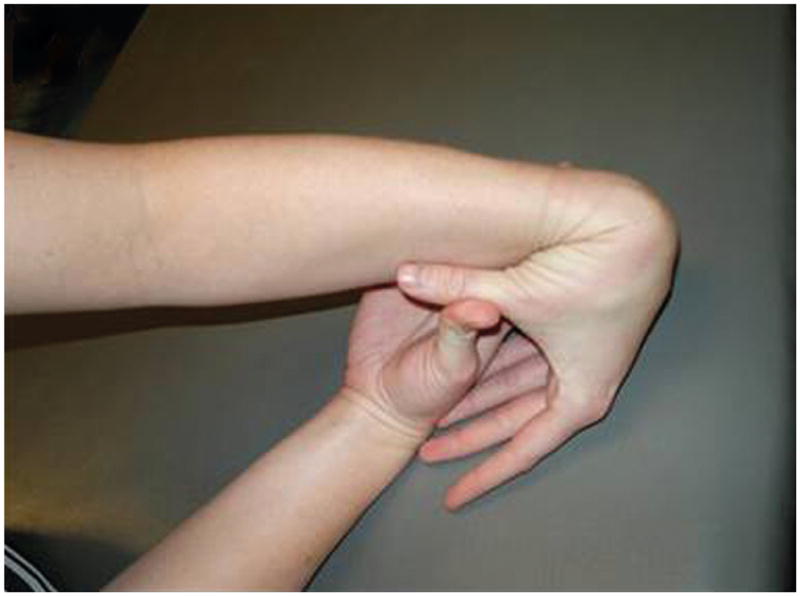
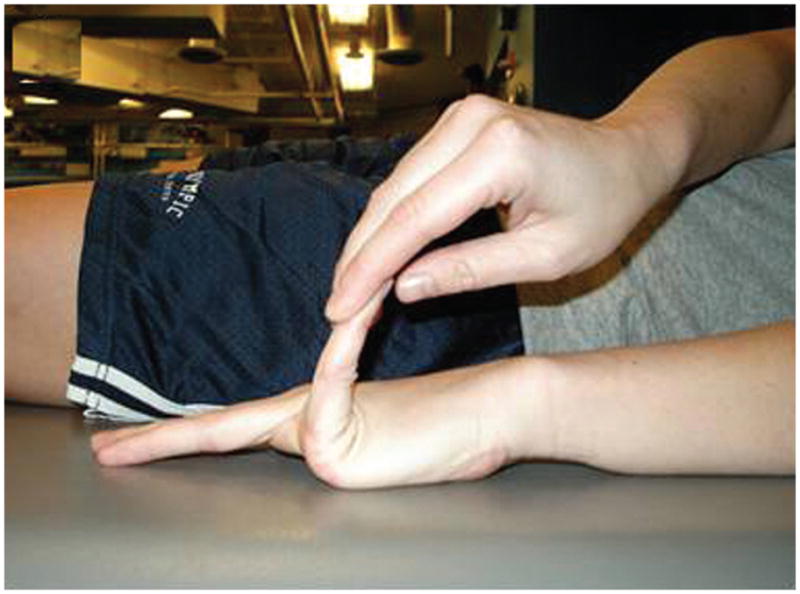
A multivariable logistic regression model (chi-square = 18.6; P = .002) used the independent variables laxity measures of knee hyperextension (P = .02), wrist and thumb to forearm opposition (P = .80), fifth-finger hyperextension > 90 degrees (P = .71), side-to-side differences in anterior-posterior tibiofemoral translation (P = .002), and prior knee injury (P = .22) to predict anterior cruciate ligament-injury status. The validated C statistic, or validated area under the receiver operating characteristic curve, was 0.72. For every 1.3-mm increase in side-to-side differences in anterior-posterior knee displacement, the odds of anterior cruciate ligament-injured status increased 4-fold (95% confidence interval, 1.68-9.69). A positive measure of knee hyperextension increased the odds of anterior cruciate ligament-injured status 5-fold (95% confidence interval, 1.24-18.44).
The current results indicate that increased knee-laxity measures may contribute to increased risk of anterior cruciate ligament injury. The methods to quantify knee joint laxity in this report may be used in conjunction with measures of neuromuscular control of the knee joint to identify high-risk female athletes with high accuracy. Once high-risk female athletes are identified, they may be targeted to the appropriate interventions to reduce injury risk.
参与高危运动的女性前交叉韧带损伤发生率比男性高4至6倍。
前瞻性地确定被动膝关节约束降低(关节松弛度增加)且膝关节松弛度左右差异较大的女运动员前交叉韧带损伤风险是否会增加。
病例对照研究;证据等级,3级。
在1558名接受前瞻性筛查的女子足球和篮球运动员中,有19人发生了前交叉韧带撕裂。从未受伤的筛查运动员中选取4名身高和体重匹配的对照受试者,与19名受伤受试者中的每一位进行比较,共95名受试者(19名受伤;76名未受伤)。使用CompuKT膝关节测径仪对全身关节松弛度测试和胫股关节前后移位进行量化。构建多变量逻辑回归模型,根据记录的松弛度测量值确定前交叉韧带损伤状态的预测因素。
一个多变量逻辑回归模型(卡方 = 18.6;P = .002)使用膝关节过伸的松弛度测量值(P = .02)、手腕和拇指与前臂的对合度(P = .80)、小指过伸>90度(P = .71)、胫股关节前后移位的左右差异(P = .002)和既往膝关节损伤(P = .22)作为自变量来预测前交叉韧带损伤状态。验证后的C统计量,即受试者工作特征曲线下的验证面积为0.72。膝关节前后移位的左右差异每增加1.3毫米,前交叉韧带损伤状态的几率增加4倍(95%置信区间,1.68 - 9.69)。膝关节过伸的阳性测量值使前交叉韧带损伤状态的几率增加5倍(95%置信区间,1.24 - 18.44)。
目前的结果表明,膝关节松弛度测量值增加可能会导致前交叉韧带损伤风险增加。本报告中量化膝关节松弛度的方法可与膝关节神经肌肉控制测量方法结合使用,以高精度识别高危女运动员。一旦识别出高危女运动员,就可以针对她们采取适当的干预措施以降低受伤风险。