Praskova Maria, Xia Fan, Avruch Joseph
Diabetes Unit and Medical Services and Department of Molecular Biology, Massachusetts General Hospital, Boston, Massachusetts 02114, USA.
Curr Biol. 2008 Mar 11;18(5):311-21. doi: 10.1016/j.cub.2008.02.006.
MST1 and MST2 are the mammalian Ste20-related protein kinases most closely related to Drosophila Hippo, a major regulator of cell proliferation and survival during development. Overexpression of MST1 or MST2 in mammalian cells is proapototic; however, little is known concerning the physiologic regulation of the endogenous MST1/MST2 kinases, their role in mammalian cell proliferation, or the identity of the MST1/MST2 substrates critical to proliferative regulation.
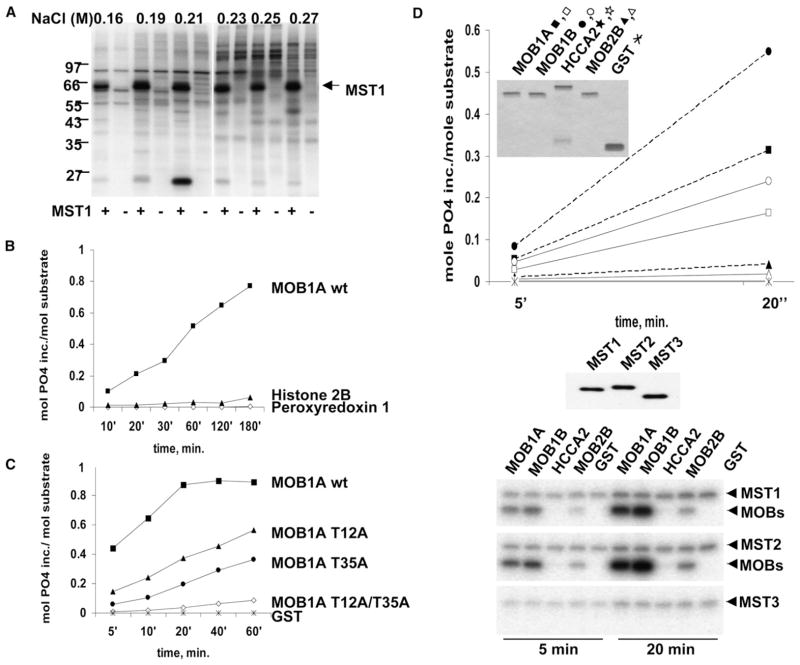
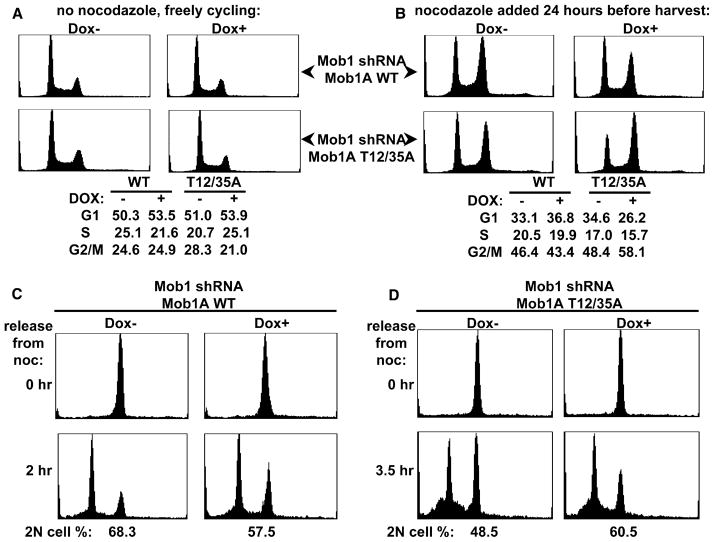
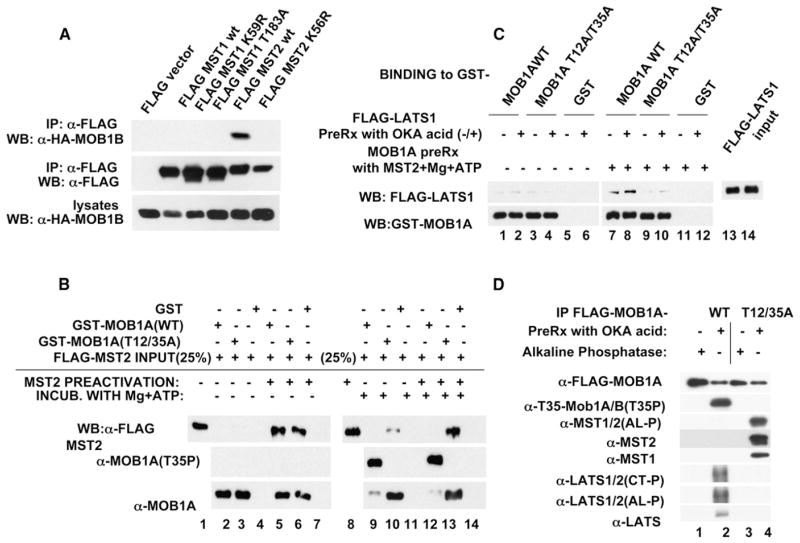
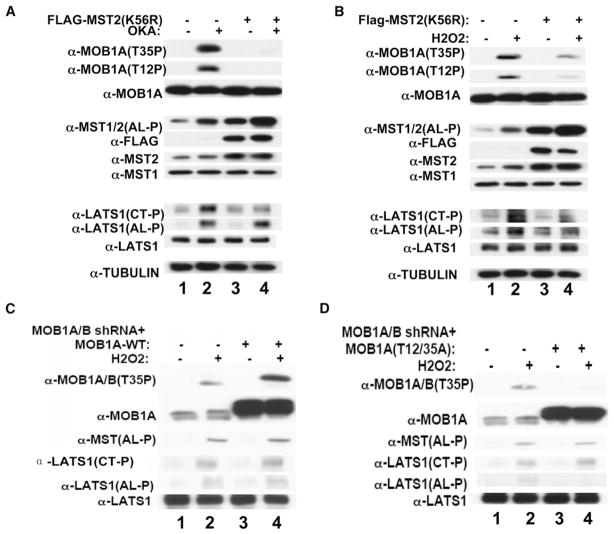
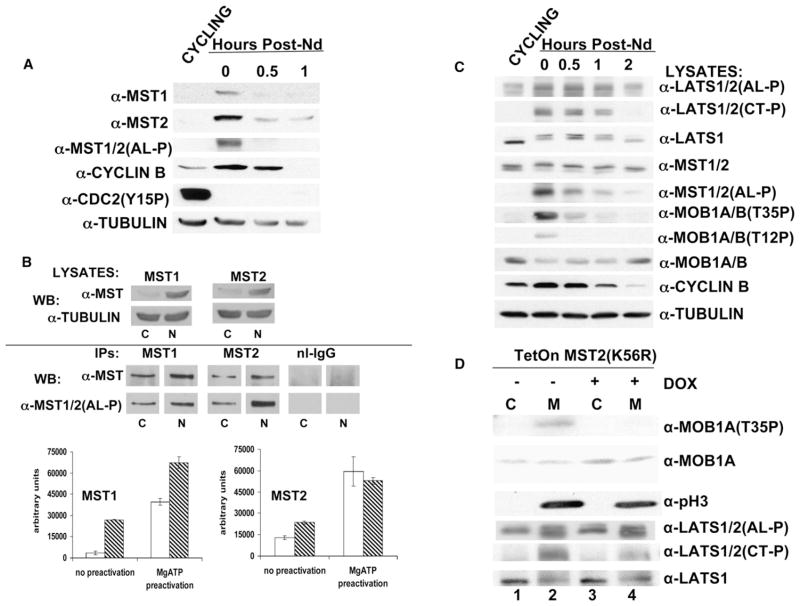
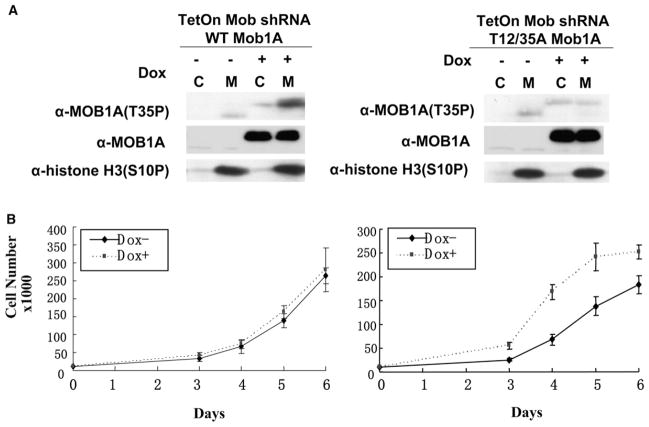
We show that MST1 and MST2 activity increases during mitosis, especially in nocodazole-arrested mitotic cells, where these kinases exhibit both an increase in both abundance and activation. MST1 and MST2 also can be activated nonphysiologically by okadaic acid or H2O2. The MOBKL1A and MOBKL1B polypeptides, homologs of the Drosophila MATS polypeptide, are identified as preferred MST1/MST2 substrates in vitro and are phosphorylated in cells in an MST1/MST2-dependent manner in mitosis and in response to okadaic acid or H2O2. MST1/MST2-catalyzed MOBKL1A/MOBKL1B phosphorylation alters the ability of MOBKL1A/MOBKL1B to bind and regulate downstream targets such as the NDR-family protein kinases. Thus, MOBKL1A/MOBKL1B phosphorylation in cells promotes MOBKL1A/MOBKL1B binding to the LATS1 kinase and enables H2O2-stimulated LATS1 activation loop phosphorylation. Most importantly, replacement of endogenous MOBKL1A/MOBKL1B by a nonphosphorylatable mutant is sufficient to accelerate cell proliferation substantially by speeding progression through G1/S as well as mitotic exit.
These results establish that MST1 and MST2 are activated in mitosis and catalyze the mitotic phosphorylation of MOBKL1A/MOBKL1B. MOBKL1A/MOBKL1B phosphorylation, in turn, is sufficient to inhibit proliferation through actions at several points in the cell cycle.
MST1和MST2是与果蝇Hippo最密切相关的哺乳动物Ste20相关蛋白激酶,果蝇Hippo是发育过程中细胞增殖和存活的主要调节因子。在哺乳动物细胞中过表达MST1或MST2具有促凋亡作用;然而,关于内源性MST1/MST2激酶的生理调节、它们在哺乳动物细胞增殖中的作用,或对增殖调节至关重要的MST1/MST2底物的身份,人们了解甚少。
我们发现MST1和MST2的活性在有丝分裂期间增加,特别是在诺考达唑阻滞的有丝分裂细胞中,这些激酶在丰度和活性上都有所增加。MST1和MST2也可以被冈田酸或H2O2非生理性激活。果蝇MATS多肽的同源物MOBKL1A和MOBKL1B多肽在体外被鉴定为首选的MST1/MST2底物,并在有丝分裂期间以及对冈田酸或H2O2的反应中,以MST1/MST2依赖的方式在细胞中被磷酸化。MST1/MST2催化的MOBKL1A/MOBKL1B磷酸化改变了MOBKL1A/MOBKL1B结合和调节下游靶点(如NDR家族蛋白激酶)的能力。因此,细胞中的MOBKL1A/MOBKL1B磷酸化促进了MOBKL1A/MOBKL1B与LATS1激酶的结合,并使H2O2刺激的LATS1激活环磷酸化。最重要的是,用不可磷酸化的突变体替代内源性MOBKL1A/MOBKL1B足以通过加速G1/S期以及有丝分裂退出进程来显著加速细胞增殖。
这些结果表明,MST1和MST2在有丝分裂中被激活,并催化MOBKL1A/MOBKL1B的有丝分裂磷酸化。反过来,MOBKL1A/MOBKL1B磷酸化足以通过在细胞周期的多个点发挥作用来抑制增殖。