Frankild Sune, de Boer Rob J, Lund Ole, Nielsen Morten, Kesmir Can
Center for Biological Sequence Analysis, Technical University of Denmark, Lyngby, Denmark.
PLoS One. 2008 Mar 19;3(3):e1831. doi: 10.1371/journal.pone.0001831.
Cytotoxic T cell (CTL) cross-reactivity is believed to play a pivotal role in generating immune responses but the extent and mechanisms of CTL cross-reactivity remain largely unknown. Several studies suggest that CTL clones can recognize highly diverse peptides, some sharing no obvious sequence identity. The emerging realization in the field is that T cell receptors (TcR) recognize multiple distinct ligands.
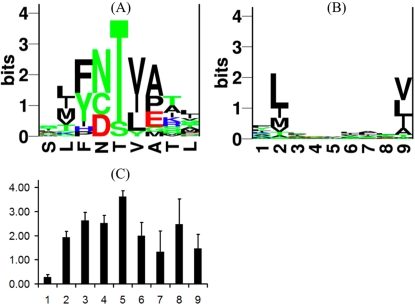
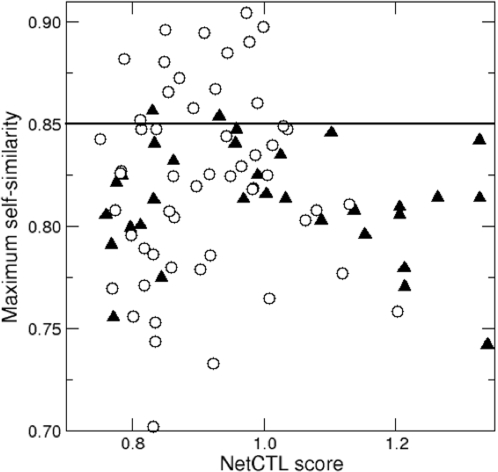
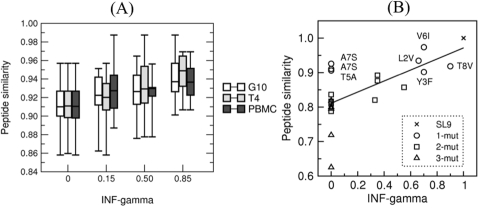
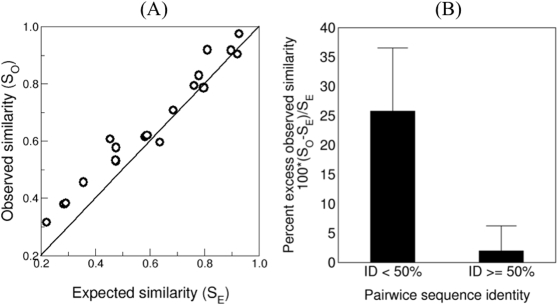
First, we analyzed peptide scans of the HIV epitope SLFNTVATL (SFL9) and found that TCR specificity is position dependent and that biochemically similar amino acid substitutions do not drastically affect recognition. Inspired by this, we developed a general model of TCR peptide recognition using amino acid similarity matrices and found that such a model was able to predict the cross-reactivity of a diverse set of CTL epitopes. With this model, we were able to demonstrate that seemingly distinct T cell epitopes, i.e., ones with low sequence identity, are in fact more biochemically similar than expected. Additionally, an analysis of HIV immunogenicity data with our model showed that CTLs have the tendency to respond mostly to peptides that do not resemble self-antigens.
T cell cross-reactivity can thus, to an extent greater than earlier appreciated, be explained by amino acid similarity. The results presented in this paper will help resolving some of the long-lasting discussions in the field of T cell cross-reactivity.
细胞毒性T细胞(CTL)交叉反应性被认为在产生免疫反应中起关键作用,但CTL交叉反应性的程度和机制仍 largely未知。一些研究表明,CTL克隆可以识别高度多样化的肽,其中一些没有明显的序列同一性。该领域新出现的认识是,T细胞受体(TcR)识别多种不同的配体。
首先,我们分析了HIV表位SLFNTVATL(SFL9)的肽扫描结果,发现TCR特异性是位置依赖性的,并且生化相似的氨基酸取代不会大幅影响识别。受此启发,我们使用氨基酸相似性矩阵开发了一种TCR肽识别的通用模型,发现这样的模型能够预测多种CTL表位的交叉反应性。利用这个模型,我们能够证明看似不同的T细胞表位,即序列同一性低的表位,实际上在生化上比预期更相似。此外,用我们的模型对HIV免疫原性数据进行的分析表明,CTL倾向于主要对与自身抗原不同的肽作出反应。
因此,T细胞交叉反应性在一定程度上可以用氨基酸相似性来解释,其程度比之前认为的更大。本文给出的结果将有助于解决T细胞交叉反应性领域一些长期存在的争论。