Rudolf Virchow Center, DFG Research Center for Experimental Biomedicine and Department of Dermatology, Julius-Maximilians-University Würzburg, Germany.
Ther Clin Risk Manag. 2005 Sep;1(3):201-8.
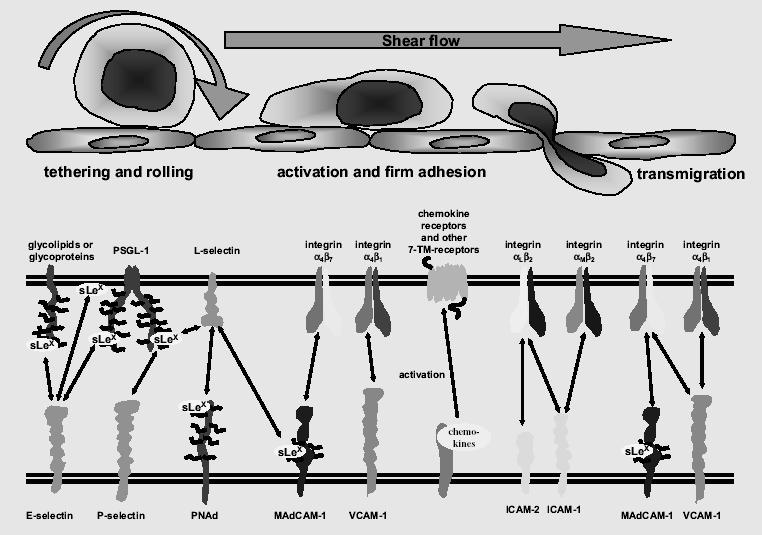
Selectins mediate tethering and rolling of leukocytes to the vascular endothelium, the first adhesive step in the recruitment of immune cells to inflamed tissues. Thus, selectins play a key role in the pathogenesis of common inflammatory skin disorders such as atopic dermatitis or psoriasis. As a consequence of their key functions, selectins have received much attention as potential target structures for new therapies. Indeed, a number of agents including small-molecule as well as peptide compounds interfering with selectin functions have been developed to treat inflammatory disorders. However, many of the selectin-directed compounds have not held up to the high expectations, in some cases due to overlapping and mutually compensating functions of selectins or suboptimal pharmacokinetic properties of the compounds, while other agents appear to be more promising candidates and have already entered clinical trials. Selectively targeting the functions of one or several selectins involved in the cascade of leukocyte recruitment promises exciting new therapeutic options, but, at the same time, bears considerable imponderables, which will be discussed in this review article.
选择素介导白细胞与血管内皮的黏附和滚动,这是免疫细胞募集到炎症组织中的第一个黏附步骤。因此,选择素在特应性皮炎或银屑病等常见炎症性皮肤疾病的发病机制中发挥着关键作用。由于它们的关键功能,选择素作为新疗法的潜在靶标结构受到了广泛关注。事实上,已经开发出许多包括小分子和肽化合物在内的药物来干扰选择素的功能,以治疗炎症性疾病。然而,许多针对选择素的化合物并没有达到预期的效果,在某些情况下,这是由于选择素的功能重叠和相互补偿,或者化合物的药代动力学特性不理想所致,而其他一些药物则显示出更有前途的候选药物,并已进入临床试验。选择性地针对参与白细胞募集级联反应的一种或几种选择素的功能有望提供令人兴奋的新治疗选择,但同时也存在相当多的未知数,本文将对此进行讨论。