Silva Mariana, Videira Paula A, Sackstein Robert
Department of Dermatology, Harvard Skin Disease Research Center, Brigham and Women's Hospital, Harvard Medical School, Boston, MA, United States.
Program of Excellence in Glycosciences, Harvard Medical School, Boston, MA, United States.
Front Immunol. 2018 Jan 19;8:1878. doi: 10.3389/fimmu.2017.01878. eCollection 2017.
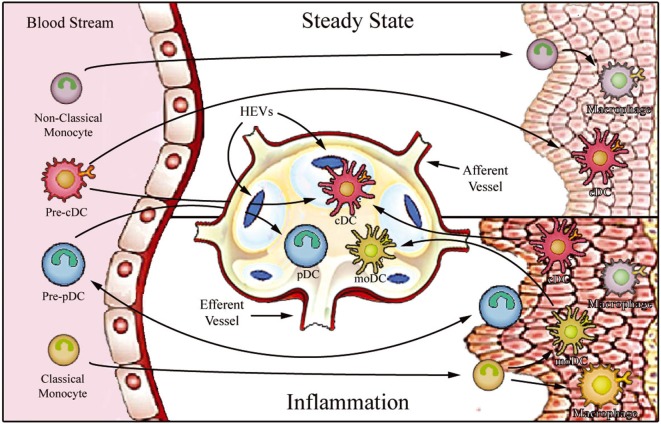
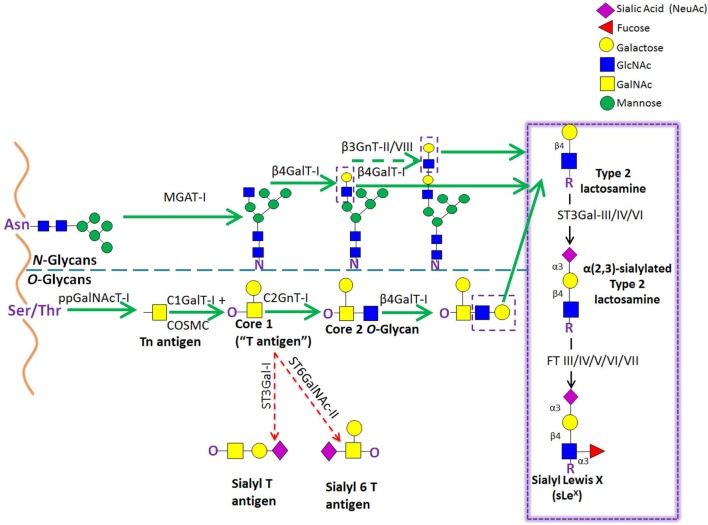
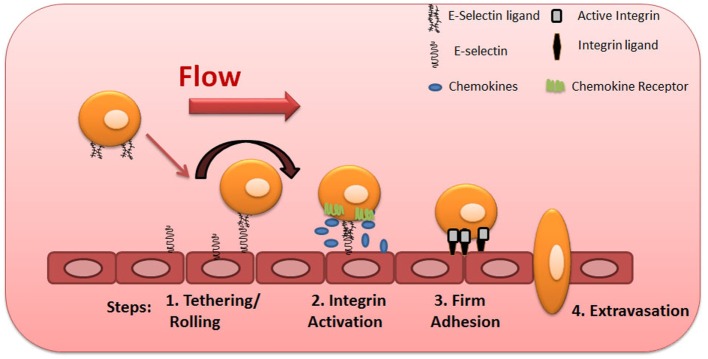
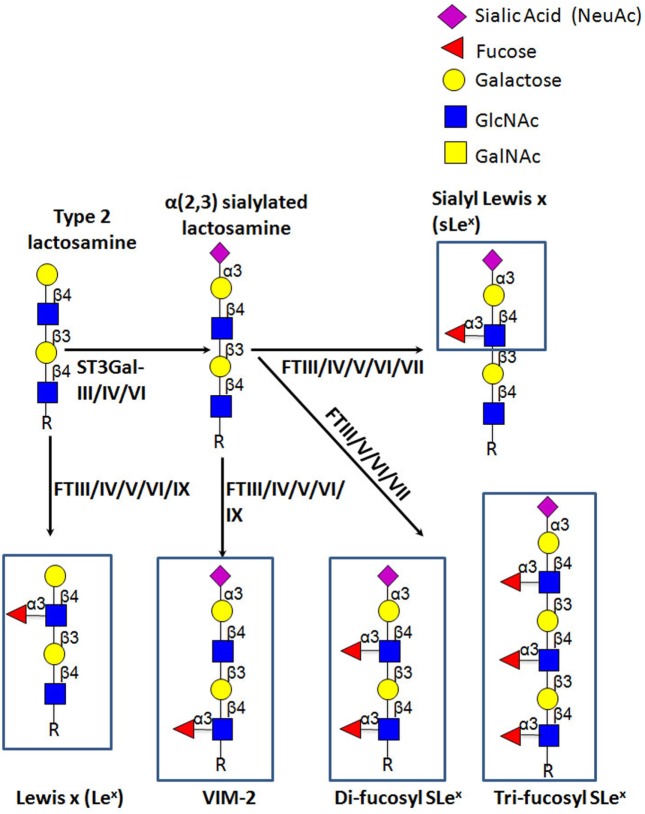
The mononuclear phagocyte system comprises a network of circulating monocytes and dendritic cells (DCs), and "histiocytes" (tissue-resident macrophages and DCs) that are derived in part from blood-borne monocytes and DCs. The capacity of circulating monocytes and DCs to function as the body's first-line defense against offending pathogens greatly depends on their ability to egress the bloodstream and infiltrate inflammatory sites. Extravasation involves a sequence of coordinated molecular events and is initiated by E-selectin-mediated deceleration of the circulating leukocytes onto microvascular endothelial cells of the target tissue. E-selectin is inducibly expressed by cytokines (tumor necrosis factor-α and IL-1β) on inflamed endothelium, and binds to sialofucosylated glycan determinants displayed on protein and lipid scaffolds of blood cells. Efficient extravasation of circulating monocytes and DCs to inflamed tissues is crucial in facilitating an effective immune response, but also fuels the immunopathology of several inflammatory disorders. Thus, insights into the structural and functional properties of the E-selectin ligands expressed by different monocyte and DC populations is key to understanding the biology of protective immunity and the pathobiology of several acute and chronic inflammatory diseases. This review will address the role of E-selectin in recruitment of human circulating monocytes and DCs to sites of tissue injury/inflammation, the structural biology of the E-selectin ligands expressed by these cells, and the molecular effectors that shape E-selectin ligand cell-specific display. In addition, therapeutic approaches targeting E-selectin receptor/ligand interactions, which can be used to boost host defense or, conversely, to dampen pathological inflammatory conditions, will also be discussed.
单核吞噬细胞系统由循环单核细胞和树突状细胞(DCs)以及“组织细胞”(组织驻留巨噬细胞和DCs)组成,这些细胞部分来源于血源性单核细胞和DCs。循环单核细胞和DCs作为机体抵御入侵病原体的一线防御的能力,在很大程度上取决于它们离开血流并浸润炎症部位的能力。外渗涉及一系列协调的分子事件,由E-选择素介导的循环白细胞在靶组织微血管内皮细胞上的减速引发。E-选择素由炎症内皮细胞上的细胞因子(肿瘤坏死因子-α和IL-1β)诱导表达,并与血细胞蛋白质和脂质支架上展示的唾液酸化岩藻糖基化聚糖决定簇结合。循环单核细胞和DCs向炎症组织的有效外渗对于促进有效的免疫反应至关重要,但也会加剧几种炎症性疾病的免疫病理学。因此,深入了解不同单核细胞和DC群体表达的E-选择素配体的结构和功能特性,是理解保护性免疫生物学以及几种急性和慢性炎症性疾病病理生物学的关键。本综述将探讨E-选择素在将人类循环单核细胞和DCs募集到组织损伤/炎症部位中的作用、这些细胞表达的E-选择素配体的结构生物学,以及塑造E-选择素配体细胞特异性展示的分子效应器。此外,还将讨论针对E-选择素受体/配体相互作用的治疗方法,这些方法可用于增强宿主防御,或者相反,减轻病理性炎症状态。