Appel Nicole, Zayas Margarita, Miller Sven, Krijnse-Locker Jacomine, Schaller Torsten, Friebe Peter, Kallis Stephanie, Engel Ulrike, Bartenschlager Ralf
Department of Molecular Virology, University of Heidelberg, Heidelberg, Germany.
PLoS Pathog. 2008 Mar 28;4(3):e1000035. doi: 10.1371/journal.ppat.1000035.
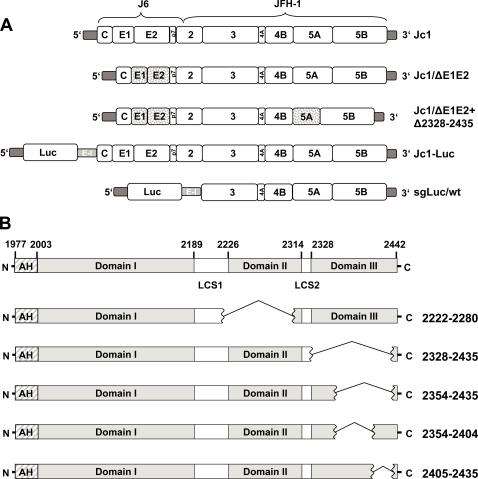
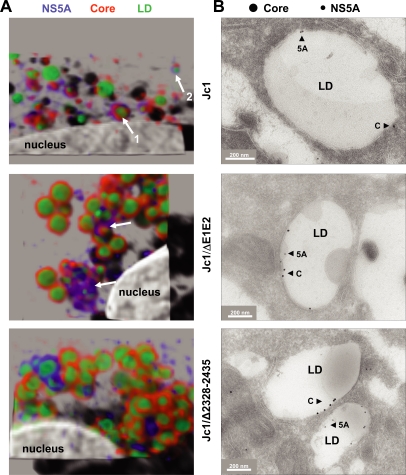
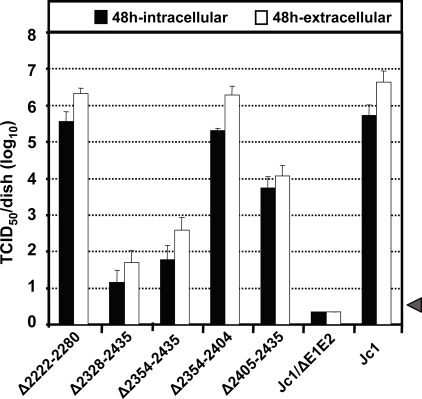
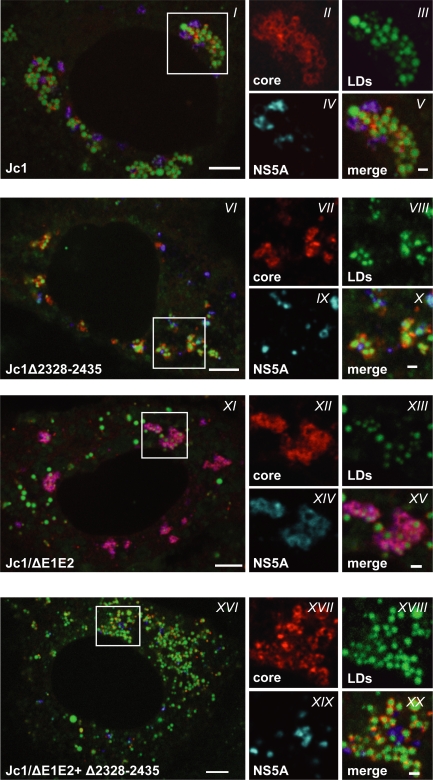
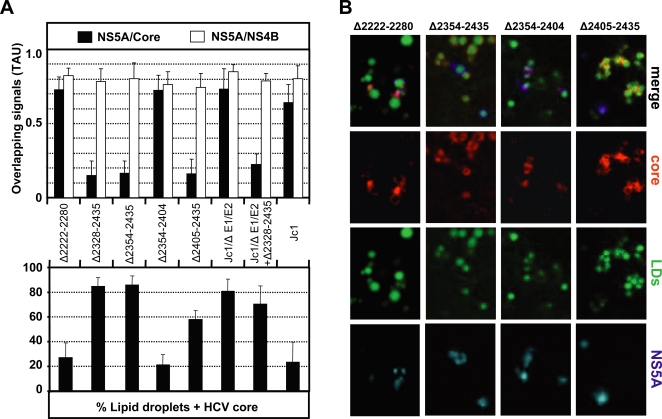
Persistent infection with the hepatitis C virus (HCV) is a major risk factor for the development of liver cirrhosis and hepatocellular carcinoma. With an estimated about 3% of the world population infected with this virus, the lack of a prophylactic vaccine and a selective therapy, chronic hepatitis C currently is a main indication for liver transplantation. The establishment of cell-based replication and virus production systems has led to first insights into the functions of HCV proteins. However, the role of nonstructural protein 5A (NS5A) in the viral replication cycle is so far not known. NS5A is a membrane-associated RNA-binding protein assumed to be involved in HCV RNA replication. Its numerous interactions with the host cell suggest that NS5A is also an important determinant for pathogenesis and persistence. In this study we show that NS5A is a key factor for the assembly of infectious HCV particles. We specifically identify the C-terminal domain III as the primary determinant in NS5A for particle formation. We show that both core and NS5A colocalize on the surface of lipid droplets, a proposed site for HCV particle assembly. Deletions in domain III of NS5A disrupting this colocalization abrogate infectious particle formation and lead to an enhanced accumulation of core protein on the surface of lipid droplets. Finally, we show that mutations in NS5A causing an assembly defect can be rescued by trans-complementation. These data provide novel insights into the production of infectious HCV and identify NS5A as a major determinant for HCV assembly. Since domain III of NS5A is one of the most variable regions in the HCV genome, the results suggest that viral isolates may differ in their level of virion production and thus in their level of fitness and pathogenesis.
丙型肝炎病毒(HCV)的持续感染是肝硬化和肝细胞癌发生的主要危险因素。据估计,全球约3%的人口感染了这种病毒,由于缺乏预防性疫苗和选择性治疗方法,慢性丙型肝炎目前是肝移植的主要适应症。基于细胞的复制和病毒生产系统的建立,使人们对HCV蛋白的功能有了初步认识。然而,非结构蛋白5A(NS5A)在病毒复制周期中的作用至今仍不清楚。NS5A是一种与膜相关的RNA结合蛋白,被认为参与HCV RNA复制。它与宿主细胞的众多相互作用表明,NS5A也是发病机制和持续性的重要决定因素。在本研究中,我们表明NS5A是传染性HCV颗粒组装的关键因素。我们特别确定C末端结构域III是NS5A中颗粒形成的主要决定因素。我们发现核心蛋白和NS5A都共定位于脂滴表面,脂滴被认为是HCV颗粒组装的位点。NS5A结构域III中的缺失破坏了这种共定位,消除了传染性颗粒的形成,并导致核心蛋白在脂滴表面的积累增加。最后,我们表明,导致组装缺陷的NS5A突变可以通过反式互补得到挽救。这些数据为传染性HCV的产生提供了新的见解,并确定NS5A是HCV组装的主要决定因素。由于NS5A的结构域III是HCV基因组中最可变的区域之一,结果表明病毒分离株在病毒粒子产生水平上可能存在差异,因此在其适应性和发病机制水平上也可能存在差异。