White Kevin T, Easterling Caryn, Roberts Niles, Wertsch Jacqueline, Shaker Reza
Department of Physical Medicine and Rehabilitation (PMR), Medical College of Wisconsin, Milwaukee, WI, 53226, USA.
Dysphagia. 2008 Dec;23(4):385-91. doi: 10.1007/s00455-008-9155-2. Epub 2008 Mar 28.
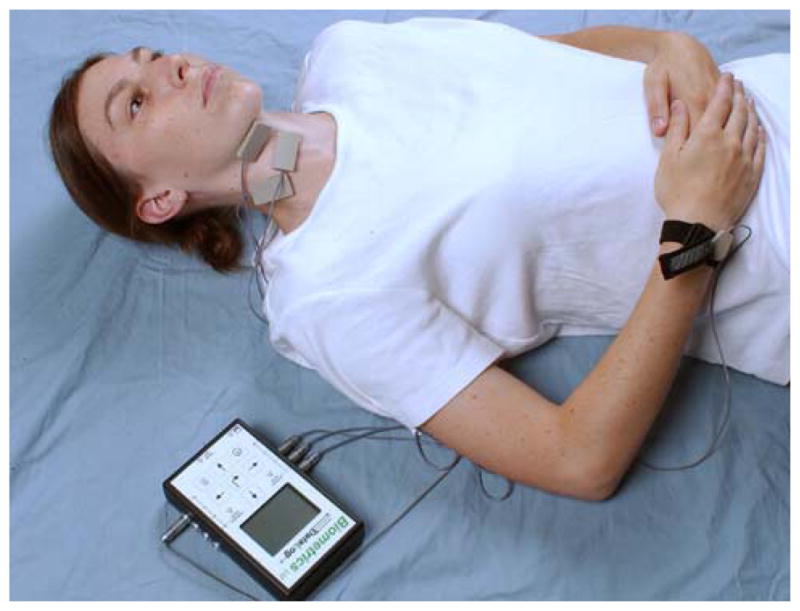
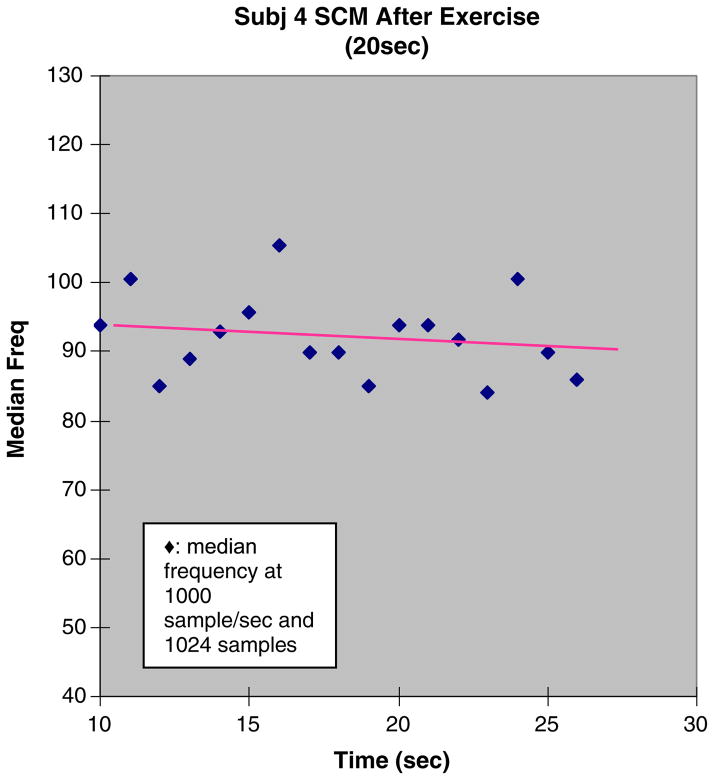
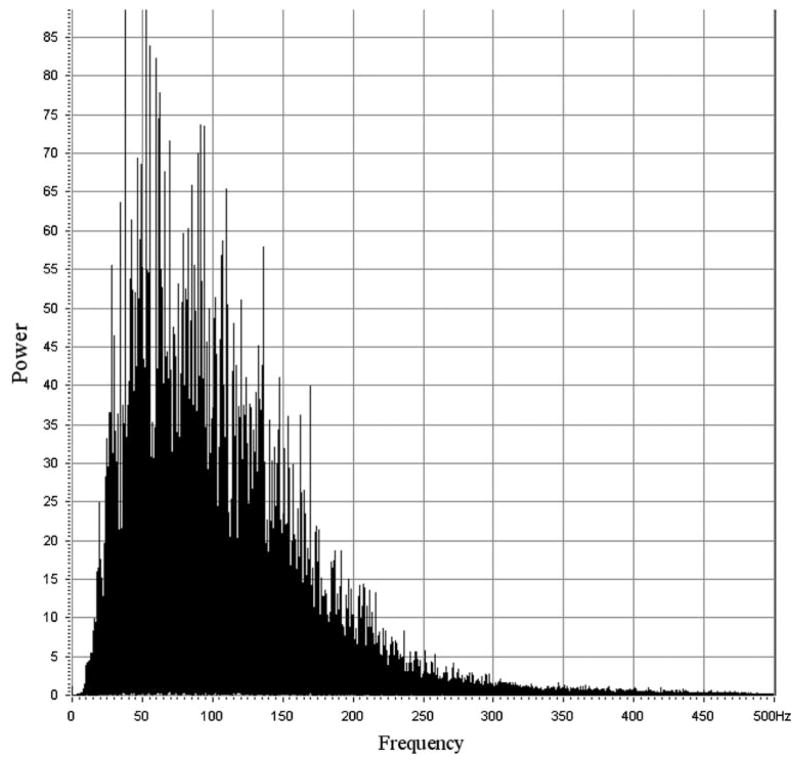
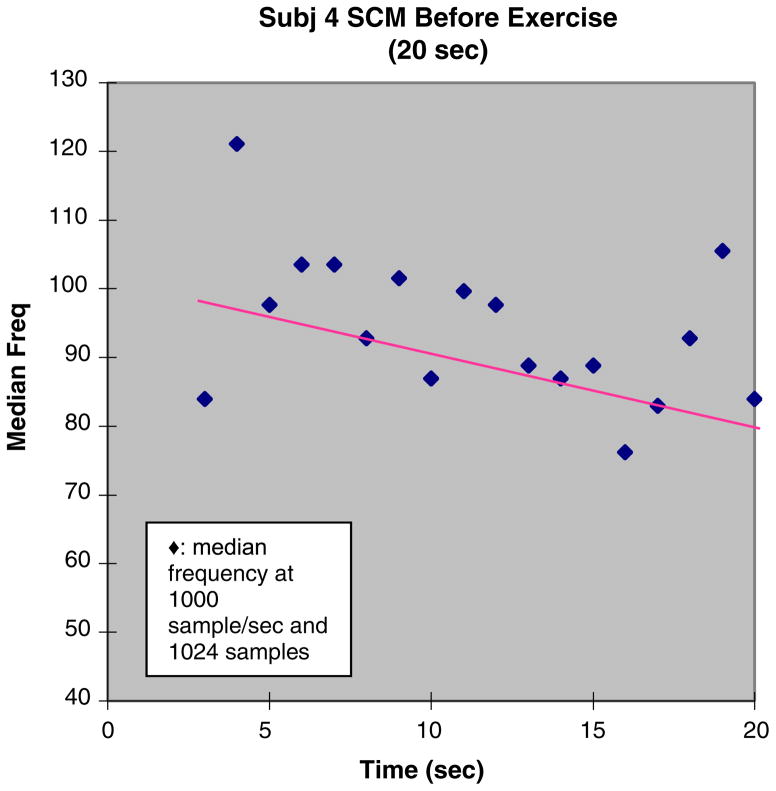
Recent studies suggest that the Shaker exercise induces fatigue in the upper esophageal sphincter (UES) opening muscles and sternocleidomastoid (SCM), with the SCMs fatiguing earliest. The aim of this study was to measure fatigue induced by the isometric portion of the Shaker exercise by measuring the rate of change in the median frequency (MF rate) of the power spectral density (PSD) function, which is interpreted as proportional to the rate of fatigue, from surface electromyography (EMG) of suprahyoid (SHM), infrahyoid (IHM), and SCM. EMG data compared fatigue-related changes from 20-, 40-, and 60-s isometric hold durations of the Shaker exercise. We found that fatigue-related changes were manifested during the 20-s hold. The findings confirm that the SCM fatigues initially and as fast as or faster than the SHM and IHM. In addition, upon completion of the exercise protocol, the SCM had a decreased MF rate, implying improved fatigue resistance, while the SHM and IHM showed increased MF rates, implying that these muscles increased their fatiguing effort. We conclude that the Shaker exercise initially leads to increased fatigue resistance of the SCM, after which the exercise loads the less fatigue-resistant SHM and IHM, potentiating the therapeutic effect of the Shaker exercise regimen with continued exercise performance.
近期研究表明,摇头运动可致使食管上括约肌(UES)开放肌及胸锁乳突肌(SCM)疲劳,其中胸锁乳突肌最早出现疲劳。本研究的目的是通过测量舌骨上肌(SHM)、舌骨下肌(IHM)和胸锁乳突肌表面肌电图(EMG)的功率谱密度(PSD)函数的中位频率变化率(MF率)来测定摇头运动等长部分所诱发的疲劳,该变化率被解读为与疲劳率成正比。肌电图数据比较了摇头运动20秒、40秒和60秒等长保持时间内与疲劳相关的变化。我们发现,在20秒保持期间出现了与疲劳相关的变化。研究结果证实,胸锁乳突肌最初就会疲劳,且疲劳速度与舌骨上肌和舌骨下肌一样快或更快。此外,在完成运动方案后,胸锁乳突肌的MF率降低,这意味着其抗疲劳能力提高,而舌骨上肌和舌骨下肌的MF率升高,这意味着这些肌肉增加了疲劳努力。我们得出结论,摇头运动最初会导致胸锁乳突肌的抗疲劳能力增强,之后该运动会使抗疲劳能力较弱的舌骨上肌和舌骨下肌承受负荷,随着运动的持续进行,增强了摇头运动疗法的治疗效果。