Zhang Hongtao, Zhao Qian, Bhattacharya Shibani, Waheed Abdul A, Tong Xiaohe, Hong Anita, Heck Susanne, Curreli Francesca, Goger Michael, Cowburn David, Freed Eric O, Debnath Asim K
Laboratory of Molecular Modeling and Drug Design, Lindsley F. Kimball Research Institute of the New York Blood Center, 310 E 67th Street, New York, NY 10021, USA.
J Mol Biol. 2008 May 2;378(3):565-80. doi: 10.1016/j.jmb.2008.02.066. Epub 2008 Mar 6.
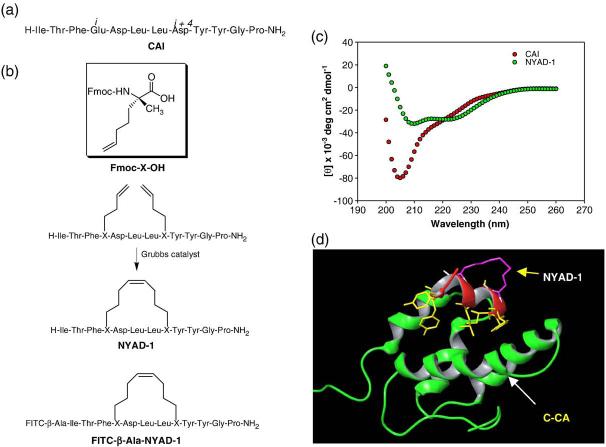
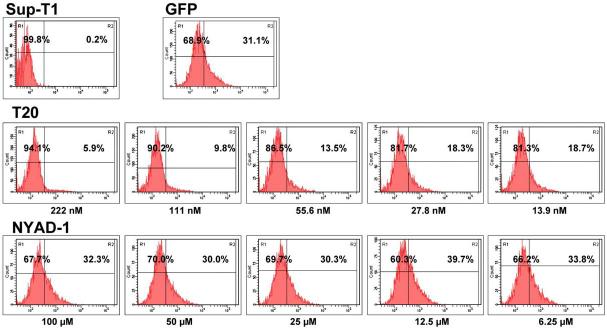
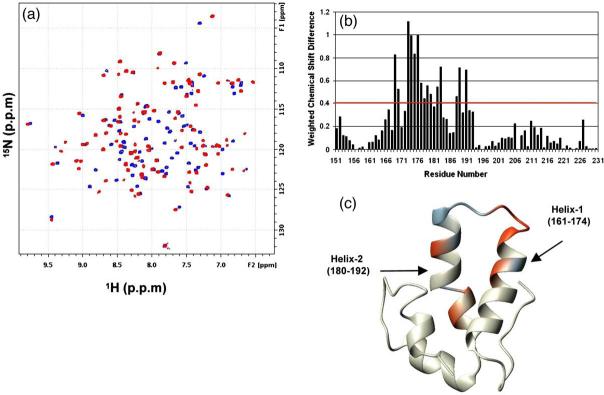
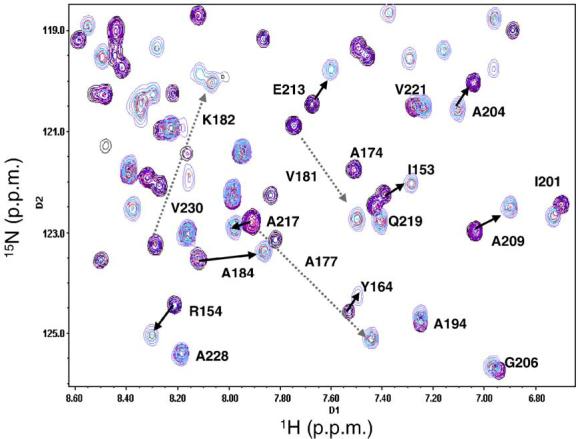
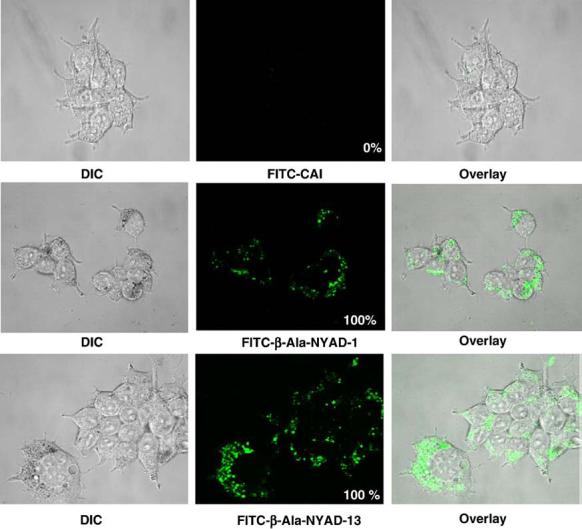
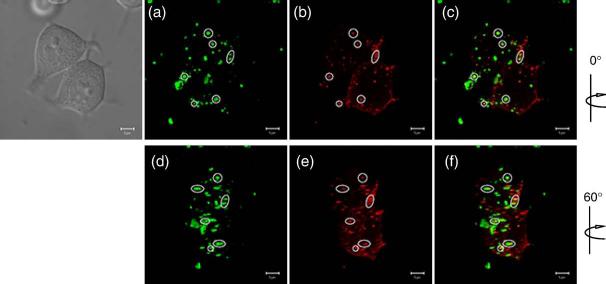
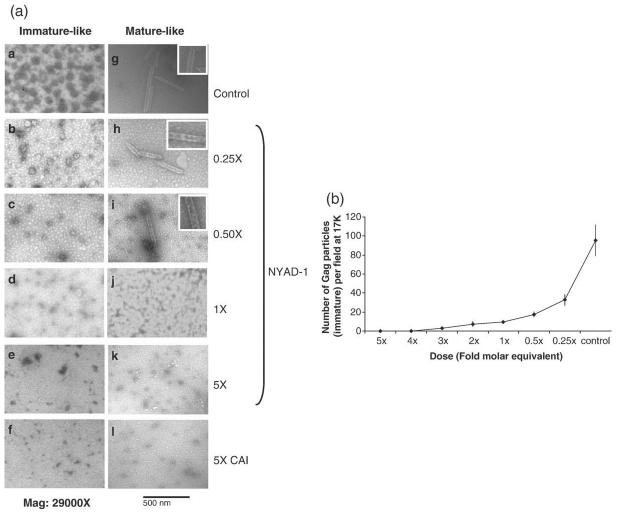
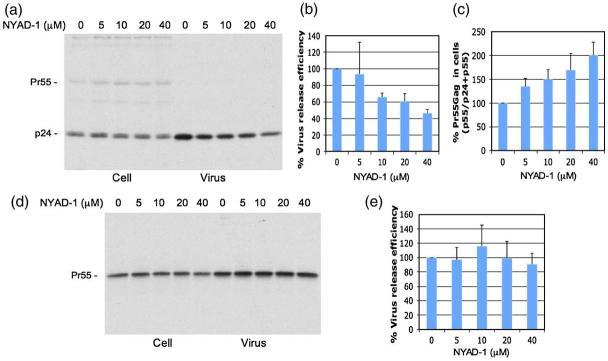
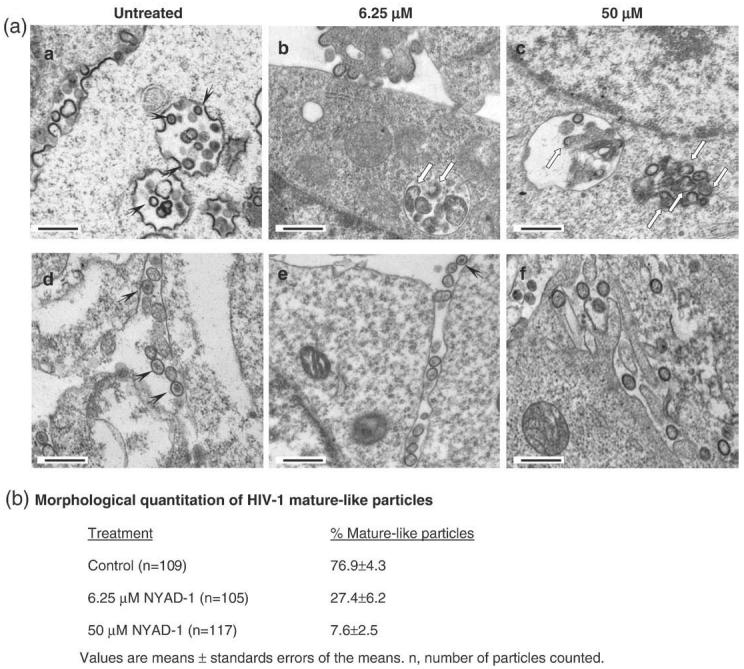
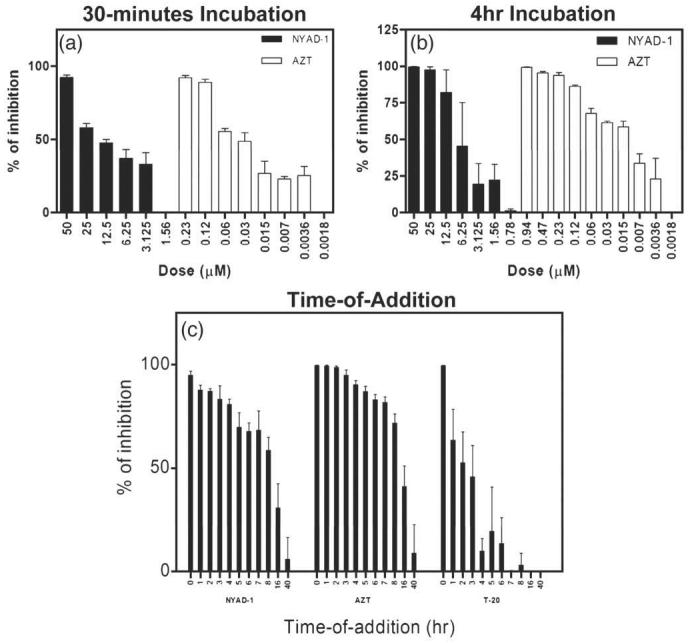
The capsid domain of the human immunodeficiency virus type 1 (HIV-1) Gag polyprotein is a critical determinant of virus assembly, and is therefore a potential target for developing drugs for AIDS therapy. Recently, a 12-mer alpha-helical peptide (CAI) was reported to disrupt immature- and mature-like capsid particle assembly in vitro; however, it failed to inhibit HIV-1 in cell culture due to its inability to penetrate cells. The same group reported the X-ray crystal structure of CAI in complex with the C-terminal domain of capsid (C-CA) at a resolution of 1.7 A. Using this structural information, we have utilized a structure-based rational design approach to stabilize the alpha-helical structure of CAI and convert it to a cell-penetrating peptide (CPP). The modified peptide (NYAD-1) showed enhanced alpha-helicity. Experiments with laser scanning confocal microscopy indicated that NYAD-1 penetrated cells and colocalized with the Gag polyprotein during its trafficking to the plasma membrane where virus assembly takes place. NYAD-1 disrupted the assembly of both immature- and mature-like virus particles in cell-free and cell-based in vitro systems. NMR chemical shift perturbation analysis mapped the binding site of NYAD-1 to residues 169-191 of the C-terminal domain of HIV-1 capsid encompassing the hydrophobic cavity and the critical dimerization domain with an improved binding affinity over CAI. Furthermore, experimental data indicate that NYAD-1 most likely targets capsid at a post-entry stage. Most significantly, NYAD-1 inhibited a large panel of HIV-1 isolates in cell culture at low micromolar potency. Our study demonstrates how a structure-based rational design strategy can be used to convert a cell-impermeable peptide to a cell-permeable peptide that displays activity in cell-based assays without compromising its mechanism of action. This proof-of-concept cell-penetrating peptide may aid validation of capsid as an anti-HIV-1 drug target and may help in designing peptidomimetics and small molecule drugs targeted to this protein.
人类免疫缺陷病毒1型(HIV-1)Gag多聚蛋白的衣壳结构域是病毒组装的关键决定因素,因此是开发艾滋病治疗药物的潜在靶点。最近,据报道一种12聚体α-螺旋肽(CAI)在体外可破坏未成熟和成熟样衣壳颗粒的组装;然而,由于其无法穿透细胞,在细胞培养中未能抑制HIV-1。同一研究小组报道了CAI与衣壳C末端结构域(C-CA)复合物的X射线晶体结构,分辨率为1.7 Å。利用这一结构信息,我们采用基于结构的合理设计方法来稳定CAI的α-螺旋结构,并将其转化为细胞穿透肽(CPP)。修饰后的肽(NYAD-1)显示出增强的α-螺旋性。激光扫描共聚焦显微镜实验表明,NYAD-1可穿透细胞,并在其转运至发生病毒组装的质膜过程中与Gag多聚蛋白共定位。NYAD-1在无细胞和基于细胞的体外系统中破坏了未成熟和成熟样病毒颗粒的组装。核磁共振化学位移扰动分析将NYAD-1的结合位点定位到HIV-1衣壳C末端结构域的169-191位残基,该区域包含疏水腔和关键的二聚化结构域,与CAI相比具有更高的结合亲和力。此外,实验数据表明NYAD-1最有可能在病毒进入后的阶段靶向衣壳。最重要的是,NYAD-1在低微摩尔浓度下可抑制细胞培养中的大量HIV-1分离株。我们的研究证明了基于结构的合理设计策略可如何用于将细胞不可渗透的肽转化为细胞可渗透的肽,该肽在基于细胞的测定中显示活性而不损害其作用机制。这种概念验证性的细胞穿透肽可能有助于验证衣壳作为抗HIV-1药物靶点,并可能有助于设计针对该蛋白的肽模拟物和小分子药物。