Kessler Ronald C, Heeringa Steven, Lakoma Matthew D, Petukhova Maria, Rupp Agnes E, Schoenbaum Michael, Wang Philip S, Zaslavsky Alan M
Department of Health Care Policy, Harvard Medical School, 180 Longwood Ave., Boston, MA 02115, USA.
Am J Psychiatry. 2008 Jun;165(6):703-11. doi: 10.1176/appi.ajp.2008.08010126. Epub 2008 May 7.
The purpose of this report was to update previous estimates of the association between mental disorders and earnings. Current estimates for 2002 are based on data from the National Comorbidity Survey Replication (NCS-R).
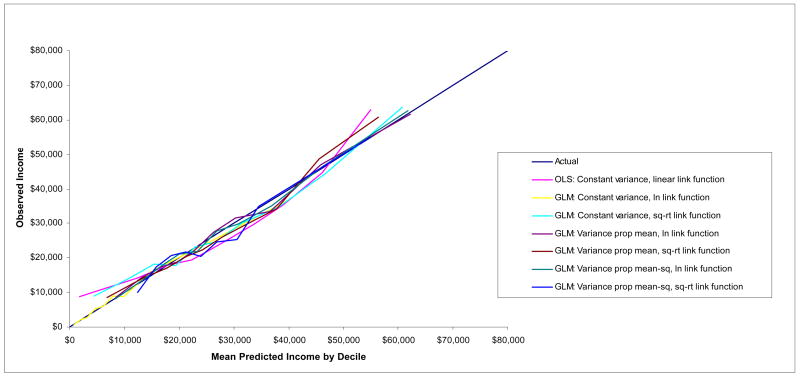
The NCS-R is a nationally representative survey of the U.S. household population that was administered from 2001 to 2003. Following the same basic approach as prior studies, with some modifications to improve model fitting, the authors predicted personal earnings in the 12 months before interview from information about 12-month and lifetime DSM-IV mental disorders among respondents ages 18-64, controlling for sociodemographic variables and substance use disorders. The authors used conventional demographic rate standardization methods to distinguish predictive effects of mental disorders on amount earned by persons with earnings from predictive effects on probability of having any earnings.
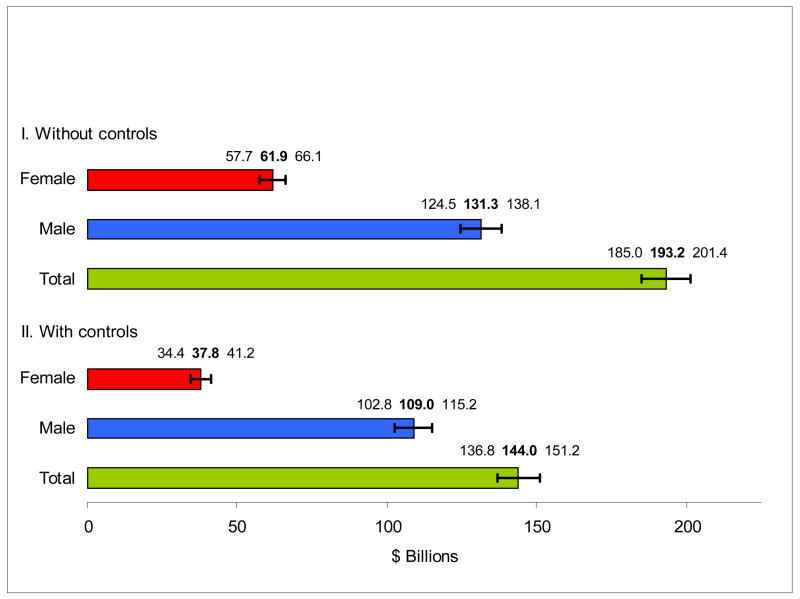
A DSM-IV serious mental illness in the preceding 12 months significantly predicted reduced earnings. Other 12-month and lifetime DSM-IV/CIDI mental disorders did not. Respondents with serious mental illness had 12-month earnings averaging $16,306 less than other respondents with the same values for control variables ($26,435 among men, $9,302 among women), for a societal-level total of $193.2 billion. Of this total, 75.4% was due to reduced earnings among mentally ill persons with any earnings (79.6% men, 69.6% women). The remaining 24.6% was due to reduced probability of having any earnings.
These results add to a growing body of evidence that mental disorders are associated with substantial societal-level impairments that should be taken into consideration when making decisions about the allocation of treatment and research resources.
本报告旨在更新先前对精神障碍与收入之间关联的估计。2002年的当前估计基于全国共病调查复制版(NCS - R)的数据。
NCS - R是一项对美国家庭人口具有全国代表性的调查,于2001年至2003年进行。作者采用与先前研究相同的基本方法,并进行了一些修改以改善模型拟合,根据18 - 64岁受访者中12个月及终生的DSM - IV精神障碍信息,预测访谈前12个月的个人收入,同时控制社会人口统计学变量和物质使用障碍。作者使用传统的人口统计学率标准化方法,以区分精神障碍对有收入者收入金额的预测效应和对有任何收入可能性的预测效应。
在前12个月内患有DSM - IV严重精神疾病显著预测了收入减少。其他12个月及终生的DSM - IV/CIDI精神障碍则不然。患有严重精神疾病的受访者12个月的收入平均比其他控制变量值相同的受访者少16,306美元(男性为26,435美元,女性为9,302美元),社会层面总计为1932亿美元。在这一总数中,75.4%是由于有收入的精神疾病患者收入减少(男性为79.6%,女性为69.6%)。其余24.6%是由于有任何收入的可能性降低。
这些结果进一步证明,精神障碍与重大的社会层面损害相关,在做出关于治疗和研究资源分配的决策时应予以考虑。