Louisiana State University, Department of Biological Sciences, Baton Rouge, LA, 70803, USA.
Plant Methods. 2008 May 19;4:9. doi: 10.1186/1746-4811-4-9.
The isolation of green fluorescent protein (GFP) and the development of spectral variants over the past decade have begun to reveal the dynamic nature of protein trafficking and organelle motility. In planta analyses of this dynamic process have typically been limited to only two organelles or proteins at a time in only a few cell types.
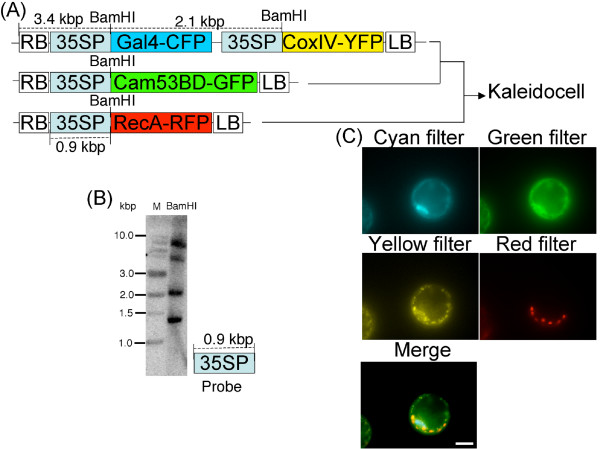
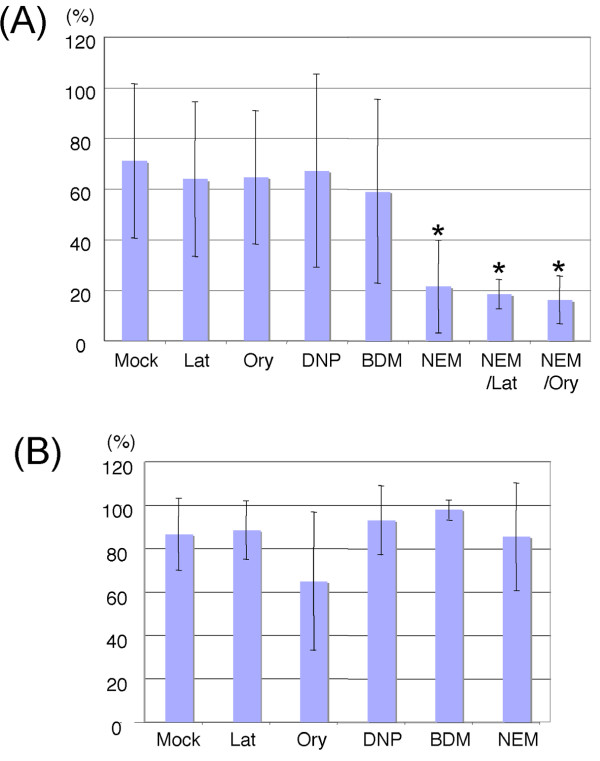
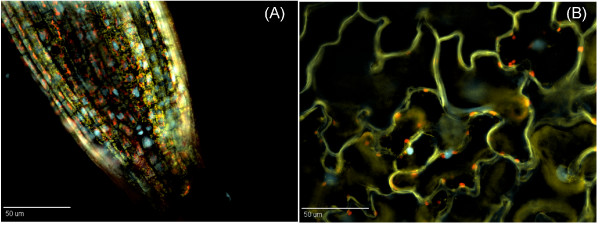
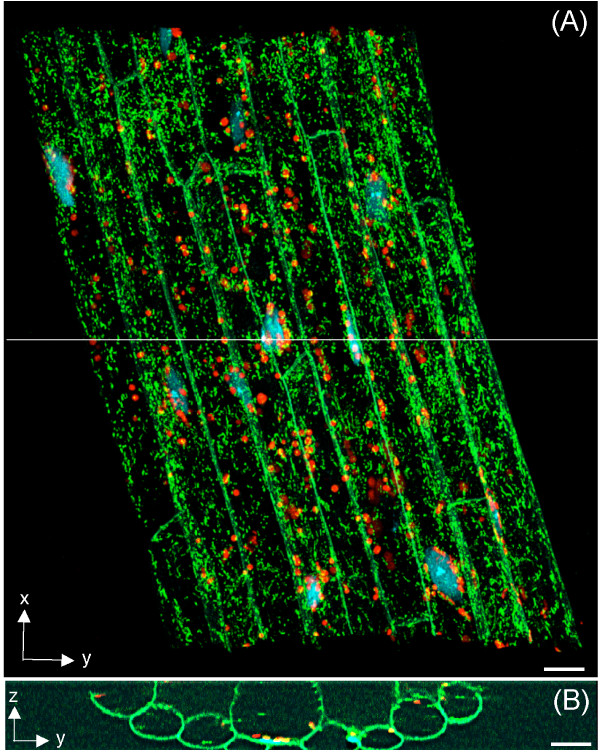
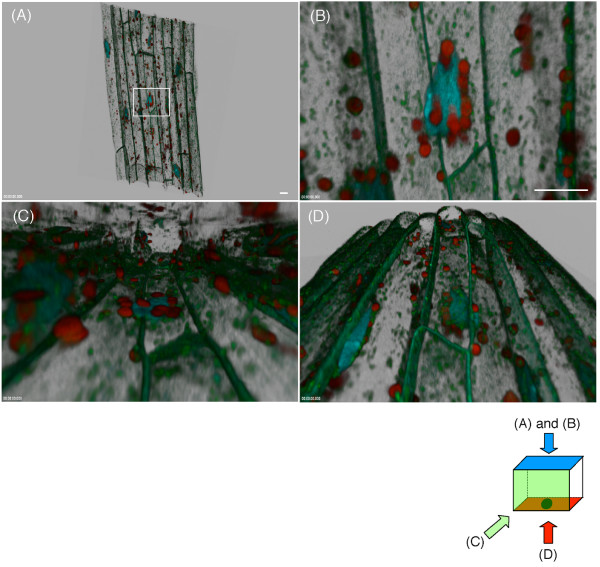
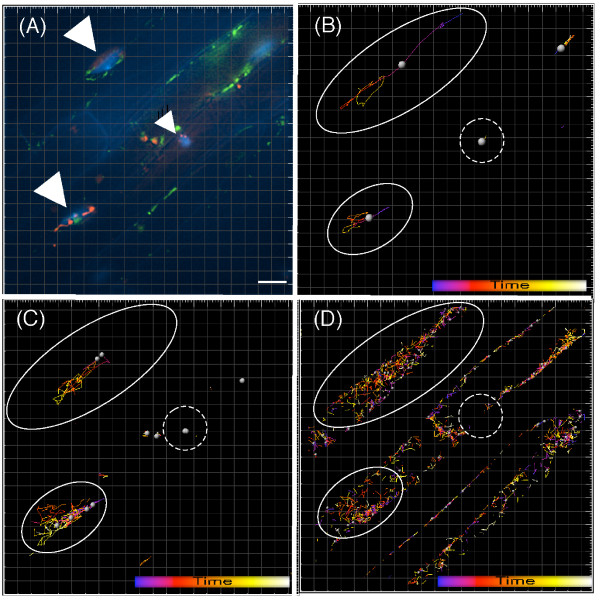
We generated a transgenic Arabidopsis plant that contains four spectrally different fluorescent proteins. Nuclei, plastids, mitochondria and plasma membranes were genetically tagged with cyan, red, yellow and green fluorescent proteins, respectively. In addition, methods to track nuclei, mitochondria and chloroplasts and quantify the interaction between these organelles at a submicron resolution were developed. These analyzes revealed that N-ethylmaleimide disrupts nuclear-mitochondrial but not nuclear-plastids interactions in root epidermal cells of live Arabidopsis seedlings.
We developed a tool and associated methods for analyzing the complex dynamic of organelle-organelle interactions in real time in planta. Homozygous transgenic Arabidopsis (Kaleidocell) is available through Arabidopsis Biological Resource Center.
在过去十年中,绿色荧光蛋白(GFP)的分离和光谱变体的发展开始揭示蛋白质运输和细胞器运动的动态性质。在植物中,对这一动态过程的分析通常一次只能在少数几种细胞类型中同时分析两个细胞器或两种蛋白质。
我们生成了一种拟南芥转基因植物,其中包含四种光谱不同的荧光蛋白。细胞核、质体、线粒体和质膜分别被遗传标记为青色、红色、黄色和绿色荧光蛋白。此外,还开发了跟踪细胞核、线粒体和叶绿体的方法,并以亚微米分辨率量化这些细胞器之间的相互作用。这些分析表明,N-乙基马来酰亚胺破坏了活体拟南芥幼苗根表皮细胞中核-线粒体但不核-质体的相互作用。
我们开发了一种工具和相关方法,用于实时分析植物体内细胞器-细胞器相互作用的复杂动态。通过拟南芥生物资源中心可获得纯合转基因拟南芥(Kaleidocell)。