Qian N X, Pastor-Anglada M, Englesberg E
Department of Biological Sciences, University of California, Santa Barbara 93106.
Proc Natl Acad Sci U S A. 1991 Apr 15;88(8):3416-20. doi: 10.1073/pnas.88.8.3416.
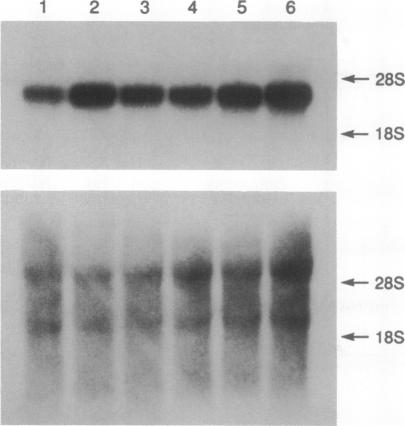
Previous work suggested that the structural gene for the A system transporter and the mRNA for the alpha subunit of the Na+,K(+)-ATPase in Chinese hamster ovary cells CHO-K1 [wild type (WT)] are coordinately controlled by regulatory gene R1. This conclusion was based on analysis of a mutant for the A system, alar4. This mutant had a constitutive level of A system transport activity equal to the level found in derepressed WT cells and a 4 times increase in abundance of the alpha 1 subunit of Na+,K(+)-ATPase mRNA over that found in repressed WT. The level of Na+ per cell in alar4 was not significantly greater than that found in the WT. To further characterize the likely coregulation of both genes, we have studied the A system activity and Na+,K(+)-ATPase mRNA alpha 1-subunit levels in cells grown under various conditions that result in repression or derepression of the A system in the WT. System A activity increased up to 2-3 times the basal transport rate (repressed state) and Na+,K(+)-ATPase mRNA alpha 1-subunit levels showed a 3-fold increase after amino acid starvation (derepressed state). These changes occurred along with a decrease in intracellular Na+ levels. N-Methyl-alpha-aminoisobutyric acid and beta-alanine, previously shown to be corepressors for the A system, prevented to a similar extent A system derepression and Na+,K(+)-ATPase mRNA alpha 1-subunit accumulation. On the other hand, phenylalanine and lysine, amino acids that are not corepressors of the A system, failed to significantly prevent derepression of both genes. Hybrids between the WT and alar4 have the phenotype of the WT when grown under repressed conditions. These results give further support to the proposition that both the A system transporter and mRNA for the alpha 1 subunit of the Na+,K(+)-ATPase are coordinately controlled by regulatory gene R1 and elevated Na+ concentrations are not involved. No Na+,K(+)-ATPase activity was detected in derepressed cells. Activity was restored by the addition of monensin. However, this activity was no greater than that obtained in repressed cells. Indications are that the reduced Na+ content in derepressed cells inhibits Na+,K(+)-ATPase activity and that conditions that favored derepression do not allow for de novo synthesis of the Na+,K(+)-ATPase.
先前的研究表明,中国仓鼠卵巢细胞CHO-K1[野生型(WT)]中A系统转运蛋白的结构基因和Na⁺,K⁺-ATP酶α亚基的mRNA受调控基因R1的协同控制。这一结论是基于对A系统突变体alar4的分析得出的。该突变体具有组成型水平的A系统转运活性,与去阻遏的野生型细胞中的水平相当,并且Na⁺,K⁺-ATP酶mRNA的α1亚基丰度比阻遏的野生型增加了4倍。alar4细胞中每个细胞的Na⁺水平并不显著高于野生型细胞。为了进一步表征这两个基因可能的共调控作用,我们研究了在各种导致野生型中A系统阻遏或去阻遏的条件下生长的细胞中的A系统活性和Na⁺,K⁺-ATP酶mRNA的α1亚基水平。氨基酸饥饿(去阻遏状态)后,A系统活性增加至基础转运速率(阻遏状态)的2至3倍,Na⁺,K⁺-ATP酶mRNA的α1亚基水平增加了3倍。这些变化伴随着细胞内Na⁺水平的降低。先前已证明N-甲基-α-氨基异丁酸和β-丙氨酸是A系统的共阻遏物,它们在相似程度上阻止了A系统的去阻遏和Na⁺,K⁺-ATP酶mRNA的α1亚基积累。另一方面,苯丙氨酸和赖氨酸这两种不是A系统共阻遏物的氨基酸,未能显著阻止这两个基因的去阻遏。野生型和alar4之间的杂种在阻遏条件下生长时具有野生型的表型。这些结果进一步支持了以下观点,即A系统转运蛋白和Na⁺,K⁺-ATP酶α1亚基的mRNA受调控基因R1的协同控制,且与升高的Na⁺浓度无关。在去阻遏的细胞中未检测到Na⁺,K⁺-ATP酶活性。添加莫能菌素可恢复活性。然而,该活性不高于在阻遏细胞中获得的活性。表明去阻遏细胞中降低 的Na⁺含量抑制了Na⁺,K⁺-ATP酶活性,并且有利于去阻遏的条件不允许Na⁺,K⁺-ATP酶的从头合成。