Izadpanah Reza, Kaushal Deepak, Kriedt Christopher, Tsien Fern, Patel Bindiya, Dufour Jason, Bunnell Bruce A
Division of Gene Therapy, Tulane National Primate Research Center, Tulane University Health Sciences Center, Covington, Louisiana 70433, USA.
Cancer Res. 2008 Jun 1;68(11):4229-38. doi: 10.1158/0008-5472.CAN-07-5272.
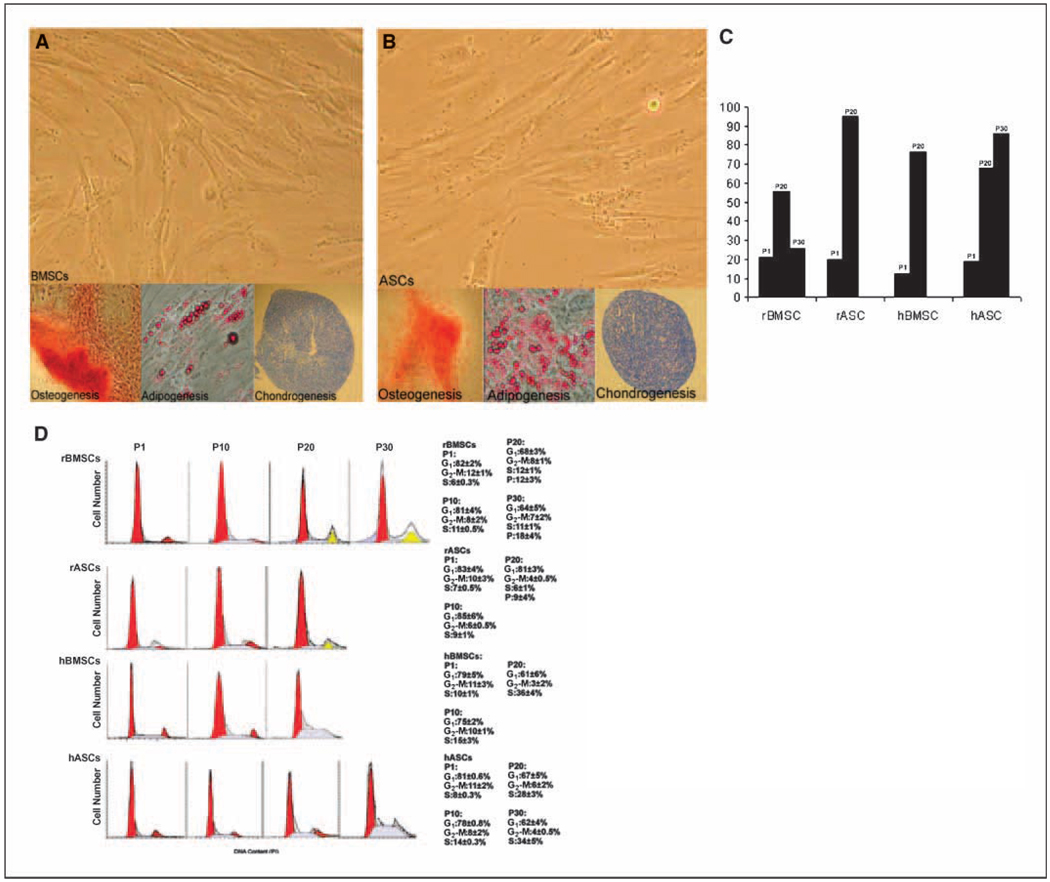
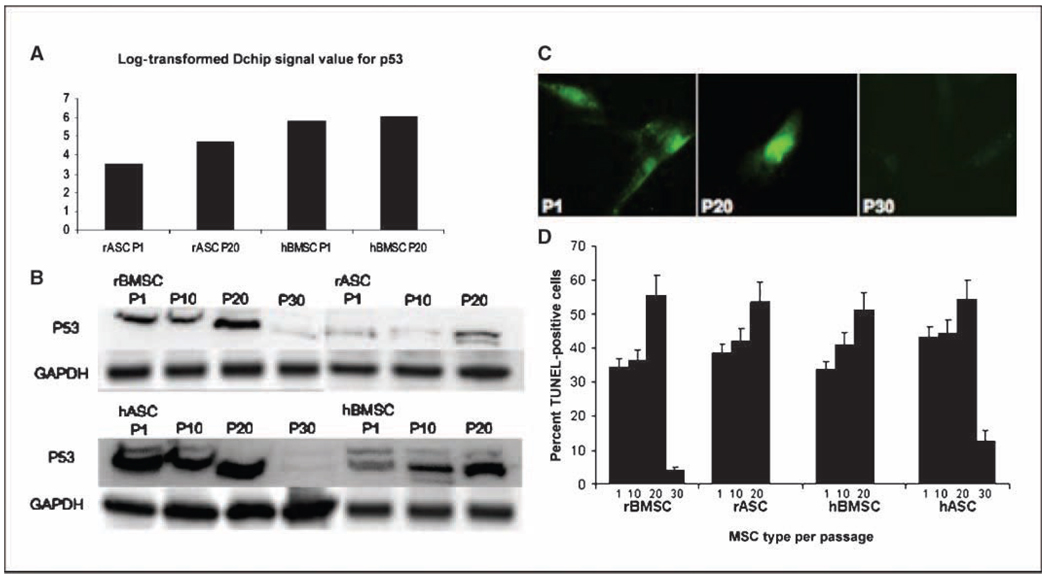
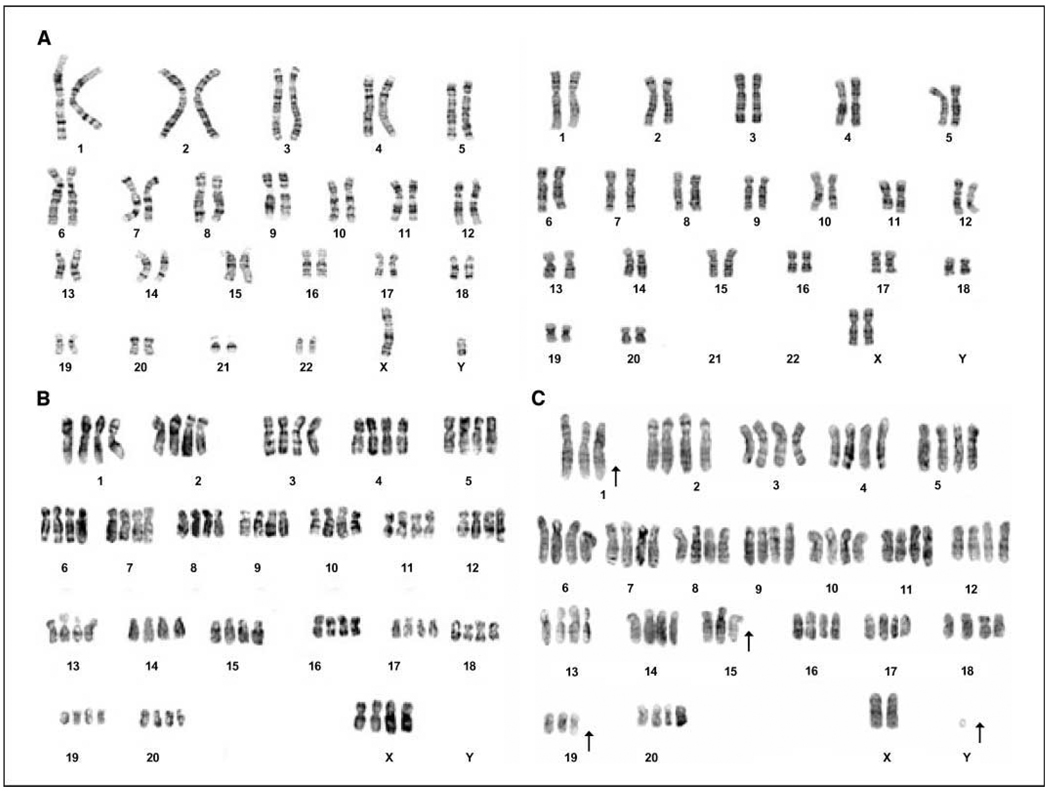
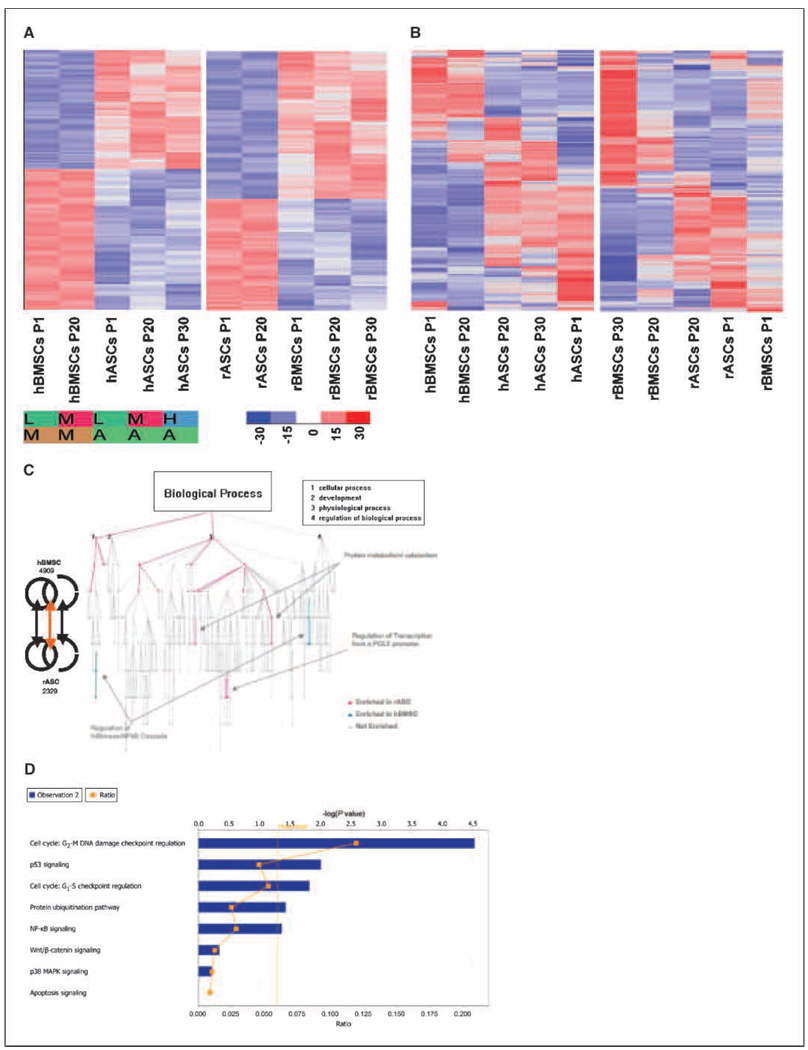
Mesenchymal stem cells (MSC) derived from bone marrow stem cells (BMSC) and adipose tissue stem cells (ASC) of humans and rhesus macaques were evaluated for their cell cycle properties during protracted culture in vitro. Human ASCs (hASC) and rhesus BMSCs (rBMSC) underwent significantly more total population doublings than human BMSCs (hBMSC) and rhesus ASCs (rASC). The cell cycle profile of all MSCs was altered as cultures aged. hMSCs underwent an increase in the frequency of cells in the S phase at P20 and P30. However, rhesus MSCs from both sources developed a distinct polyploid population of cells at P20, which progressed to aneuploidy by P30. Karyotype analysis of MSCs revealed the development of tetraploid or aneuploid karyotypes in the rhesus cells at P20 or P30. Analysis of the transcriptome of the MSCs from early and late passages revealed significant alterations in the patterns of gene expression (8.8% of the genes were differentially expressed in hBMSCs versus hASCs, and 5.5% in rBMSCs versus rASCs). Gene expression changes were much less evident within the same cell type as aging occurred (0.7% in hMSCs and 0.9% in rMSC). Gene ontology analysis showed that functions involved in protein catabolism and regulation of pol II transcription were overrepresented in rASCs, whereas the regulation of I kappa B/nuclear factor-kappaB cascade were overrepresented in hBMSCs. Functional analysis of genes that were differentially expressed in rASCs and hBMSCs revealed that pathways involved in cell cycle, cell cycle checkpoints, protein-ubiquitination, and apoptosis were altered.
对源自人类和恒河猴骨髓干细胞(BMSC)及脂肪组织干细胞(ASC)的间充质干细胞(MSC)在体外长期培养期间的细胞周期特性进行了评估。人类脂肪组织干细胞(hASC)和恒河猴骨髓干细胞(rBMSC)的总群体倍增次数明显多于人类骨髓干细胞(hBMSC)和恒河猴脂肪组织干细胞(rASC)。随着培养时间延长,所有MSC的细胞周期谱均发生改变。人类MSC在传代20次(P20)和传代30次(P30)时S期细胞频率增加。然而,来自两种来源的恒河猴MSC在P20时均出现明显的多倍体细胞群体,并在P30时发展为非整倍体。对MSC的核型分析显示,恒河猴细胞在P20或P30时出现四倍体或非整倍体核型。对早期和晚期传代的MSC转录组分析显示,基因表达模式发生了显著改变(hBMSC与hASC相比,8.8%的基因差异表达;rBMSC与rASC相比,5.5%的基因差异表达)。随着细胞衰老,同一细胞类型内的基因表达变化不太明显(人类MSC中为0.7%,恒河猴MSC中为0.9%)。基因本体分析表明,蛋白质分解代谢和聚合酶II转录调控相关功能在rASC中过度表达,而IκB/核因子-κB级联反应调控在hBMSC中过度表达。对rASC和hBMSC中差异表达基因的功能分析表明,细胞周期、细胞周期检查点、蛋白质泛素化和凋亡相关途径发生了改变。