Owen Jennifer, Hedley B Ann, Svendsen Claus, Wren Jodie, Jonker Martijs J, Hankard Peter K, Lister Linsey J, Stürzenbaum Stephen R, Morgan A John, Spurgeon David J, Blaxter Mark L, Kille Peter
Institute of Evolutionary Biology, University of Edinburgh, King's Buildings, Edinburgh, EH9 3JT, UK.
BMC Genomics. 2008 Jun 3;9:266. doi: 10.1186/1471-2164-9-266.
Natural contamination and anthropogenic pollution of soils are likely to be major determinants of functioning and survival of keystone invertebrate taxa. Soil animals will have both evolutionary adaptation and genetically programmed responses to these toxic chemicals, but mechanistic understanding of such is sparse. The clitellate annelid Lumbricus rubellus is a model organism for soil health testing, but genetic data have been lacking.
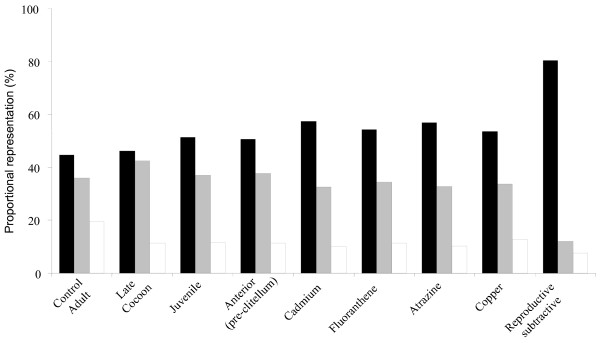
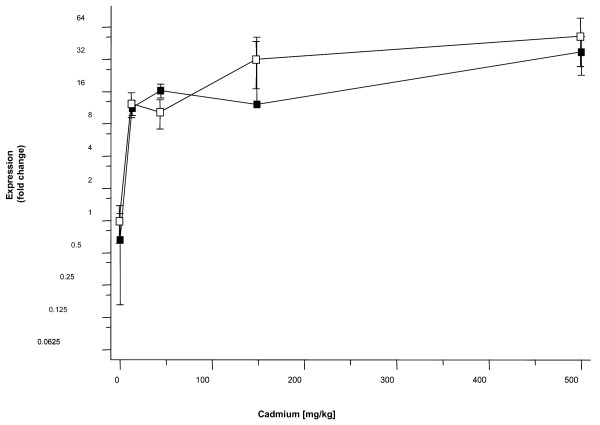
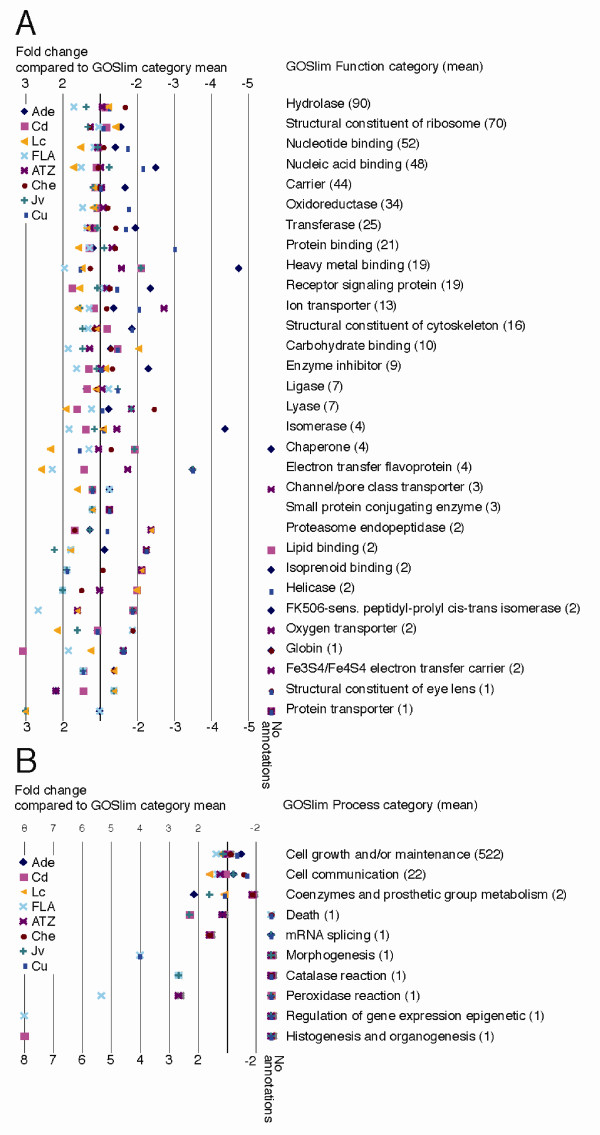
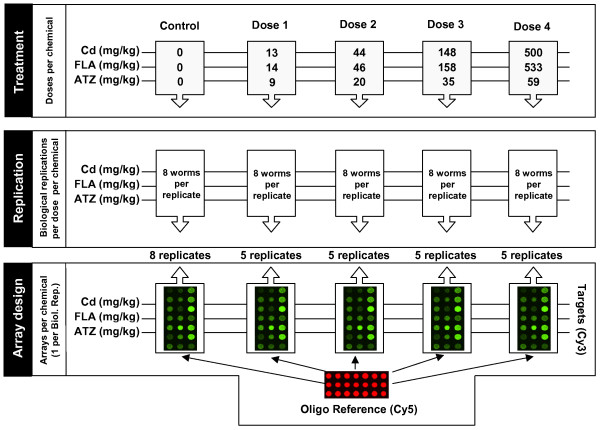
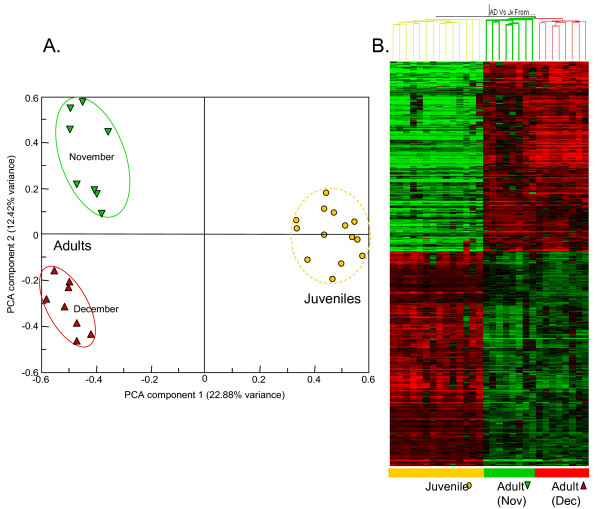
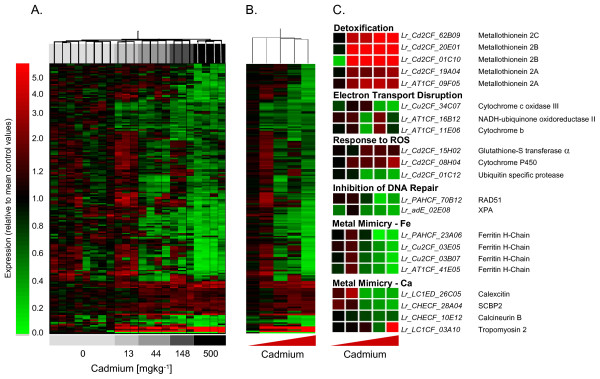
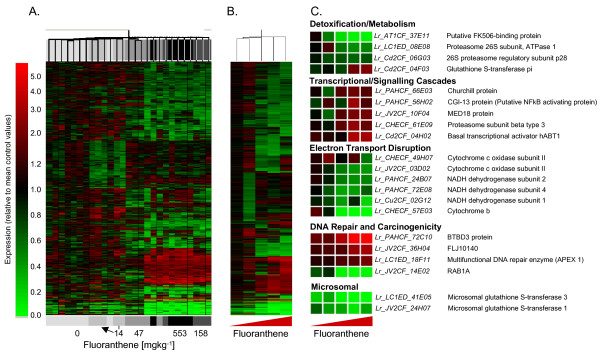
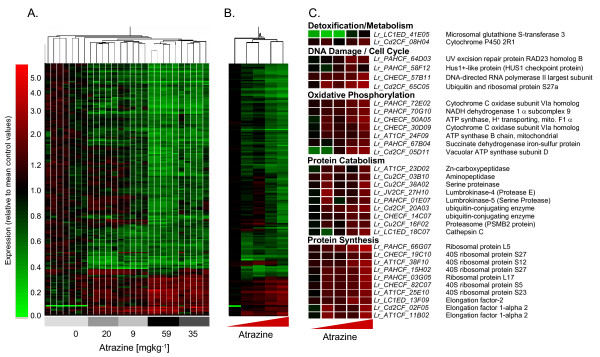
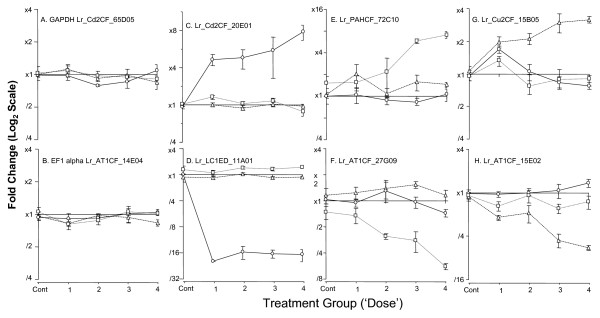
We generated a 17,000 sequence expressed sequence tag dataset, defining ~8,100 different putative genes, and built an 8,000-element transcriptome microarray for L. rubellus. Strikingly, less than half the putative genes (43%) were assigned annotations from the gene ontology (GO) system; this reflects the phylogenetic uniqueness of earthworms compared to the well-annotated model animals. The microarray was used to identify adult- and juvenile-specific transcript profiles in untreated animals and to determine dose-response transcription profiles following exposure to three xenobiotics from different chemical classes: inorganic (the metal cadmium), organic (the polycyclic aromatic hydrocarbon fluoranthene), and agrochemical (the herbicide atrazine). Analysis of these profiles revealed compound-specific fingerprints which identify the molecular responses of this annelid to each contaminant. The data and analyses are available in an integrated database, LumbriBASE.
L. rubellus has a complex response to contaminant exposure, but this can be efficiently analysed using molecular methods, revealing unique response profiles for different classes of effector. These profiles may assist in the development of novel monitoring or bioremediation protocols, as well as in understanding the ecosystem effects of exposure.
土壤的自然污染和人为污染可能是关键无脊椎动物类群功能和生存的主要决定因素。土壤动物对这些有毒化学物质会有进化适应和基因编程反应,但对此的机制理解却很匮乏。赤子爱胜蚓是一种用于土壤健康测试的模式生物,但一直缺乏遗传数据。
我们生成了一个包含17000个序列的表达序列标签数据集,定义了约8100个不同的假定基因,并构建了一个用于赤子爱胜蚓的包含8000个元件的转录组微阵列。令人惊讶的是,不到一半的假定基因(43%)被赋予了来自基因本体(GO)系统的注释;这反映了与注释完善的模式动物相比,蚯蚓在系统发育上的独特性。该微阵列用于识别未处理动物中的成年和幼年特异性转录谱,并确定暴露于来自不同化学类别的三种外源化合物后的剂量反应转录谱:无机化合物(金属镉)、有机化合物(多环芳烃荧蒽)和农用化学品(除草剂阿特拉津)。对这些谱的分析揭示了化合物特异性指纹,可识别这种环节动物对每种污染物的分子反应。数据和分析可在一个综合数据库LumbriBASE中获取。
赤子爱胜蚓对污染物暴露有复杂反应,但使用分子方法可以有效分析这种反应,揭示不同类效应物的独特反应谱。这些谱可能有助于开发新的监测或生物修复方案,以及理解暴露对生态系统的影响。