Greenbaum Benjamin D, Levine Arnold J, Bhanot Gyan, Rabadan Raul
BioMaPS Institute, Rutgers University, Piscataway, New Jersey, United States of America.
PLoS Pathog. 2008 Jun 6;4(6):e1000079. doi: 10.1371/journal.ppat.1000079.
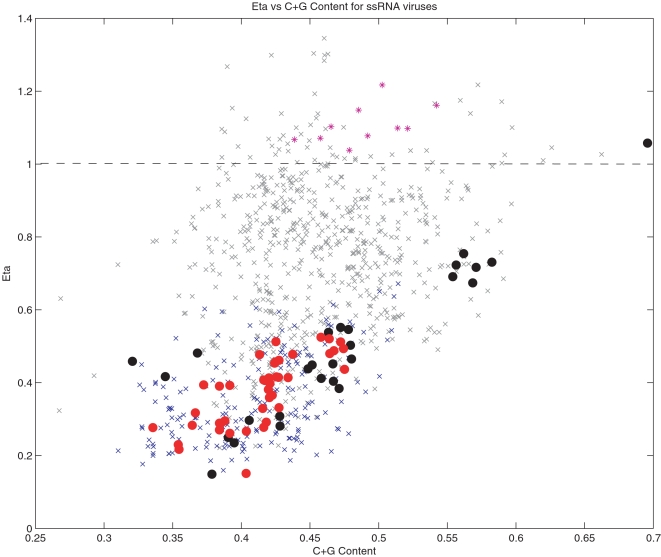
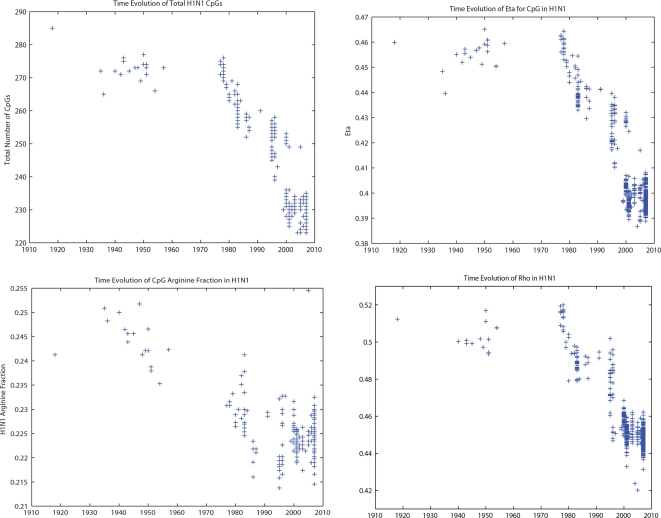
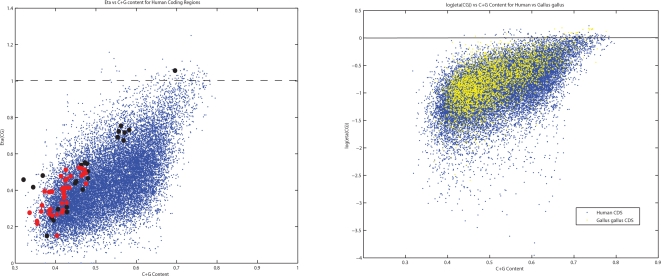
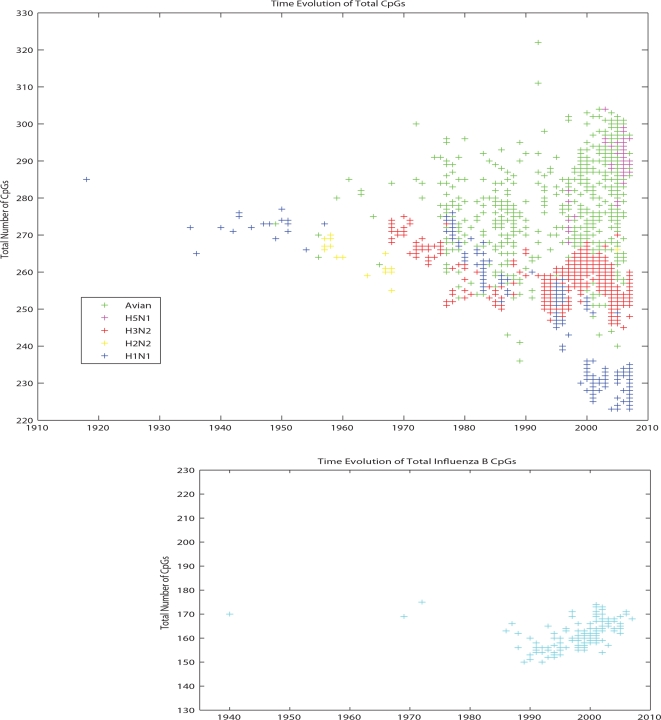
It is well known that the dinucleotide CpG is under-represented in the genomic DNA of many vertebrates. This is commonly thought to be due to the methylation of cytosine residues in this dinucleotide and the corresponding high rate of deamination of 5-methycytosine, which lowers the frequency of this dinucleotide in DNA. Surprisingly, many single-stranded RNA viruses that replicate in these vertebrate hosts also have a very low presence of CpG dinucleotides in their genomes. Viruses are obligate intracellular parasites and the evolution of a virus is inexorably linked to the nature and fate of its host. One therefore expects that virus and host genomes should have common features. In this work, we compare evolutionary patterns in the genomes of ssRNA viruses and their hosts. In particular, we have analyzed dinucleotide patterns and found that the same patterns are pervasively over- or under-represented in many RNA viruses and their hosts suggesting that many RNA viruses evolve by mimicking some of the features of their host's genes (DNA) and likely also their corresponding mRNAs. When a virus crosses a species barrier into a different host, the pressure to replicate, survive and adapt, leaves a footprint in dinucleotide frequencies. For instance, since human genes seem to be under higher pressure to eliminate CpG dinucleotide motifs than avian genes, this pressure might be reflected in the genomes of human viruses (DNA and RNA viruses) when compared to those of the same viruses replicating in avian hosts. To test this idea we have analyzed the evolution of the influenza virus since 1918. We find that the influenza A virus, which originated from an avian reservoir and has been replicating in humans over many generations, evolves in a direction strongly selected to reduce the frequency of CpG dinucleotides in its genome. Consistent with this observation, we find that the influenza B virus, which has spent much more time in the human population, has adapted to its human host and exhibits an extremely low CpG dinucleotide content. We believe that these observations directly show that the evolution of RNA viral genomes can be shaped by pressures observed in the host genome. As a possible explanation, we suggest that the strong selection pressures acting on these RNA viruses are most likely related to the innate immune response and to nucleotide motifs in the host DNA and RNAs.
众所周知,二核苷酸CpG在许多脊椎动物的基因组DNA中含量较低。普遍认为这是由于该二核苷酸中胞嘧啶残基的甲基化以及5-甲基胞嘧啶相应的高脱氨率,从而降低了DNA中该二核苷酸的频率。令人惊讶的是,许多在这些脊椎动物宿主中复制的单链RNA病毒,其基因组中CpG二核苷酸的含量也非常低。病毒是专性细胞内寄生虫,病毒的进化与宿主的性质和命运紧密相连。因此可以预期病毒基因组和宿主基因组应该具有共同特征。在这项研究中,我们比较了单链RNA病毒及其宿主基因组的进化模式。特别是,我们分析了二核苷酸模式,发现许多RNA病毒及其宿主中相同的模式普遍存在过高或过低的情况,这表明许多RNA病毒通过模仿宿主基因(DNA)及其相应mRNA的某些特征进行进化。当病毒跨越物种屏障进入不同宿主时,复制、生存和适应的压力会在二核苷酸频率上留下印记。例如,由于人类基因似乎比禽类基因面临更高的消除CpG二核苷酸基序的压力,与在禽类宿主中复制的相同病毒相比,这种压力可能会反映在人类病毒(DNA和RNA病毒)的基因组中。为了验证这一想法,我们分析了自1918年以来流感病毒的进化。我们发现,源自禽类宿主并在人类中经过多代复制的甲型流感病毒,其进化方向是强烈选择降低其基因组中CpG二核苷酸的频率。与此观察结果一致,我们发现,在人类群体中存在时间长得多的乙型流感病毒已经适应了其人类宿主,并表现出极低的CpG二核苷酸含量。我们认为,这些观察结果直接表明RNA病毒基因组的进化可以受到宿主基因组中观察到的压力的影响。作为一种可能的解释,我们认为作用于这些RNA病毒的强大选择压力很可能与先天免疫反应以及宿主DNA和RNA中的核苷酸基序有关。