Brouard Jean-Simon, Otis Christian, Lemieux Claude, Turmel Monique
Département de biochimie et de microbiologie, Université Laval, Québec, QC G1V 0A6, Canada .
BMC Genomics. 2008 Jun 16;9:290. doi: 10.1186/1471-2164-9-290.
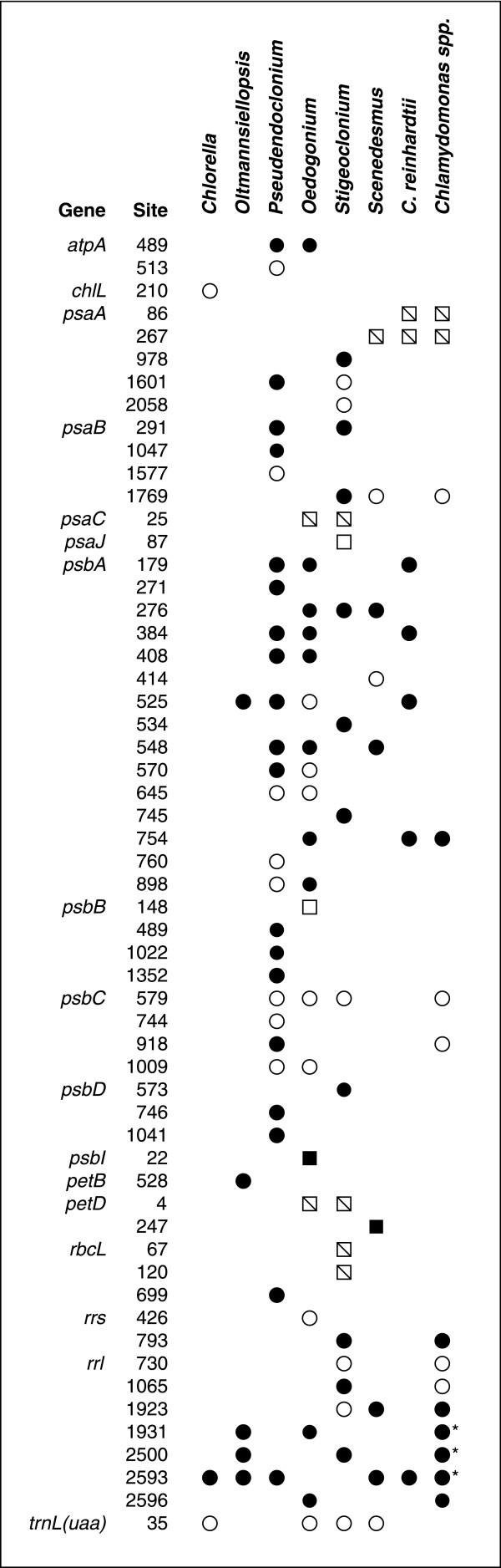
To gain insight into the branching order of the five main lineages currently recognized in the green algal class Chlorophyceae and to expand our understanding of chloroplast genome evolution, we have undertaken the sequencing of chloroplast DNA (cpDNA) from representative taxa. The complete cpDNA sequences previously reported for Chlamydomonas (Chlamydomonadales), Scenedesmus (Sphaeropleales), and Stigeoclonium (Chaetophorales) revealed tremendous variability in their architecture, the retention of only few ancestral gene clusters, and derived clusters shared by Chlamydomonas and Scenedesmus. Unexpectedly, our recent phylogenies inferred from these cpDNAs and the partial sequences of three other chlorophycean cpDNAs disclosed two major clades, one uniting the Chlamydomonadales and Sphaeropleales (CS clade) and the other uniting the Oedogoniales, Chaetophorales and Chaetopeltidales (OCC clade). Although molecular signatures provided strong support for this dichotomy and for the branching of the Oedogoniales as the earliest-diverging lineage of the OCC clade, more data are required to validate these phylogenies. We describe here the complete cpDNA sequence of Oedogonium cardiacum (Oedogoniales).
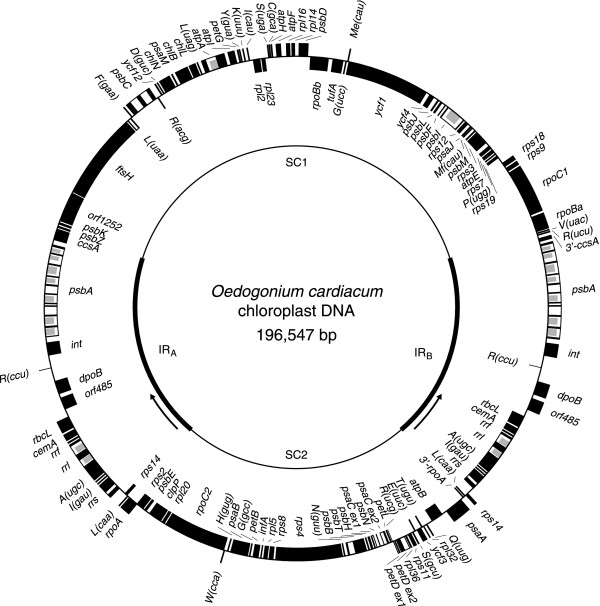
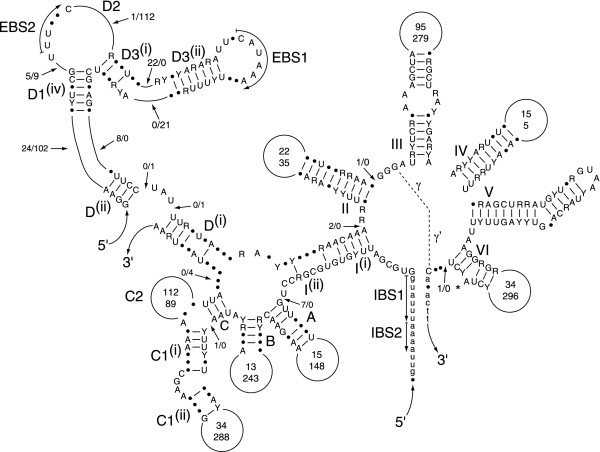
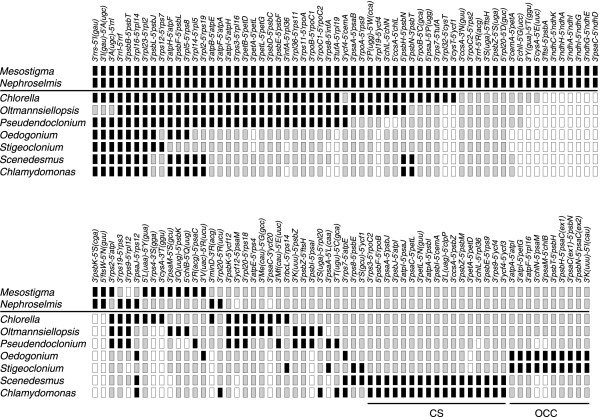
Like its three chlorophycean homologues, the 196,547-bp Oedogonium chloroplast genome displays a distinctive architecture. This genome is one of the most compact among photosynthetic chlorophytes. It has an atypical quadripartite structure, is intron-rich (17 group I and 4 group II introns), and displays 99 different conserved genes and four long open reading frames (ORFs), three of which are clustered in the spacious inverted repeat of 35,493 bp. Intriguingly, two of these ORFs (int and dpoB) revealed high similarities to genes not usually found in cpDNA. At the gene content and gene order levels, the Oedogonium genome most closely resembles its Stigeoclonium counterpart. Characters shared by these chlorophyceans but missing in members of the CS clade include the retention of psaM, rpl32 and trnL(caa), the loss of petA, the disruption of three ancestral clusters and the presence of five derived gene clusters.
The Oedogonium chloroplast genome disclosed additional characters that bolster the evidence for a close alliance between the Oedogoniales and Chaetophorales. Our unprecedented finding of int and dpoB in this cpDNA provides a clear example that novel genes were acquired by the chloroplast genome through horizontal transfers, possibly from a mitochondrial genome donor.
为深入了解绿藻纲绿藻目目前公认的五个主要谱系的分支顺序,并拓展我们对叶绿体基因组进化的认识,我们对代表性分类群的叶绿体DNA(cpDNA)进行了测序。先前报道的衣藻属(衣藻目)、栅藻属(球藻目)和丝藻属(胶毛藻目)的完整cpDNA序列显示出其结构存在巨大差异,仅保留了少数祖先基因簇,以及衣藻属和栅藻属共有的衍生基因簇。出乎意料的是,我们最近从这些cpDNA和其他三个绿藻纲cpDNA的部分序列推断出的系统发育树揭示了两个主要分支,一个将衣藻目和球藻目联合起来(CS分支),另一个将鞘藻目、胶毛藻目和胶毛藻目联合起来(OCC分支)。尽管分子特征为这种二分法以及鞘藻目作为OCC分支中最早分化的谱系的分支提供了有力支持,但仍需要更多数据来验证这些系统发育树。我们在此描述了心形鞘藻(鞘藻目)的完整cpDNA序列。
与其三个绿藻纲同源物一样,196,547碱基对的心形鞘藻叶绿体基因组呈现出独特的结构。该基因组是光合绿藻中最紧凑的基因组之一。它具有非典型的四分体结构,富含内含子(17个I类和4个II类内含子),并显示出99个不同的保守基因和四个长开放阅读框(ORF),其中三个聚集在35,493碱基对的宽敞反向重复序列中。有趣的是,其中两个ORF(int和dpoB)与通常在cpDNA中未发现的基因具有高度相似性。在心形鞘藻基因组与丝藻属对应基因组在基因含量和基因顺序水平上最为相似。这些绿藻纲共有的但在CS分支成员中缺失的特征包括保留psaM、rpl32和trnL(caa),petA的缺失,三个祖先基因簇的破坏以及五个衍生基因簇的存在。
心形鞘藻叶绿体基因组揭示了更多特征,支持了鞘藻目和胶毛藻目之间紧密联系的证据。我们在该cpDNA中前所未有的int和dpoB发现提供了一个明确的例子,即叶绿体基因组通过水平转移获得了新基因,可能来自线粒体基因组供体。