Kumar-Sinha Chandan, Tomlins Scott A, Chinnaiyan Arul M
Michigan Center for Translational Pathology, University of Michigan Medical School, 1400 East Medical Center Drive, 5316 CCGC, Ann Arbor, Michigan 48109-0602, USA.
Nat Rev Cancer. 2008 Jul;8(7):497-511. doi: 10.1038/nrc2402. Epub 2008 Jun 19.
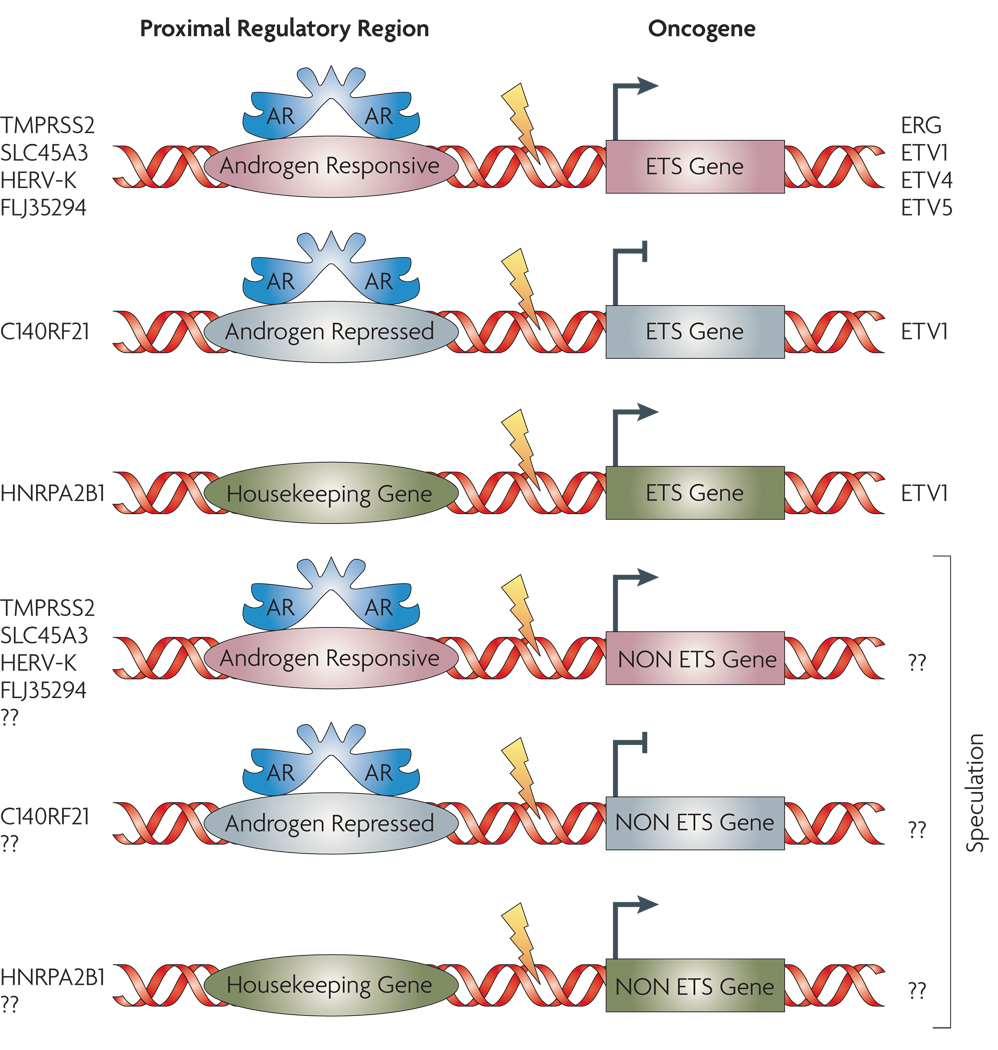
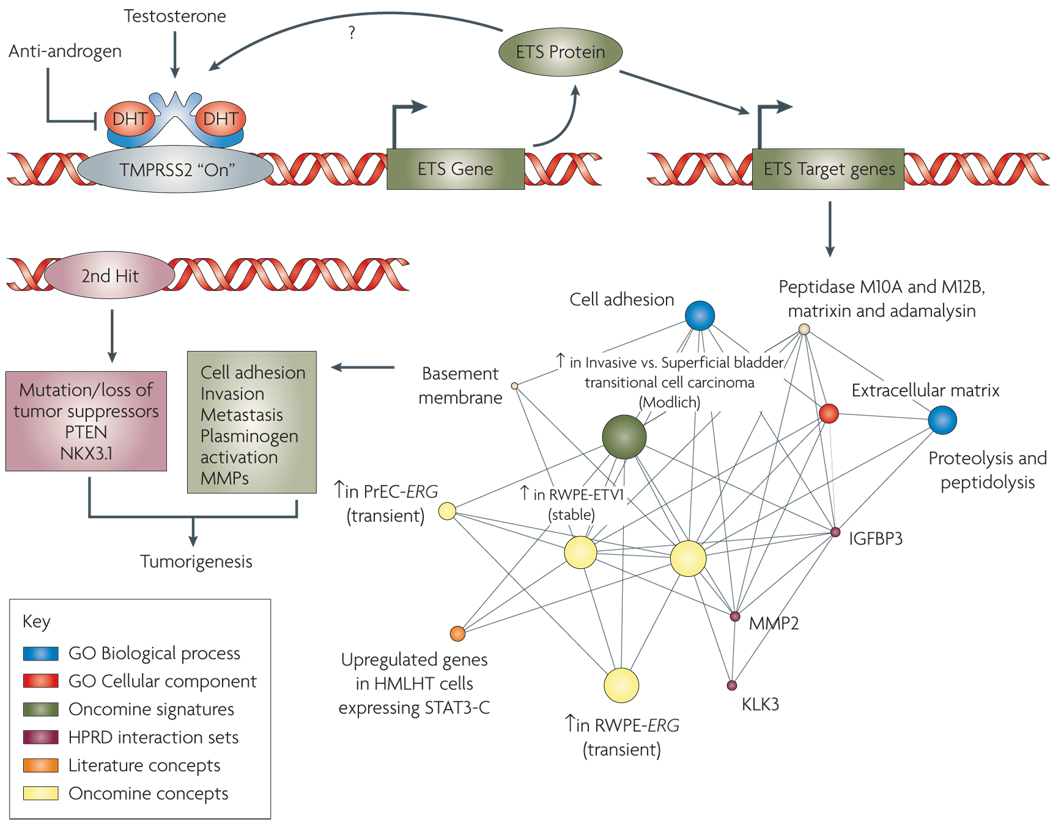
The discovery of recurrent gene fusions in a majority of prostate cancers has important clinical and biological implications in the study of common epithelial tumours. Gene fusion and chromosomal rearrangements were previously thought to be primarily the oncogenic mechanism of haematological malignancies and sarcomas. The prostate cancer gene fusions that have been identified thus far are characterized by 5' genomic regulatory elements, most commonly controlled by androgen, fused to members of the Ets family of transcription factors, leading to the overexpression of oncogenic transcription factors. Ets gene fusions probably define a distinct class of prostate cancer, and this might have a bearing on diagnosis, prognosis and rational therapeutic targeting.
在大多数前列腺癌中发现的复发性基因融合,在常见上皮性肿瘤的研究中具有重要的临床和生物学意义。基因融合和染色体重排以前被认为主要是血液系统恶性肿瘤和肉瘤的致癌机制。迄今为止已鉴定出的前列腺癌基因融合的特征是5'基因组调控元件,最常见的是受雄激素控制,与Ets转录因子家族成员融合,导致致癌转录因子的过表达。Ets基因融合可能定义了一类独特的前列腺癌,这可能对诊断、预后和合理的治疗靶点有影响。