Wildenberg Manon E, van Helden-Meeuwsen Cornelia G, Drexhage Hemmo A, Versnel Marjan A
Department of Immunology, Erasmus MC, P,O, Box 2040, 3000 CA Rotterdam, The Netherlands.
Arthritis Res Ther. 2008;10(3):R69. doi: 10.1186/ar2441. Epub 2008 Jun 19.
In the nonobese diabetic (NOD) mouse model of Sjögren's syndrome, lymphocytic infiltration is preceded by an accumulation of dendritic cells in the submandibular glands (SMGs). NOD mice also exhibit an increased frequency of mature, fractalkine receptor (CX3C chemokine receptor [CX3CR]1) expressing monocytes, which are considered to be precursors for tissue dendritic cells. To unravel further the role played by fractalkine-CX3CR1 interactions in the salivary gland inflammation, we studied the expression of fractalkine in NOD SMGs.
We studied protein expression using Western blot analysis of whole tissue lysates. Protease activity was measured in salivary gland tissue lysates using fluorimetric substrates. Digestive capacity of enzymes was determined by in vitro incubation of recombinant enzyme and fractalkine, followed by protein staining and Western blot.
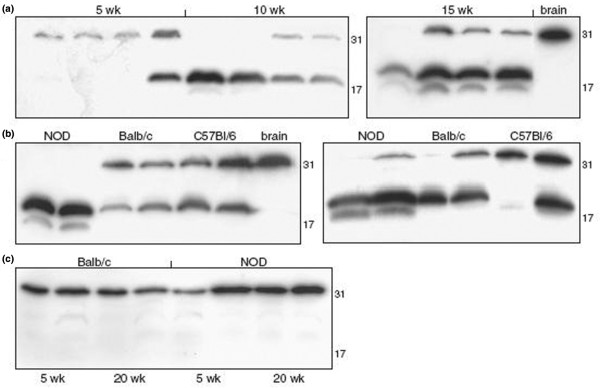
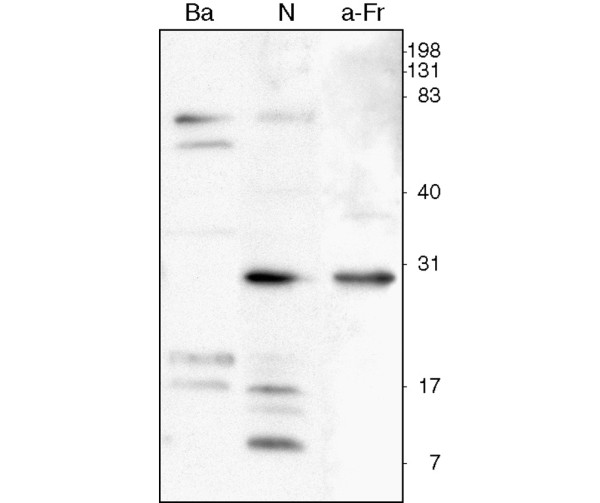
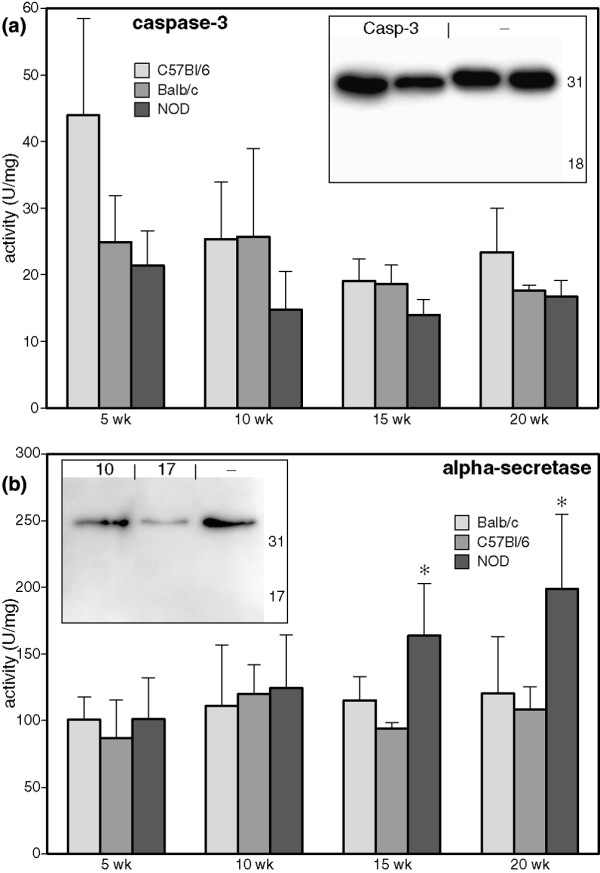
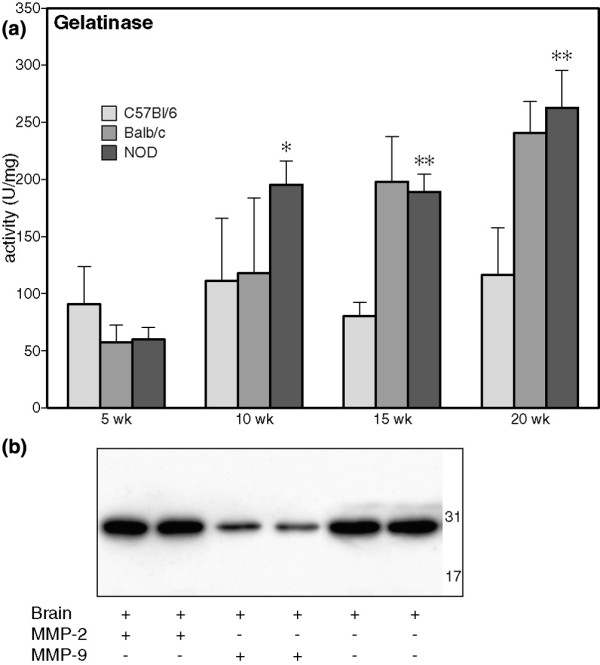
Fractalkine was detected in salivary glands of both NOD and control mice at all ages. Western blot analysis showed fractalkine cleavage with increasing age, which was more pronounced in NOD mice. This cleavage resulted in a decrease in the 31 kDa form of the protein, and the generation of an approximately 19 kDa band. Furthermore, in NOD animals older than 15 weeks, we noted the presence of a unique approximately 17 kDa fragment. This cleavage was organ specific, because it did not occur in brain or pancreas. Increased gelatinase and alpha-secretase activity were detected in NOD SMG and contributed to cleavage of the 31 kDa protein. Because aberrant cleavage products may induce autoimmunity, we studied the presence of autoantibodies against fractalkine. Indeed, NOD mice exhibited significantly more antibodies against fractalkine than did control animals.
These data indicate that aberrant proteolytic activity in the NOD SMG results in increased fractalkine cleavage and generation of a unique fractalkine fragment. This specific cleavage may contribute to autoimmunity.
在干燥综合征的非肥胖糖尿病(NOD)小鼠模型中,下颌下腺(SMG)中树突状细胞的积累先于淋巴细胞浸润。NOD小鼠还表现出表达趋化因子受体(CX3C趋化因子受体[CX3CR]1)的成熟单核细胞频率增加,这些单核细胞被认为是组织树突状细胞的前体。为了进一步阐明趋化因子-CX3CR1相互作用在唾液腺炎症中所起的作用,我们研究了趋化因子在NOD SMG中的表达。
我们使用全组织裂解物的蛋白质印迹分析来研究蛋白质表达。使用荧光底物测量唾液腺组织裂解物中的蛋白酶活性。通过重组酶与趋化因子的体外孵育,随后进行蛋白质染色和蛋白质印迹来确定酶的消化能力。
在所有年龄段的NOD小鼠和对照小鼠的唾液腺中均检测到趋化因子。蛋白质印迹分析显示,随着年龄的增长,趋化因子会发生裂解,在NOD小鼠中更为明显。这种裂解导致该蛋白31 kDa形式减少,并产生一条约19 kDa的条带。此外,在15周龄以上的NOD动物中,我们注意到存在一个独特的约17 kDa片段。这种裂解具有器官特异性,因为它在脑或胰腺中未发生。在NOD SMG中检测到明胶酶和α-分泌酶活性增加,这有助于31 kDa蛋白的裂解。由于异常裂解产物可能诱导自身免疫,我们研究了针对趋化因子的自身抗体的存在情况。实际上,NOD小鼠比对照动物表现出更多的针对趋化因子的抗体。
这些数据表明,NOD SMG中的异常蛋白水解活性导致趋化因子裂解增加,并产生独特的趋化因子片段。这种特异性裂解可能导致自身免疫。