Goila-Gaur Ritu, Strebel Klaus
Laboratory of Molecular Microbiology, National Institute of Allergy and Infectious Diseases, National Institutes of Health, 4/312, Bethesda, Maryland 20892-0460, USA.
Retrovirology. 2008 Jun 24;5:51. doi: 10.1186/1742-4690-5-51.
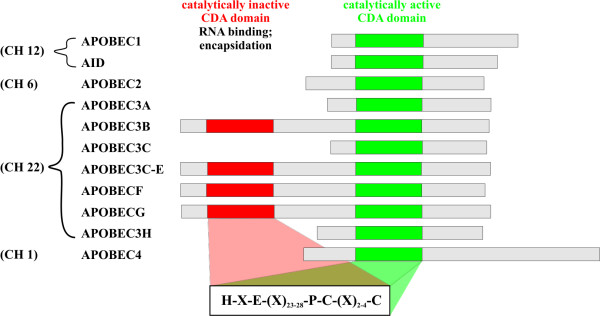
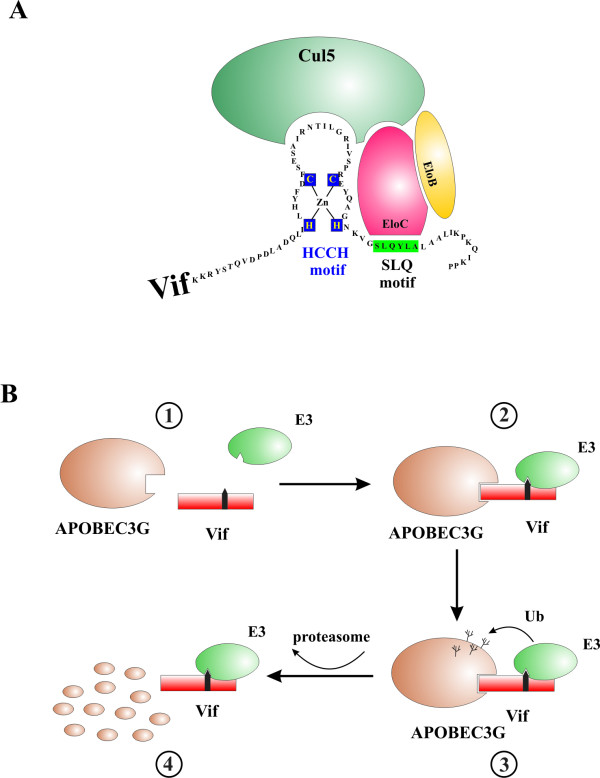
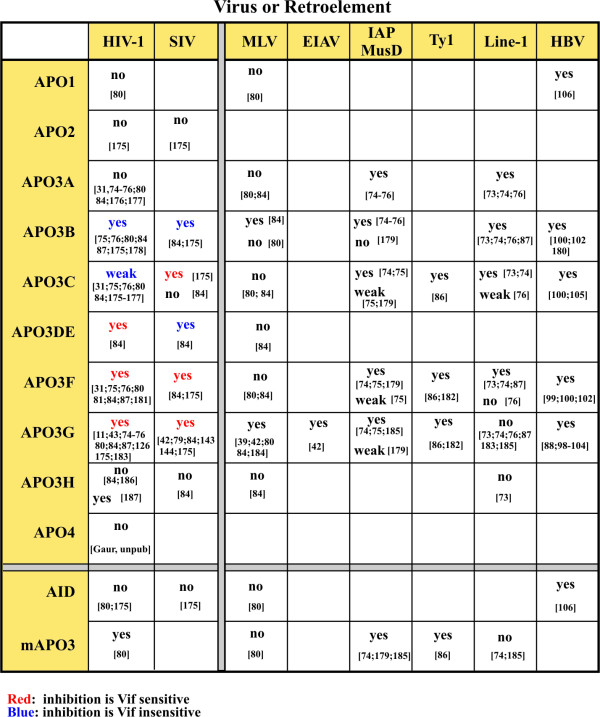
Members of the APOBEC family of cellular cytidine deaminases represent a recently identified group of proteins that provide immunity to infection by retroviruses and protect the cell from endogenous mobile retroelements. Yet, HIV-1 is largely immune to the intrinsic antiviral effects of APOBEC proteins because it encodes Vif (viral infectivity factor), an accessory protein that is critical for in vivo replication of HIV-1. In the absence of Vif, APOBEC proteins are encapsidated by budding virus particles and either cause extensive cytidine to uridine editing of negative sense single-stranded DNA during reverse transcription or restrict virus replication through deaminase-independent mechanisms. Thus, the primary function of Vif is to prevent encapsidation of APOBEC proteins into viral particles. This is in part accomplished by the ability of Vif to induce the ubiquitin-dependent degradation of some of the APOBEC proteins. However, Vif is also able to prevent encapsidation of APOBEC3G and APOBEC3F through degradation-independent mechanism(s). The goal of this review is to recapitulate current knowledge of the functional interaction of HIV-1 and its Vif protein with the APOBEC3 subfamily of proteins and to summarize our present understanding of the mechanism of APOBEC3-dependent retrovirus restriction.
细胞胞苷脱氨酶APOBEC家族的成员代表了一组最近发现的蛋白质,它们为逆转录病毒感染提供免疫,并保护细胞免受内源性移动逆转录元件的侵害。然而,HIV-1对APOBEC蛋白的内在抗病毒作用基本免疫,因为它编码Vif(病毒感染因子),这是一种对HIV-1体内复制至关重要的辅助蛋白。在没有Vif的情况下,APOBEC蛋白被出芽的病毒颗粒包裹,并在逆转录过程中导致负链单链DNA的胞苷到尿苷的广泛编辑,或者通过脱氨酶非依赖机制限制病毒复制。因此,Vif的主要功能是防止APOBEC蛋白被包裹到病毒颗粒中。这部分是通过Vif诱导一些APOBEC蛋白的泛素依赖性降解的能力来实现的。然而,Vif也能够通过不依赖降解的机制防止APOBEC3G和APOBEC3F被包裹。这篇综述的目的是概括目前关于HIV-1及其Vif蛋白与APOBEC3蛋白亚家族功能相互作用的知识,并总结我们目前对APOBEC3依赖性逆转录病毒限制机制的理解。