Reid K F, Naumova E N, Carabello R J, Phillips E M, Fielding R A
Nutrition, Exercise Physiology and Sarcopenia Laboratory, Jean Mayer USDA Human Nutrition Research Center on Aging, Tufts University, Boston, MA 02111, USA.
J Nutr Health Aging. 2008 Aug-Sep;12(7):493-8. doi: 10.1007/BF02982711.
This study examined the influence of lower extremity body composition and muscle strength on the severity of mobility-disability in community-dwelling older adults.
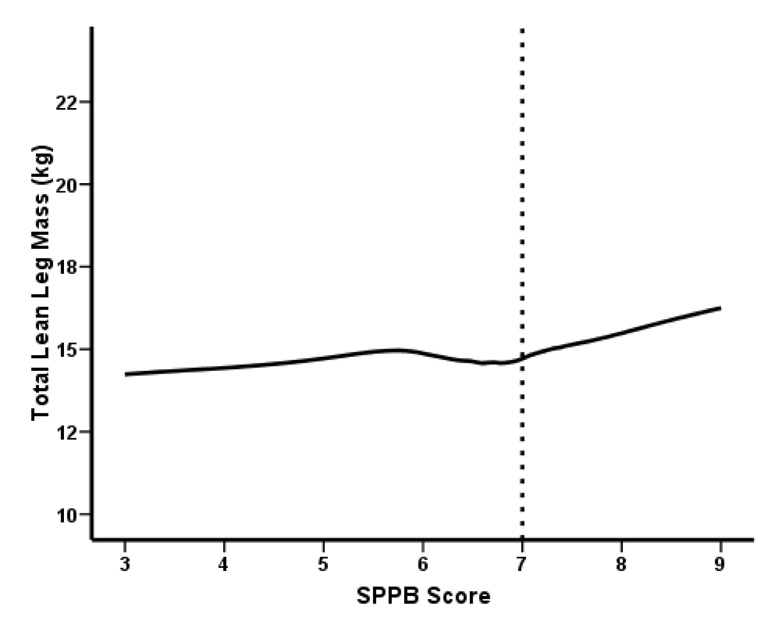
Fifty-seven older males and females (age 74.2 +/- 7 yrs; BMI 28.9 +/- 6 kg/m2) underwent an objective assessment of lower extremity functional performance, the Short Physical Performance Battery test (SPPB). Participants were subsequently classified as having moderate (SPPB score 7: n = 38) or severe mobility impairments (SPPB score <or= 7: n = 19). Body composition was assessed using dual-energy X-ray absorptiometry and provided measures of bone mineral density (BMD), total leg lean mass (TLM) and total body fat. Maximal hip extensor muscle strength was estimated using the bilateral leg press exercise. Multiple logistic regression analysis was utilized to identify the significant independent variables that predicted the level of mobility-disability.
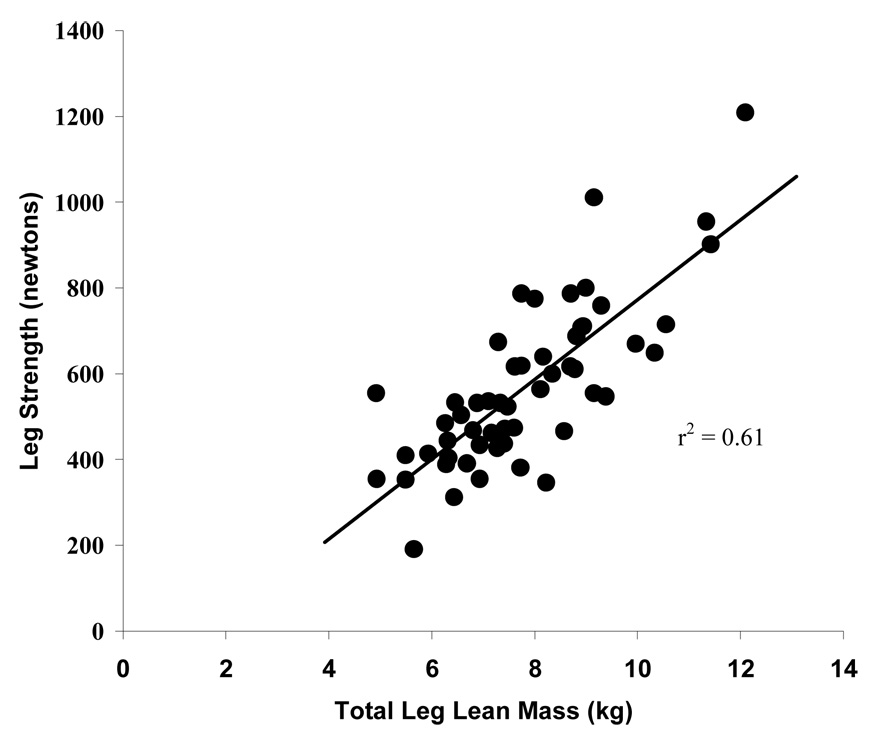
TLM was a strong independent predictor of the level of functional impairment, after accounting for chronic medical conditions, BMD, body fat, body weight and habitual physical activity. In a separate predictive model, reduced muscle strength was also a significant predictor of severe functional impairment. The severity of mobility-disability was not influenced by gender (p = 0.71). A strong association was elicited between TLM and muscle strength (r = 0.78, p < 0.01).
These data suggest that lower extremity muscle mass is an important determinant of physical performance among functionally-limited elders. Such findings may have important implications for the design of suitable strategies to maintain independence in older adults with compromised physical functioning. Additional studies are warranted to assess the efficacy of lifestyle, exercise or therapeutic interventions for increasing lean body mass in this population.
本研究探讨了社区居住的老年人下肢身体成分和肌肉力量对行动障碍严重程度的影响。
57名老年男性和女性(年龄74.2±7岁;体重指数28.9±6kg/m²)接受了下肢功能表现的客观评估,即简短身体机能测试(SPPB)。参与者随后被分为中度(SPPB评分7:n = 38)或重度行动障碍(SPPB评分≤7:n = 19)。使用双能X线吸收法评估身体成分,并提供骨密度(BMD)、全腿瘦体重(TLM)和全身脂肪的测量值。使用双侧腿举运动估计最大髋伸肌力量。采用多元逻辑回归分析来确定预测行动障碍水平的显著独立变量。
在考虑慢性疾病、BMD、身体脂肪、体重和习惯性身体活动后,TLM是功能障碍水平的强有力独立预测因素。在一个单独的预测模型中,肌肉力量下降也是严重功能障碍的显著预测因素。行动障碍的严重程度不受性别影响(p = 0.71)。TLM与肌肉力量之间存在强烈关联(r = 0.78,p < 0.01)。
这些数据表明,下肢肌肉质量是功能受限老年人身体表现的重要决定因素。这些发现可能对设计合适的策略以维持身体功能受损的老年人的独立性具有重要意义。有必要进行更多研究来评估生活方式、运动或治疗干预对增加该人群瘦体重的效果。