Melo Rossana C N
Department of Biology, Federal University of Juiz de Fora, MG, Brazil.
J Cell Mol Med. 2009 Feb;13(2):279-94. doi: 10.1111/j.1582-4934.2008.00388.x. Epub 2008 Jun 20.
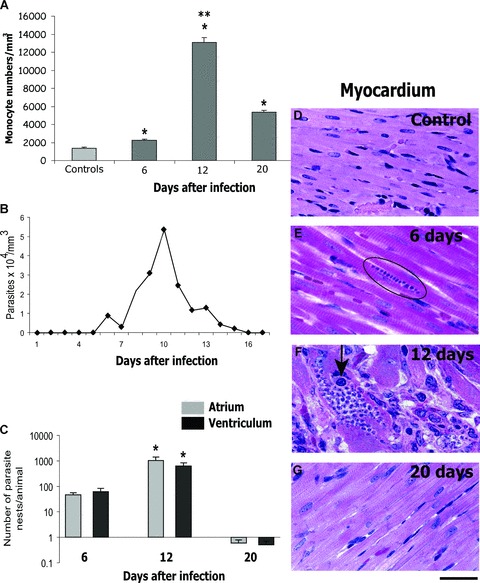
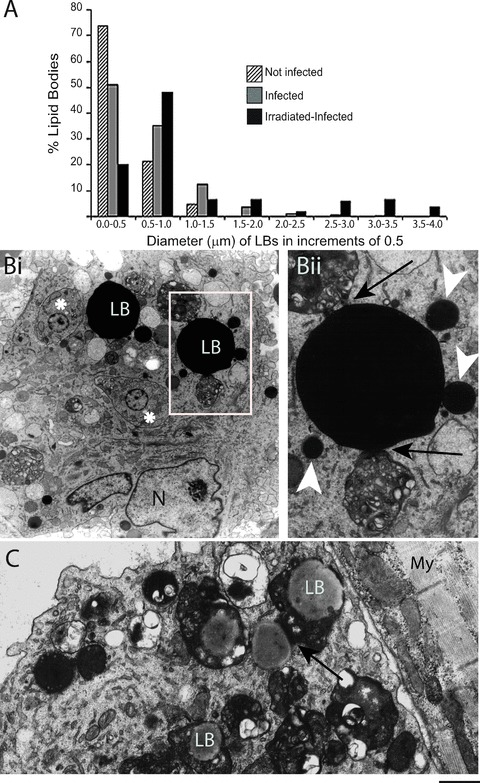
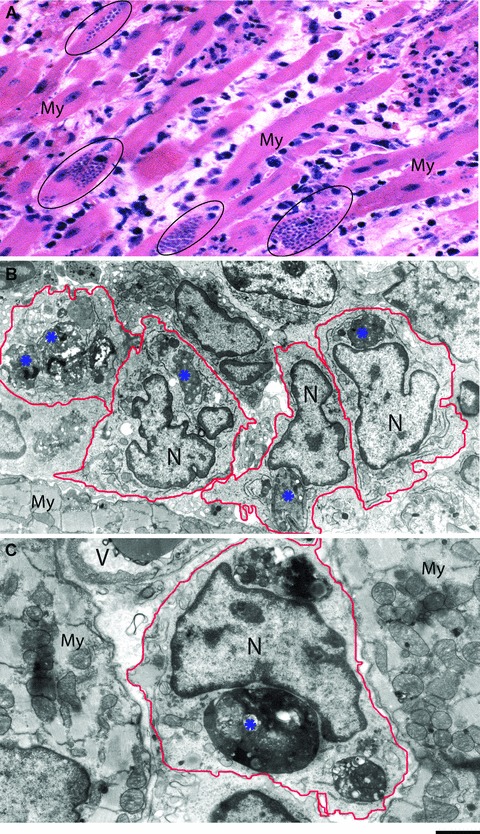
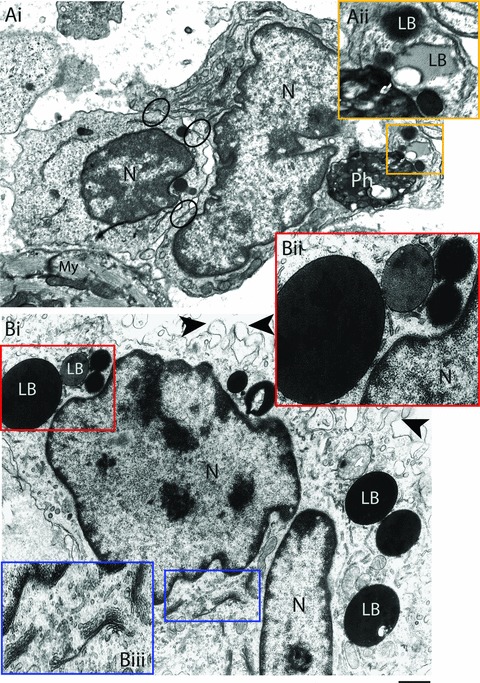
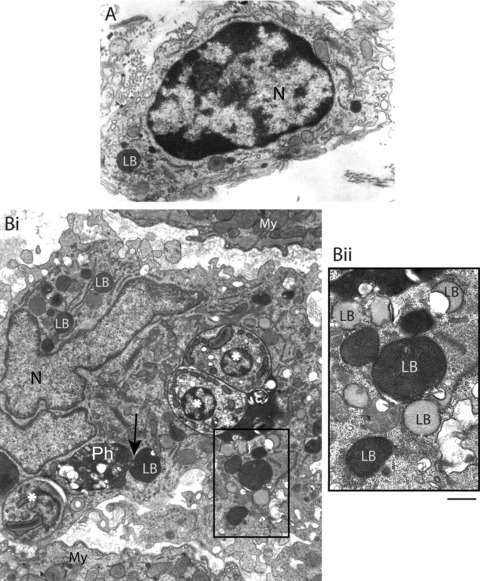
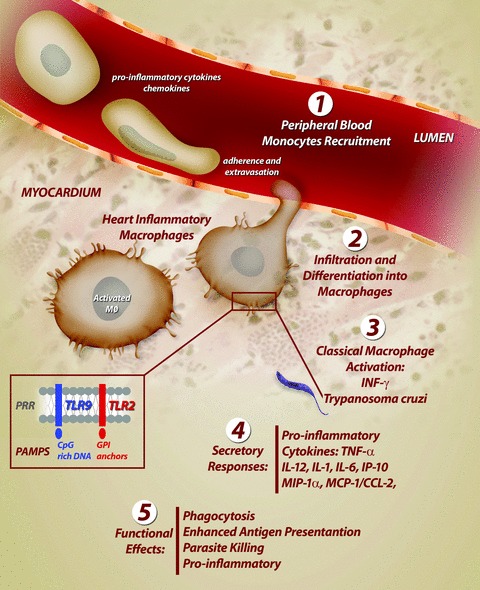
The heart is the main target organ of the parasite Trypanosoma cruzi, the causal agent of Chagas' disease, a significant public health issue and still a major cause of morbidity and mortality in Latin America. During the acute disease, tissue damage in the heart is related to the intense myocardium parasitism. To control parasite multiplication, cells of the monocytic lineage are highly mobilized. In response to inflammatory and immune stimulation, an intense migration and extravasation of monocytes occurs from the bloodstream into heart. Monocyte differentiation leads to the formation of tissue phagocytosing macrophages, which are strongly activated and direct host defence. Newly elicited monocyte-derived macrophages both undergo profound physiological changes and display morphological heterogeneity that greatly differs from originally non-inflammatory macrophages, and underlie their functional activities as potent inflammatory cells. Thus, activated macrophages play a critical role in the outcome of parasite infection. This review covers functional and ultrastructural aspects of heart inflammatory macrophages triggered by the acute Chagas' disease, including recent discoveries on morphologically distinct, inflammation-related organelles, termed lipid bodies, which are actively formed in vivo within macrophages in response to T. cruzi infection. These findings are defining a broader role for lipid bodies as key markers of macrophage activation during innate immune responses to infectious diseases and attractive targets for novel anti-inflammatory therapies. Modulation of macrophage activation may be central in providing therapeutic benefits for Chagas' disease control.
心脏是克氏锥虫的主要靶器官,克氏锥虫是恰加斯病的病原体,恰加斯病是一个重大的公共卫生问题,至今仍是拉丁美洲发病和死亡的主要原因。在急性期,心脏组织损伤与心肌的严重寄生虫感染有关。为了控制寄生虫繁殖,单核细胞系细胞被高度调动。在炎症和免疫刺激的作用下,单核细胞从血液中大量迁移并渗出到心脏。单核细胞分化导致形成组织吞噬巨噬细胞,这些巨噬细胞被强烈激活并直接参与宿主防御。新募集的单核细胞衍生巨噬细胞既经历深刻的生理变化,又表现出形态异质性,这与最初的非炎症巨噬细胞有很大不同,并且是它们作为强效炎症细胞发挥功能活动的基础。因此,活化的巨噬细胞在寄生虫感染的结果中起关键作用。本综述涵盖了急性恰加斯病引发的心脏炎症巨噬细胞的功能和超微结构方面,包括最近关于形态上不同的、与炎症相关的细胞器(称为脂质体)的发现,脂质体是巨噬细胞在体内响应克氏锥虫感染而活跃形成的。这些发现正在为脂质体定义一个更广泛的作用,即脂质体作为传染病固有免疫反应期间巨噬细胞活化的关键标志物以及新型抗炎疗法的有吸引力的靶点。巨噬细胞活化的调节可能是控制恰加斯病的治疗益处的核心。