Reyna Sara M, Ghosh Sangeeta, Tantiwong Puntip, Meka C S Reddy, Eagan Phyllis, Jenkinson Christopher P, Cersosimo Eugenio, Defronzo Ralph A, Coletta Dawn K, Sriwijitkamol Apiradee, Musi Nicolas
Diabetes Division, University of Texas Health Science Center at San Antonio, San Antonio, Texas, USA.
Diabetes. 2008 Oct;57(10):2595-602. doi: 10.2337/db08-0038. Epub 2008 Jul 15.
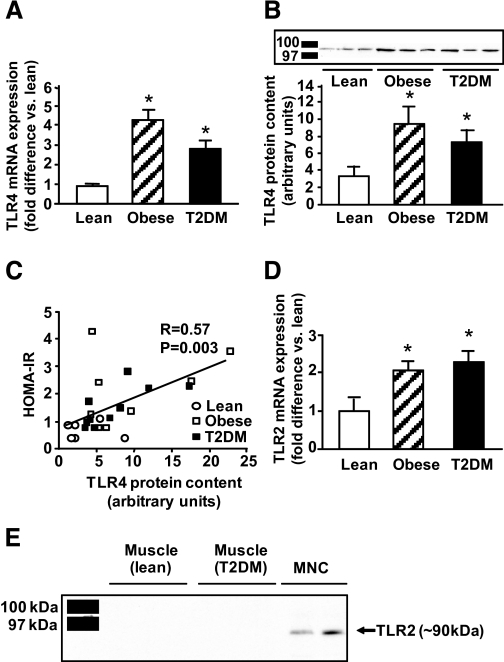
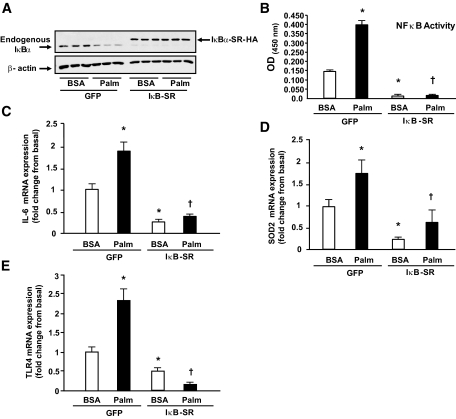
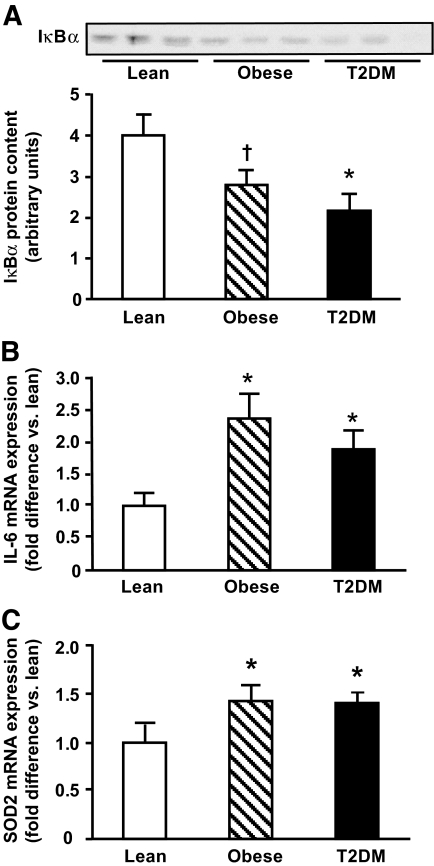
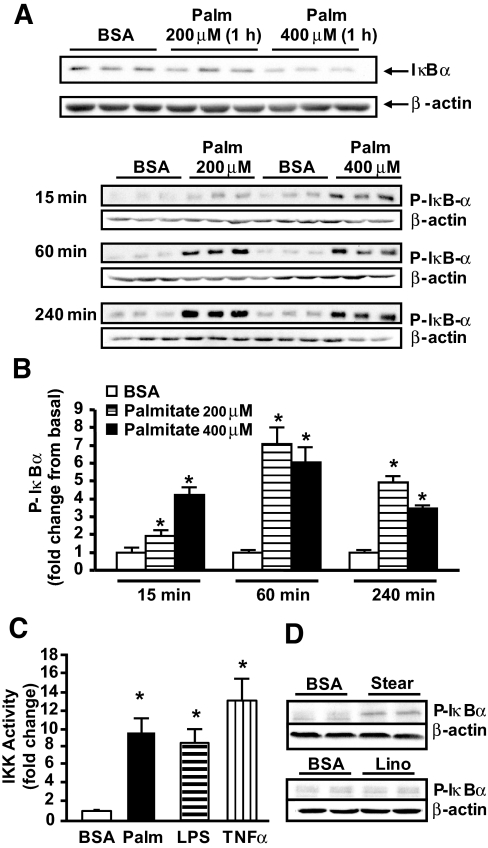
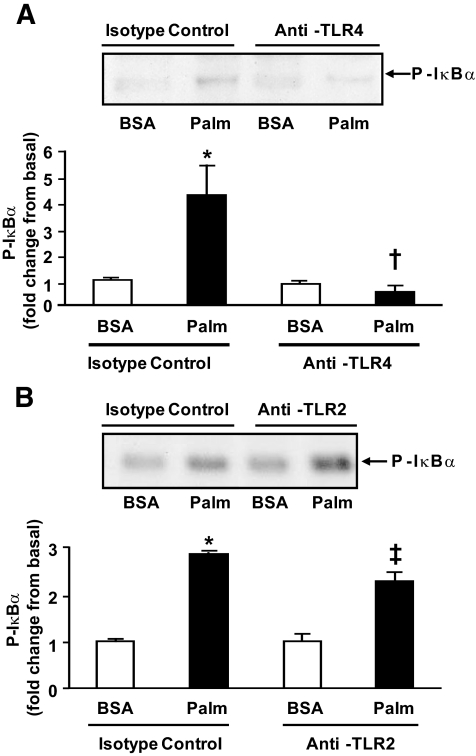
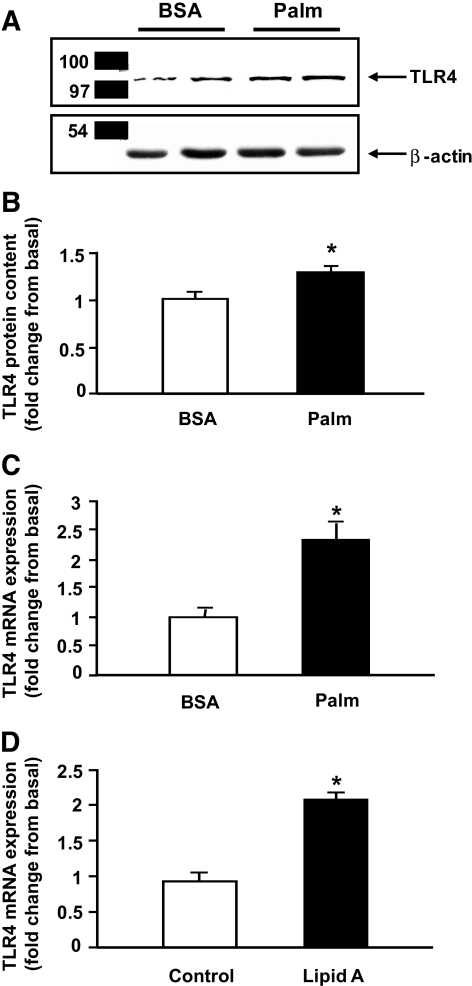
OBJECTIVE- Tall-like receptor (TLR)4 has been implicated in the pathogenesis of free fatty acid (FFA)-induced insulin resistance by activating inflammatory pathways, including inhibitor of kappaB (IkappaB)/nuclear factor kappaB (NFkappaB). However, it is not known whether insulin-resistant subjects have abnormal TLR4 signaling. We examined whether insulin-resistant subjects have abnormal TLR4 expression and TLR4-driven (IkappaB/NFkappaB) signaling in skeletal muscle. RESEARCH DESIGN AND METHODS- TLR4 gene expression and protein content were measured in muscle biopsies in 7 lean, 8 obese, and 14 type 2 diabetic subjects. A primary human myotube culture system was used to examine whether FFAs stimulate IkappaB/NFkappaB via TLR4 and whether FFAs increase TLR4 expression/content in muscle. RESULTS- Obese and type 2 diabetic subjects had significantly elevated TLR4 gene expression and protein content in muscle. TLR4 muscle protein content correlated with the severity of insulin resistance. Obese and type 2 diabetic subjects also had lower IkappaBalpha content, an indication of elevated IkappaB/NFkappaB signaling. The increase in TLR4 and NFkappaB signaling was accompanied by elevated expression of the NFkappaB-regulated genes interleukin (IL)-6 and superoxide dismutase (SOD)2. In primary human myotubes, acute palmitate treatment stimulated IkappaB/NFkappaB, and blockade of TLR4 prevented the ability of palmitate to stimulate the IkappaB/NFkappaB pathway. Increased TLR4 content and gene expression observed in muscle from insulin-resistant subjects were reproduced by treating myotubes from lean, normal-glucose-tolerant subjects with palmitate. Palmitate also increased IL-6 and SOD2 gene expression, and this effect was prevented by inhibiting NFkappaB. CONCLUSIONS- Abnormal TLR4 expression and signaling, possibly caused by elevated plasma FFA levels, may contribute to the pathogenesis of insulin resistance in humans.
目的——类Toll样受体(TLR)4通过激活包括κB抑制因子(IkappaB)/核因子κB(NFkappaB)在内的炎症信号通路,参与游离脂肪酸(FFA)诱导的胰岛素抵抗的发病机制。然而,胰岛素抵抗患者的TLR4信号是否异常尚不清楚。我们研究了胰岛素抵抗患者的骨骼肌中TLR4表达及TLR4驱动的(IkappaB/NFkappaB)信号是否异常。
研究设计与方法——测定了7名瘦人、8名肥胖者和14名2型糖尿病患者肌肉活检标本中的TLR4基因表达和蛋白含量。采用原代人肌管培养系统,研究FFA是否通过TLR4刺激IkappaB/NFkappaB,以及FFA是否增加肌肉中TLR4的表达/含量。
结果——肥胖者和2型糖尿病患者肌肉中的TLR4基因表达和蛋白含量显著升高。TLR4肌肉蛋白含量与胰岛素抵抗的严重程度相关。肥胖者和2型糖尿病患者的IkappaBalpha含量也较低,提示IkappaB/NFkappaB信号增强。TLR4和NFkappaB信号的增加伴随着NFkappaB调控基因白细胞介素(IL)-6和超氧化物歧化酶(SOD)2表达的升高。在原代人肌管中,急性棕榈酸处理可刺激IkappaB/NFkappaB,而阻断TLR4可阻止棕榈酸刺激IkappaB/NFkappaB信号通路的能力。用棕榈酸处理糖耐量正常的瘦人肌管,可重现胰岛素抵抗患者肌肉中观察到的TLR4含量和基因表达增加的现象。棕榈酸还增加了IL-6和SOD2基因的表达,抑制NFkappaB可阻止这种作用。
结论——异常的TLR4表达和信号可能由血浆FFA水平升高引起,可能参与了人类胰岛素抵抗的发病机制。