Department of Human Health and Nutritional Sciences, University of Guelph, Guelph, ON N1G 2W1, Canada.
Nutrients. 2024 Jun 29;16(13):2086. doi: 10.3390/nu16132086.
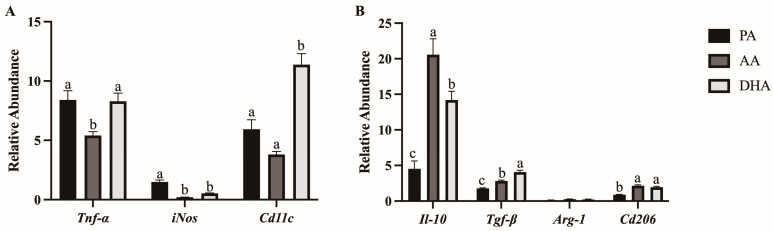
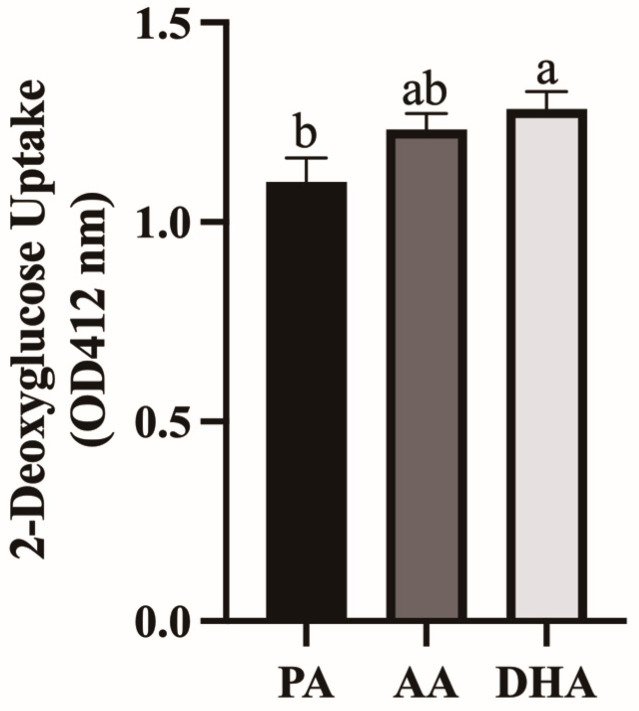
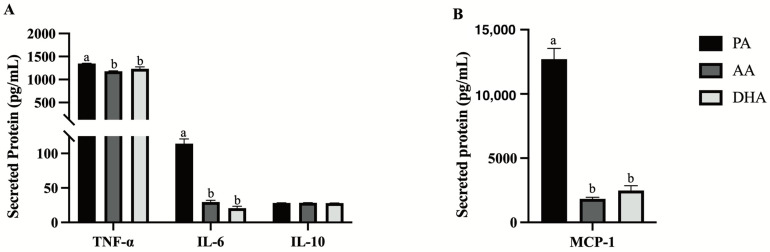
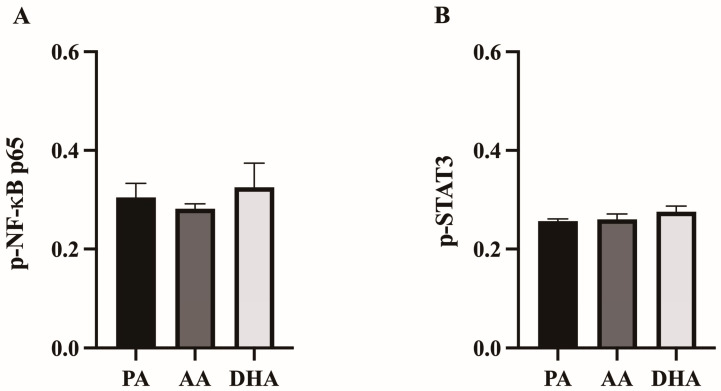
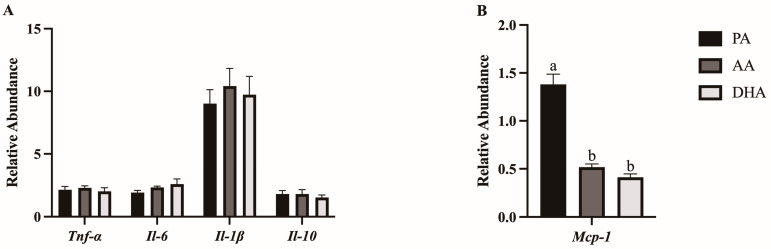
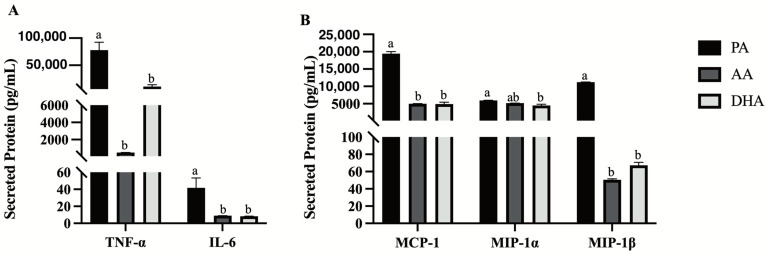
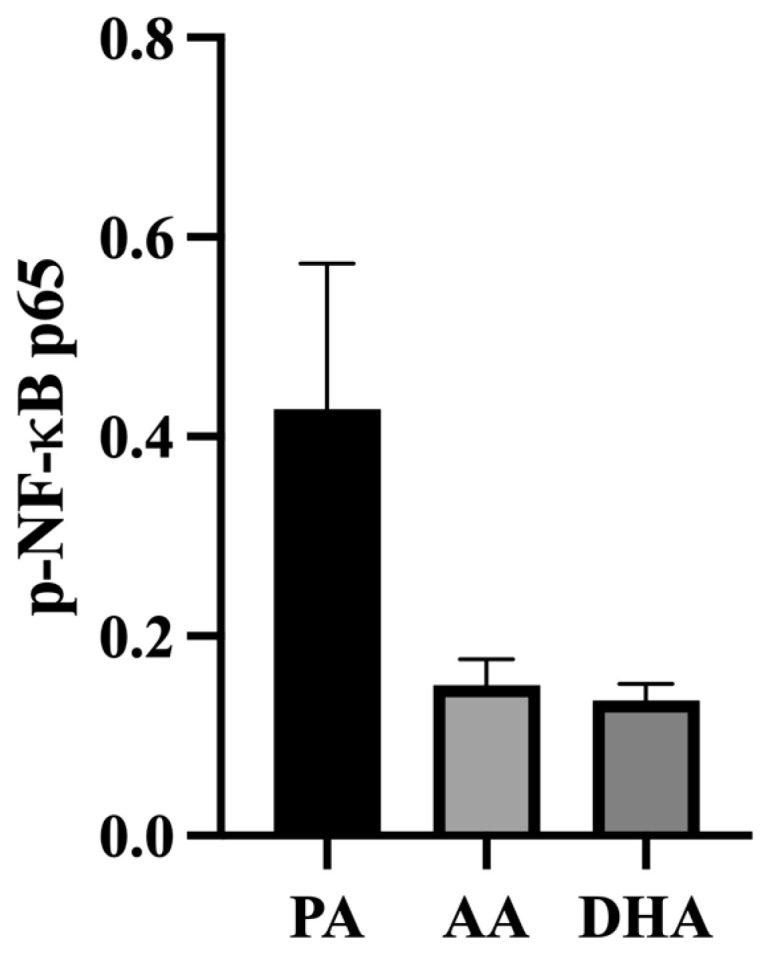
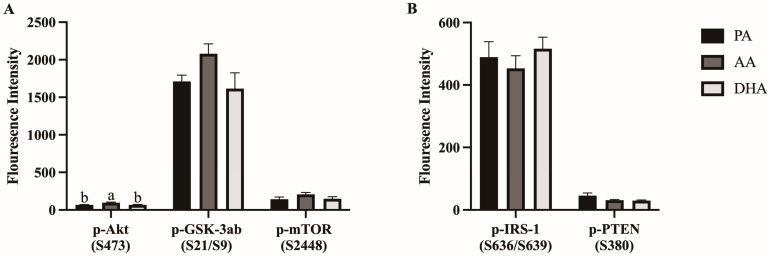
In obesity, circulating saturated fatty acids (SFAs) and inflammatory cytokines interfere with skeletal muscle insulin signaling, leading to whole body insulin resistance. Further, obese skeletal muscle is characterized by macrophage infiltration and polarization to the inflammatory M1 phenotype, which is central to the development of local inflammation and insulin resistance. While skeletal muscle-infiltrated macrophage-myocyte crosstalk is exacerbated by SFA, the effects of other fatty acids, such as -3 and -6 polyunsaturated fatty acids (PUFAs), are less studied. Thus, the objective of this study was to determine the effects of long-chain -3 and -6 PUFAs on macrophage M1 polarization and subsequent effects on myocyte inflammation and metabolic function compared to SFA. Using an in vitro model recapitulating obese skeletal muscle cells, differentiated L6 myocytes were cultured for 24 h with RAW 264.7 macrophage-conditioned media (MCM), followed by insulin stimulation (100 nM, 20 min). MCM was generated by pre-treating macrophages for 24 h with 100 μM palmitic acid (16:0, PA-control), arachidonic acid (20:4-6, AA), or docosahexaenoic acid (22:6-3, DHA). Next, macrophage cultures were stimulated with a physiological dose (10 ng/mL) of lipopolysaccharide for an additional 12 h to mimic in vivo obese endotoxin levels. Compared to PA, both AA and DHA reduced mRNA expression and/or secreted protein levels of markers for M1 (TNFα, IL-6, iNOS; < 0.05) and increased those for M2 (IL-10, TGF-β; < 0.05) macrophage polarization. In turn, AA- and DHA-derived MCM reduced L6 myocyte-secreted cytokines (TNFα, IL-6; < 0.05) and chemokines (MCP-1, MIP-1β; < 0.05). Only AA-derived MCM increased L6-myocyte phosphorylation of Akt ( < 0.05), yet this was inconsistent with improved insulin signaling, as only DHA-derived MCM improved L6 myocyte glucose uptake ( < 0.05). In conclusion, dietary -3 and -6 PUFAs may be a useful strategy to modulate macrophage-myocyte inflammatory crosstalk and improve myocyte insulin sensitivity in obesity.
在肥胖症中,循环饱和脂肪酸 (SFAs) 和炎性细胞因子干扰骨骼肌胰岛素信号传导,导致全身胰岛素抵抗。此外,肥胖的骨骼肌以巨噬细胞浸润和向炎症 M1 表型极化为特征,这是局部炎症和胰岛素抵抗发展的核心。虽然 SFA 加剧了骨骼肌浸润的巨噬细胞-肌细胞串扰,但其他脂肪酸(如 -3 和 -6 多不饱和脂肪酸 (PUFAs))的影响研究较少。因此,本研究的目的是确定长链 -3 和 -6 PUFAs 对巨噬细胞 M1 极化的影响,以及与 SFA 相比,随后对肌细胞炎症和代谢功能的影响。
使用模拟肥胖骨骼肌细胞的体外模型,将分化的 L6 肌细胞在 RAW 264.7 巨噬细胞条件培养基 (MCM) 中培养 24 小时,然后进行胰岛素刺激(100 nM,20 分钟)。MCM 通过预先用 100 μM 棕榈酸 (16:0,PA-对照)、花生四烯酸 (20:4-6,AA) 或二十二碳六烯酸 (22:6-3,DHA) 预处理巨噬细胞 24 小时来产生。接下来,用生理剂量 (10 ng/mL) 的脂多糖刺激巨噬细胞培养物 12 小时,以模拟体内肥胖内毒素水平。与 PA 相比,AA 和 DHA 均降低了 M1(TNFα、IL-6、iNOS;<0.05)标志物的 mRNA 表达和/或分泌蛋白水平,并增加了 M2(IL-10、TGF-β;<0.05)标志物的表达。反过来,AA 和 DHA 衍生的 MCM 减少了 L6 肌细胞分泌的细胞因子(TNFα、IL-6;<0.05)和趋化因子(MCP-1、MIP-1β;<0.05)。只有 AA 衍生的 MCM 增加了 L6 肌细胞 Akt 的磷酸化(<0.05),但这与改善胰岛素信号不一致,因为只有 DHA 衍生的 MCM 改善了 L6 肌细胞的葡萄糖摄取(<0.05)。
总之,膳食 -3 和 -6 PUFAs 可能是一种调节巨噬细胞-肌细胞炎症串扰和改善肥胖症中肌细胞胰岛素敏感性的有用策略。