Fouts Derrick E, Tyler Heather L, DeBoy Robert T, Daugherty Sean, Ren Qinghu, Badger Jonathan H, Durkin Anthony S, Huot Heather, Shrivastava Susmita, Kothari Sagar, Dodson Robert J, Mohamoud Yasmin, Khouri Hoda, Roesch Luiz F W, Krogfelt Karen A, Struve Carsten, Triplett Eric W, Methé Barbara A
J. Craig Venter Institute, Rockville, Maryland, USA.
PLoS Genet. 2008 Jul 25;4(7):e1000141. doi: 10.1371/journal.pgen.1000141.
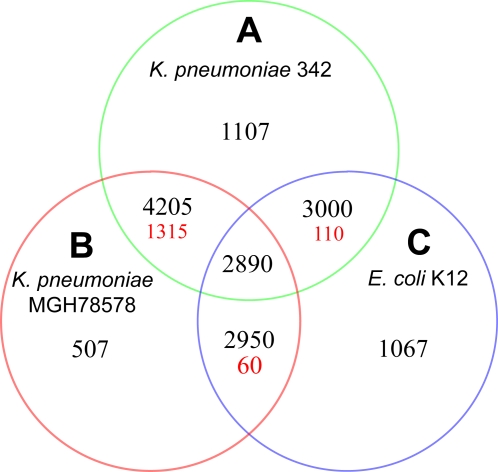
We report here the sequencing and analysis of the genome of the nitrogen-fixing endophyte, Klebsiella pneumoniae 342. Although K. pneumoniae 342 is a member of the enteric bacteria, it serves as a model for studies of endophytic, plant-bacterial associations due to its efficient colonization of plant tissues (including maize and wheat, two of the most important crops in the world), while maintaining a mutualistic relationship that encompasses supplying organic nitrogen to the host plant. Genomic analysis examined K. pneumoniae 342 for the presence of previously identified genes from other bacteria involved in colonization of, or growth in, plants. From this set, approximately one-third were identified in K. pneumoniae 342, suggesting additional factors most likely contribute to its endophytic lifestyle. Comparative genome analyses were used to provide new insights into this question. Results included the identification of metabolic pathways and other features devoted to processing plant-derived cellulosic and aromatic compounds, and a robust complement of transport genes (15.4%), one of the highest percentages in bacterial genomes sequenced. Although virulence and antibiotic resistance genes were predicted, experiments conducted using mouse models showed pathogenicity to be attenuated in this strain. Comparative genomic analyses with the presumed human pathogen K. pneumoniae MGH78578 revealed that MGH78578 apparently cannot fix nitrogen, and the distribution of genes essential to surface attachment, secretion, transport, and regulation and signaling varied between each genome, which may indicate critical divergences between the strains that influence their preferred host ranges and lifestyles (endophytic plant associations for K. pneumoniae 342 and presumably human pathogenesis for MGH78578). Little genome information is available concerning endophytic bacteria. The K. pneumoniae 342 genome will drive new research into this less-understood, but important category of bacterial-plant host relationships, which could ultimately enhance growth and nutrition of important agricultural crops and development of plant-derived products and biofuels.
我们在此报告固氮内生菌肺炎克雷伯菌342的基因组测序与分析结果。尽管肺炎克雷伯菌342属于肠道细菌,但因其能有效定殖于植物组织(包括玉米和小麦这两种世界上最重要的作物),同时维持一种向宿主植物供应有机氮的共生关系,所以它可作为研究内生植物 - 细菌关联的模型。基因组分析检测了肺炎克雷伯菌342中是否存在先前在其他参与植物定殖或生长的细菌中鉴定出的基因。在这组基因中,约三分之一在肺炎克雷伯菌342中被鉴定出来,这表明可能还有其他因素促成了其内生生活方式。比较基因组分析用于为这个问题提供新见解。结果包括鉴定出了用于处理植物衍生的纤维素和芳香族化合物的代谢途径及其他特征,以及丰富的转运基因(占15.4%),这在已测序的细菌基因组中占比很高。尽管预测到了毒力和抗生素抗性基因,但使用小鼠模型进行的实验表明该菌株的致病性已减弱。与假定的人类病原体肺炎克雷伯菌MGH78578的比较基因组分析显示,MGH78578显然不能固氮,并且参与表面附着、分泌、转运以及调控和信号传导的必需基因在每个基因组中的分布各不相同,这可能表明这些菌株之间存在关键差异,影响它们偏好的宿主范围和生活方式(肺炎克雷伯菌342为内生植物关联,而MGH78578可能与人类致病有关)。关于内生细菌的基因组信息很少。肺炎克雷伯菌342的基因组将推动对这种了解较少但很重要的细菌 - 植物宿主关系类别的新研究,这最终可能会促进重要农作物的生长和营养,以及植物衍生产品和生物燃料的开发。