Cybulski Robert J, Sanz Patrick, McDaniel Dennis, Darnell Steve, Bull Robert L, O'Brien Alison D
Department of Microbiology and Immunology, Uniformed Services University of the Health Sciences, Bethesda, MD 20814-4799, United States.
Vaccine. 2008 Sep 8;26(38):4927-39. doi: 10.1016/j.vaccine.2008.07.015. Epub 2008 Jul 25.
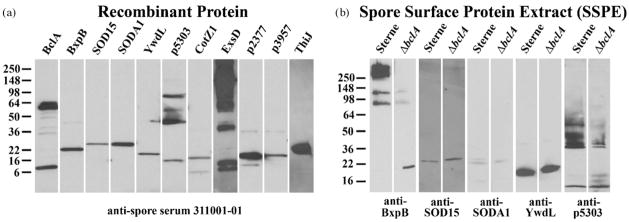
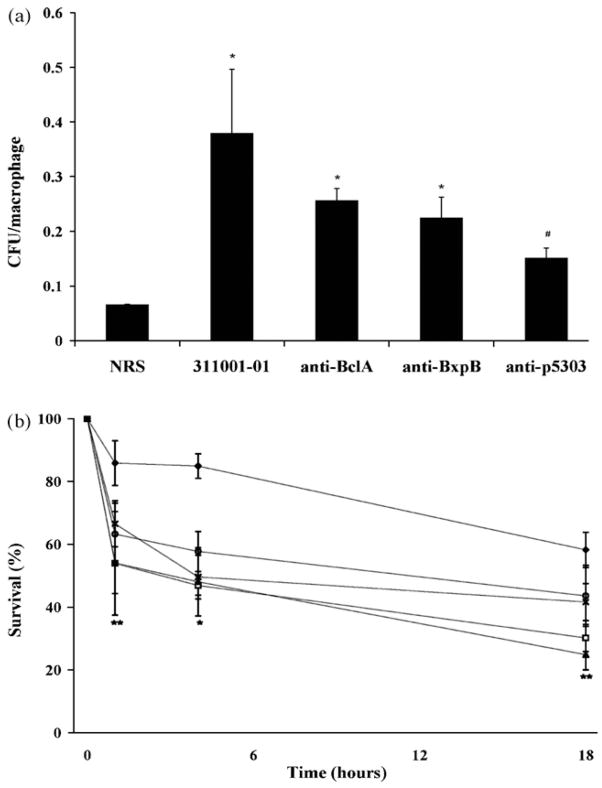
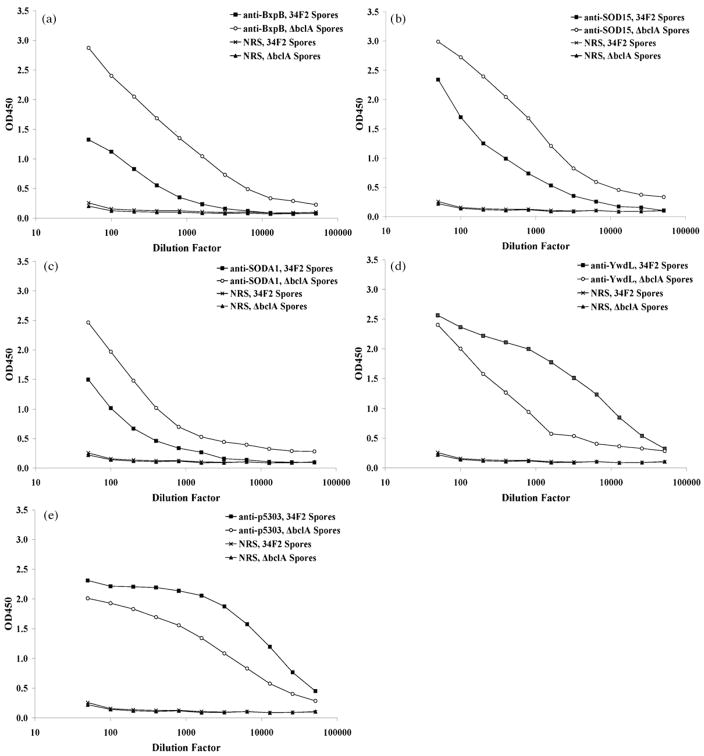
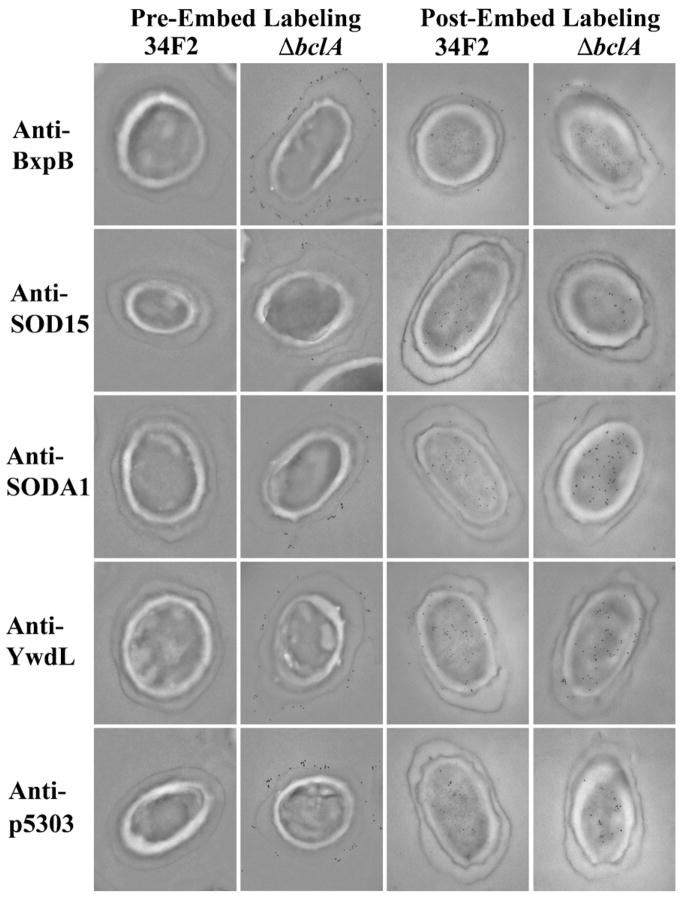
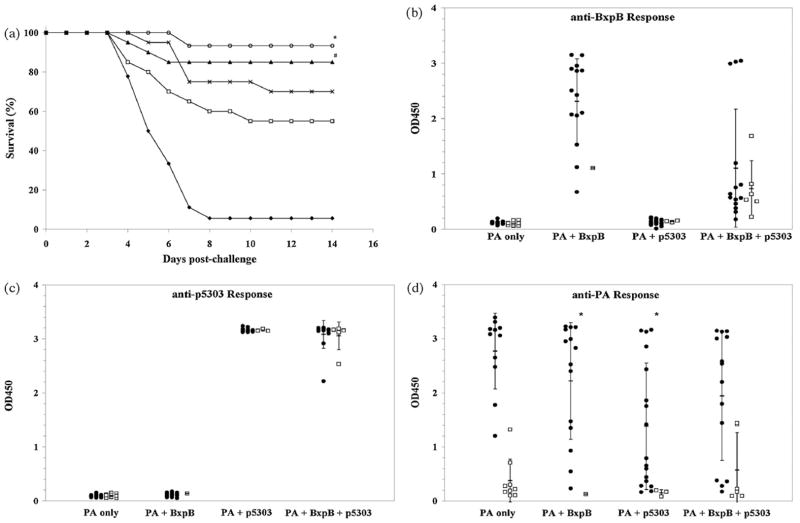
Inactivated Bacillus anthracis spores given with protective antigen (PA) contribute to immunity against anthrax in several animal models. Antiserum raised against whole irradiated B. anthracis spores has been shown to have anti-germination and opsonic activities in vitro. Based on these observations, we hypothesized that surface-exposed spore proteins might serve as supplemental components of a PA-based anthrax vaccine. The protective anti-spore serum was tested for reactivity with recombinant forms of 30 proteins known, or believed to be, present within the B. anthracis exosporium. Eleven of those proteins were reactive with this antiserum, and, subsequently a subset of this group was used to generate rabbit polyclonal antibodies. These sera were evaluated for recognition of the immunogens on intact spores generated from Sterne strain, as well as from an isogenic mutant lacking the spore surface protein Bacillus collagen-like antigen (BclA). The data were consistent with the notion that the antigens in question were located beneath BclA on the basal surface of the exosporium. A/J mice immunized with either the here-to-for hypothetical protein p5303 or the structural protein BxpB, each in combination with subprotective levels of PA, showed enhanced protection against subcutaneous spore challenge. While neither anti-BxpB or anti-p5303 antibodies reduced the rate of spore germination in vitro, both caused increased uptake and lead to a higher rate of destruction by phagocytic cells. We conclude that by facilitating more efficient phagocytic clearance of spores, antibodies against individual exosporium components can contribute to protection against B. anthracis infection.
在几种动物模型中,将灭活的炭疽芽孢杆菌孢子与保护性抗原(PA)一起使用有助于产生抗炭疽免疫力。已证明,针对经辐照的完整炭疽芽孢杆菌孢子产生的抗血清在体外具有抗萌发和调理活性。基于这些观察结果,我们推测表面暴露的孢子蛋白可能作为基于PA的炭疽疫苗的补充成分。测试了保护性抗孢子血清与已知或被认为存在于炭疽芽孢杆菌芽孢衣内的30种重组蛋白形式的反应性。其中11种蛋白与该抗血清有反应,随后使用该组中的一个子集来产生兔多克隆抗体。评估了这些血清对由斯特恩菌株以及缺乏孢子表面蛋白芽孢杆菌胶原样抗原(BclA)的同基因突变体产生的完整孢子上免疫原的识别情况。数据与以下观点一致,即所讨论的抗原位于芽孢衣基底表面的BclA之下。用此前假设的蛋白p5303或结构蛋白BxpB分别与亚保护水平的PA联合免疫的A/J小鼠,对皮下孢子攻击显示出增强的保护作用。虽然抗BxpB或抗p5303抗体在体外均未降低孢子萌发率,但两者均导致摄取增加,并导致吞噬细胞的破坏率更高。我们得出结论,通过促进对孢子更有效的吞噬清除,针对单个芽孢衣成分的抗体可有助于抵御炭疽芽孢杆菌感染。