Ueda Shinobu, Kawamata Masaki, Teratani Takumi, Shimizu Taku, Tamai Yoshitaka, Ogawa Hiromasa, Hayashi Katsuyuki, Tsuda Hiroyuki, Ochiya Takahiro
Section for Studies on Metastasis, National Cancer Center Research Institute, Tokyo, Japan.
PLoS One. 2008 Jul 30;3(7):e2800. doi: 10.1371/journal.pone.0002800.
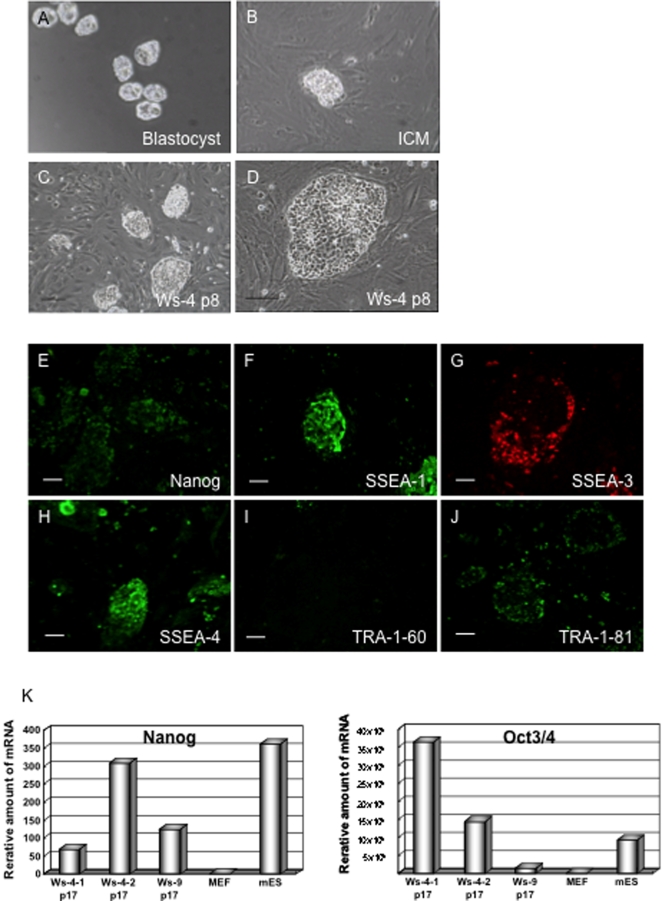
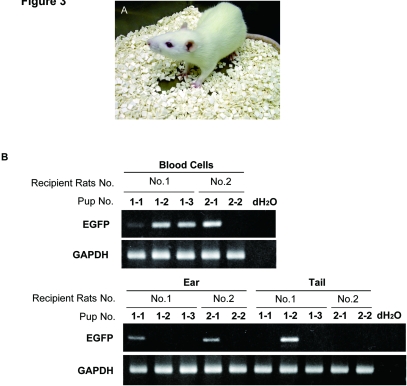
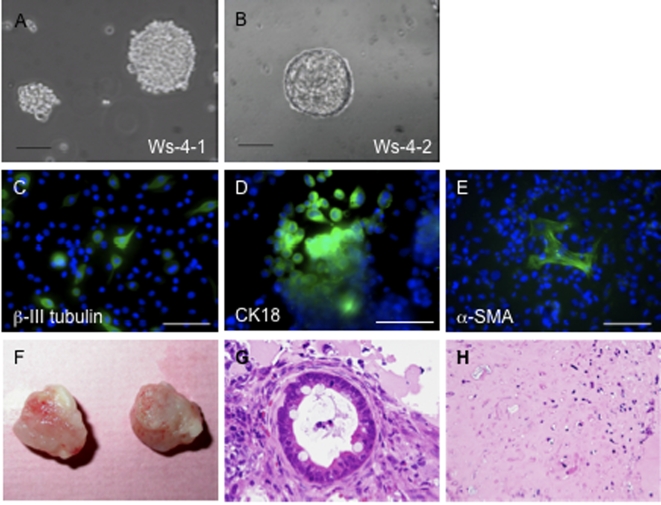
The rat is a reference animal model for physiological studies and for the analysis of multigenic human diseases such as hypertension, diabetes, neurological disorders, and cancer. The rats have long been used in extensive chemical carcinogenesis studies. Thus, the rat embryonic stem (rES) cell is an important resource for the study of disease models. Attempts to derive ES cells from various mammals, including the rat, have not succeeded. Here we have established two independent rES cells from Wister rat blastocysts that have undifferentiated characters such as Nanog and Oct3/4 genes expression and they have stage-specific embryonic antigen (SSEA) -1, -3, -4, and TRA-1-81 expression. The cells were successfully cultured in an undifferentiated state and can be possible over 18 passages with maintaining more than 40% of normal karyotype. Their pluripotent potential was confirmed by the differentiation into derivatives of the endoderm, mesoderm, and ectoderm. Most importantly, the rES cells are capable of producing chimera rats. Therefore, we established pluripotent rES cell lines that are widely used to produce genetically modified experimental rats for study of human diseases.
大鼠是生理学研究以及分析高血压、糖尿病、神经紊乱和癌症等多基因人类疾病的参考动物模型。长期以来,大鼠一直被用于广泛的化学致癌研究。因此,大鼠胚胎干细胞(rES细胞)是疾病模型研究的重要资源。从包括大鼠在内的各种哺乳动物中获取ES细胞的尝试均未成功。在此,我们从Wistar大鼠囊胚中建立了两个独立的rES细胞系,它们具有未分化特征,如Nanog和Oct3/4基因表达,并且表达阶段特异性胚胎抗原(SSEA)-1、-3、-4和TRA-1-81。这些细胞在未分化状态下成功培养,在保持超过40%正常核型的情况下可传代超过18次。它们向内胚层、中胚层和外胚层衍生物的分化证实了其多能性潜力。最重要的是,rES细胞能够产生嵌合大鼠。因此,我们建立了多能性rES细胞系,这些细胞系广泛用于生产转基因实验大鼠以研究人类疾病。