Yang Hyunjeong, Takagi Hiroshi, Konishi Yoshiyuki, Ageta Hiroshi, Ikegami Koji, Yao Ikuko, Sato Showbu, Hatanaka Ken, Inokuchi Kaoru, Seog Dae-Hyun, Setou Mitsutoshi
Department of Biological Information, Tokyo Institute of Technology, Yokohama, Kanagawa, Japan.
PLoS One. 2008 Jul 30;3(7):e2809. doi: 10.1371/journal.pone.0002809.
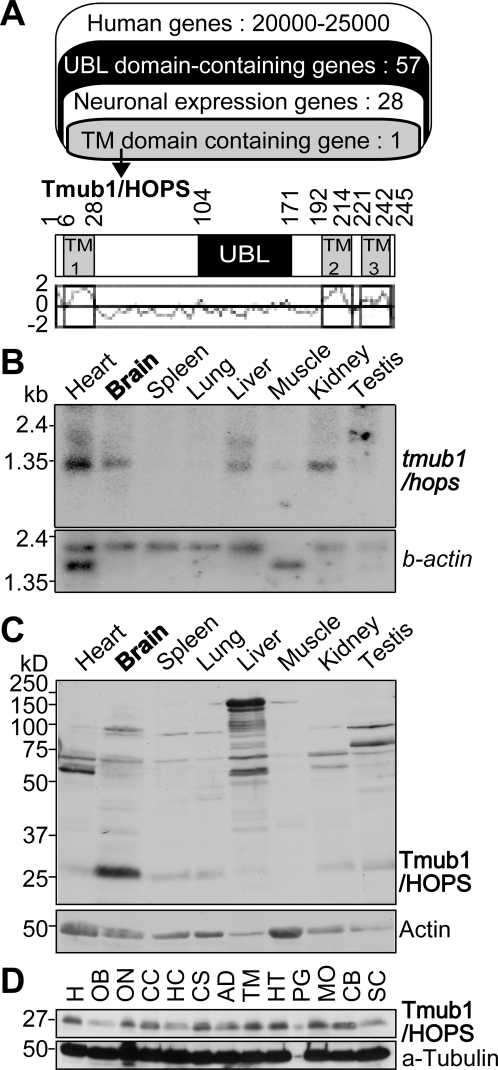
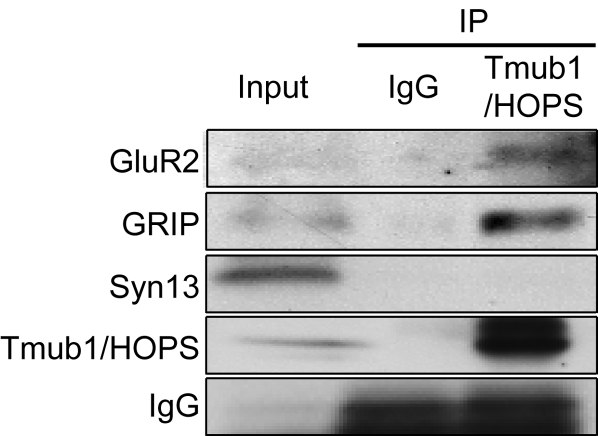
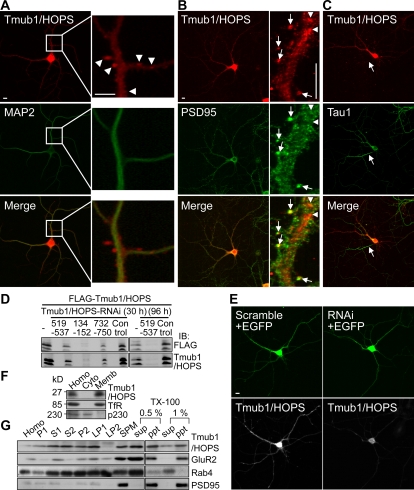
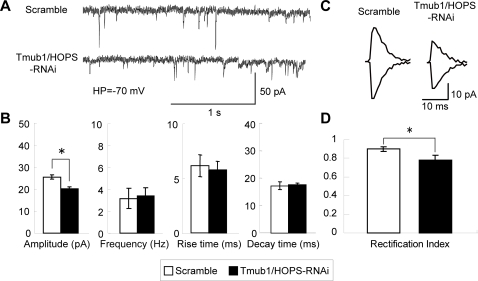
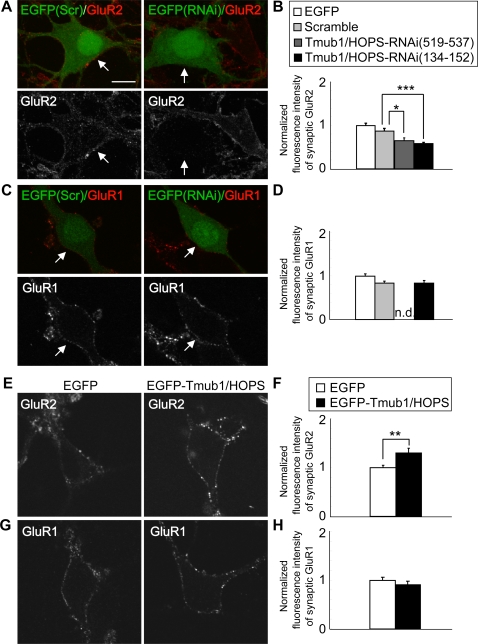
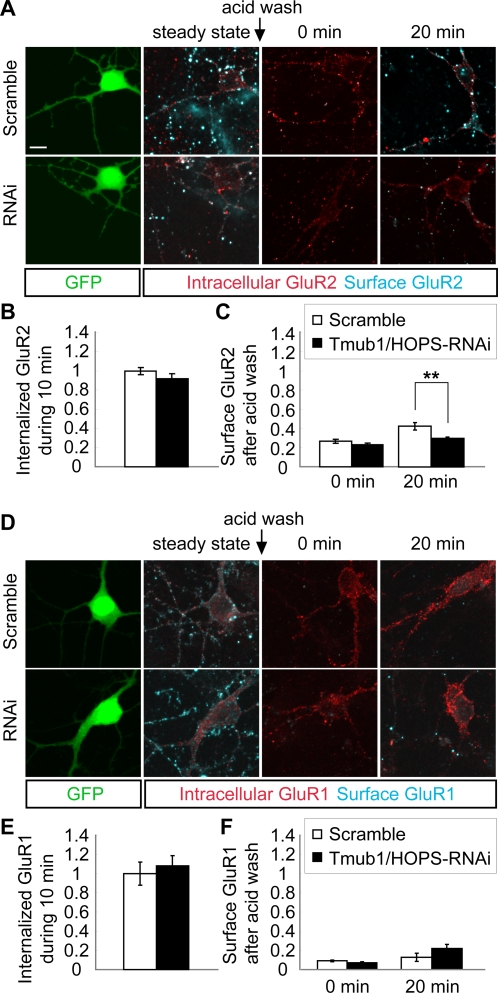
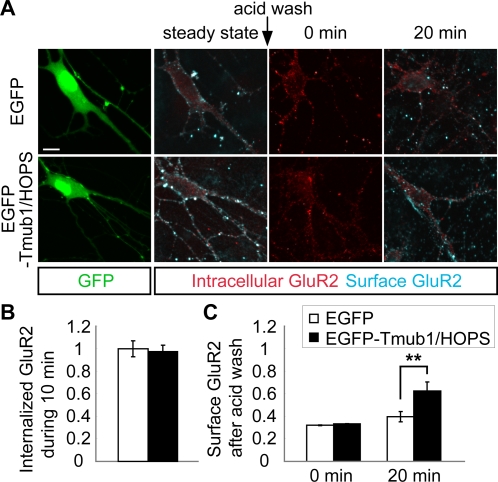
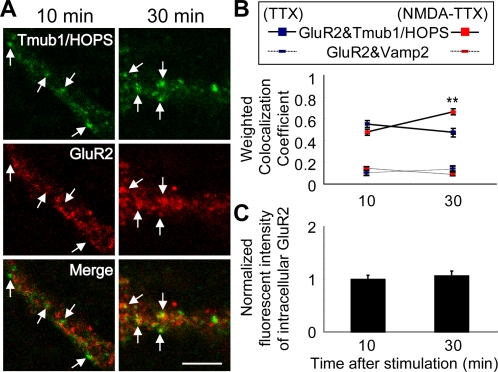
Some ubiquitin-like (UBL) domain-containing proteins are known to play roles in receptor trafficking. Alpha-amino-3-hydroxy-5-methyl-4-isoxazole propionic acid receptors (AMPARs) undergo constitutive cycling between the intracellular compartment and the cell surface in the central nervous system. However, the function of UBL domain-containing proteins in the recycling of the AMPARs to the synaptic surface has not yet been reported.Here, we report that the Transmembrane and ubiquitin-like domain-containing 1 (Tmub1) protein, formerly known as the Hepatocyte Odd Protein Shuttling (HOPS) protein, which is abundantly expressed in the brain and which exists in a synaptosomal membrane fraction, facilitates the recycling of the AMPAR subunit GluR2 to the cell surface. Neurons transfected with Tmub1/HOPS-RNAi plasmids showed a significant reduction in the AMPAR current as compared to their control neurons. Consistently, the synaptic surface expression of GluR2, but not of GluR1, was significantly decreased in the neurons transfected with the Tmub1/HOPS-RNAi and increased in the neurons overexpressing EGFP-Tmub1/HOPS. The altered surface expression of GluR2 was speculated to be due to the altered surface-recycling of the internalized GluR2 in our recycling assay. Eventually, we found that GluR2 and glutamate receptor interacting protein (GRIP) were coimmunoprecipitated by the anti-Tmub1/HOPS antibody from the mouse brain. Taken together, these observations show that the Tmub1/HOPS plays a role in regulating basal synaptic transmission; it contributes to maintain the synaptic surface number of the GluR2-containing AMPARs by facilitating the recycling of GluR2 to the plasma membrane.
已知一些含泛素样(UBL)结构域的蛋白质在受体运输中发挥作用。α-氨基-3-羟基-5-甲基-4-异恶唑丙酸受体(AMPARs)在中枢神经系统的细胞内区室和细胞表面之间进行组成型循环。然而,含UBL结构域的蛋白质在AMPARs循环至突触表面的过程中的功能尚未见报道。在此,我们报告跨膜和含泛素样结构域蛋白1(Tmub1),以前称为肝细胞奇数蛋白穿梭蛋白(HOPS),在大脑中大量表达且存在于突触体膜组分中,它促进AMPAR亚基GluR2循环至细胞表面。与对照神经元相比,用Tmub1/HOPS-RNAi质粒转染的神经元的AMPAR电流显著降低。同样,在用Tmub1/HOPS-RNAi转染的神经元中,GluR2而非GluR1的突触表面表达显著降低,而在过表达EGFP-Tmub1/HOPS的神经元中则增加。在我们的循环分析中,推测内化的GluR2的表面循环改变导致了GluR2表面表达的改变。最终,我们发现从小鼠脑中用抗Tmub1/HOPS抗体可共免疫沉淀GluR2和谷氨酸受体相互作用蛋白(GRIP)。综上所述,这些观察结果表明Tmub1/HOPS在调节基础突触传递中发挥作用;它通过促进GluR2循环至质膜来维持含GluR2的AMPARs的突触表面数量。