Kumamoto Carol A
Department of Molecular Biology and Microbiology, Tufts University, 136 Harrison Avenue, Boston, Massachusetts 02111, USA.
Nat Rev Microbiol. 2008 Sep;6(9):667-73. doi: 10.1038/nrmicro1960.
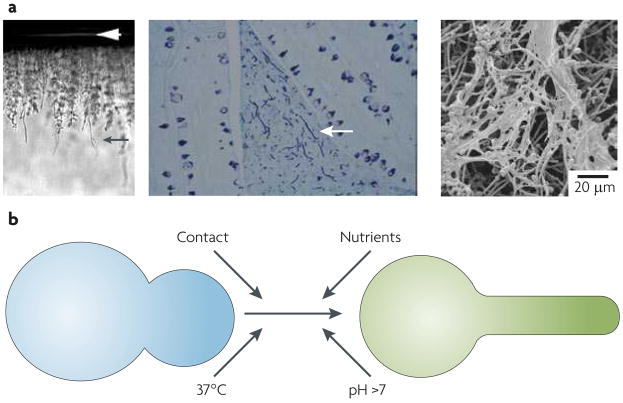
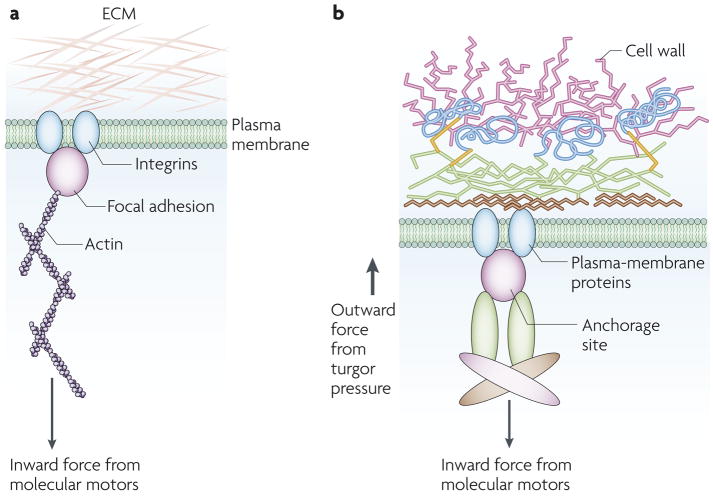
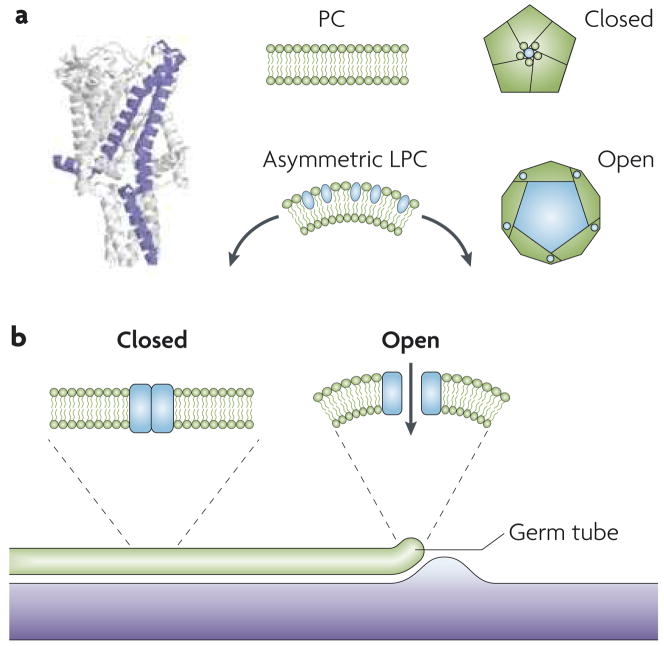
Numerous fungal species respond to contact with a surface by undergoing differentiation. Contact between plant pathogenic fungi and a surface results in the elaboration of the complex structures that enable invasion of the host plant, and for the opportunistic human pathogen Candida albicans, contact with a semi-solid surface results in invasive growth into the subjacent material. The ability to sense contact with an appropriate surface therefore contributes to the ability of these fungi to cause disease in their respective hosts. This Review discusses molecular mechanisms of mechanosensitivity, the proteins involved, such as mechanosensitive ion channels, G-protein-coupled receptors and integrins, and their putative roles in fungal contact sensing.
许多真菌物种通过分化来响应与表面的接触。植物病原真菌与表面的接触会导致形成复杂结构,从而能够侵入宿主植物;而对于机会性人类病原体白色念珠菌来说,与半固体表面的接触会导致其向下方材料中进行侵袭性生长。因此,感知与合适表面接触的能力有助于这些真菌在各自宿主中引发疾病。本综述讨论了机械敏感性的分子机制、所涉及的蛋白质,如机械敏感离子通道、G蛋白偶联受体和整合素,以及它们在真菌接触感知中的假定作用。