McBride Robert C, Ogbunugafor C Brandon, Turner Paul E
Department of Ecology and Evolutionary Biology, Yale University, New Haven, Connecticut 06520-8106, USA.
BMC Evol Biol. 2008 Aug 11;8:231. doi: 10.1186/1471-2148-8-231.
The ability for an evolving population to adapt to a novel environment is achieved through a balance of robustness and evolvability. Robustness is the invariance of phenotype in the face of perturbation and evolvability is the capacity to adapt in response to selection. Genetic robustness has been posited, depending on the underlying mechanism, to either decrease the efficacy of selection, or increase the possibility of future adaptation. However, the true effect of genetic robustness on evolvability in biological systems remains uncertain.
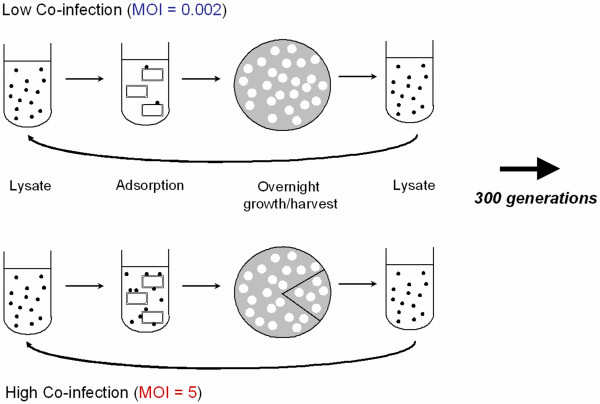
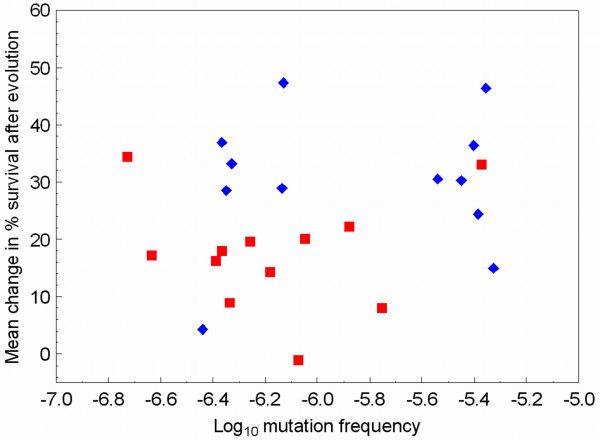
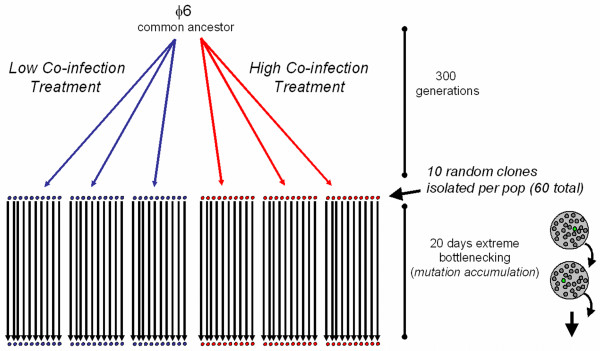
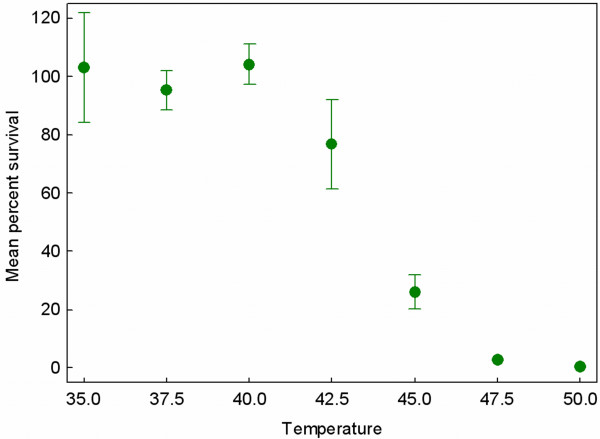
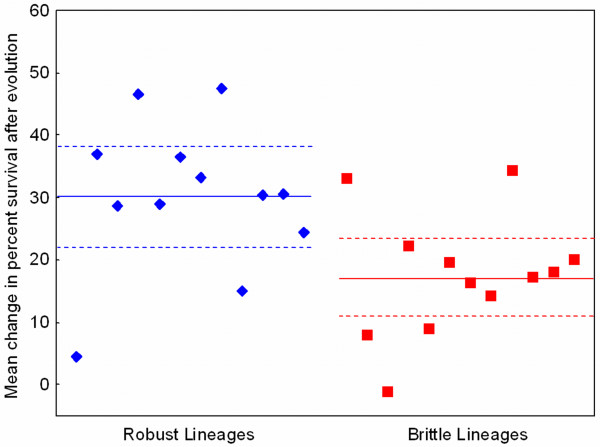
Here we demonstrate that genetic robustness increases evolvability of thermotolerance in laboratory populations of the RNA virus phi6. We observed that populations founded by robust clones evolved greater resistance to heat shock, relative to populations founded by brittle (less-robust) clones. Thus, we provide empirical evidence for the idea that robustness can promote evolvability in this environment, and further suggest that evolvability can arise indirectly via selection for robustness, rather than through direct selective action.
Our data imply that greater tolerance of mutational change is associated with virus adaptability in a new niche, a finding generally relevant to evolutionary biology, and informative for elucidating how viruses might evolve to emerge in new habitats and/or overcome novel therapies.
不断进化的种群适应新环境的能力是通过稳健性和进化能力的平衡来实现的。稳健性是指表型在面对扰动时的不变性,而进化能力是指响应选择进行适应的能力。根据潜在机制推测,遗传稳健性要么会降低选择的效力,要么会增加未来适应的可能性。然而,遗传稳健性对生物系统进化能力的真正影响仍不确定。
在此我们证明,遗传稳健性提高了RNA病毒phi6实验室种群的耐热性进化能力。我们观察到,由稳健克隆建立的种群相对于由脆弱(稳健性较差)克隆建立的种群,对热休克产生了更强的抗性。因此,我们为稳健性能够在这种环境中促进进化能力这一观点提供了实证依据,并进一步表明,进化能力可以通过对稳健性的选择间接产生,而不是通过直接的选择作用。
我们的数据表明,对突变变化的更高耐受性与病毒在新生态位中的适应性相关,这一发现通常与进化生物学相关,并且有助于阐明病毒如何进化以出现在新栖息地和/或克服新疗法。