Cladel Nancy M, Hu Jiafen, Balogh Karla K, Christensen Neil D
Jake Gittlen Cancer Research Foundation, Pennsylvania State University College of Medicine, Hershey, Pennsylvania, United States of America.
PLoS One. 2008 Aug 13;3(8):e2947. doi: 10.1371/journal.pone.0002947.
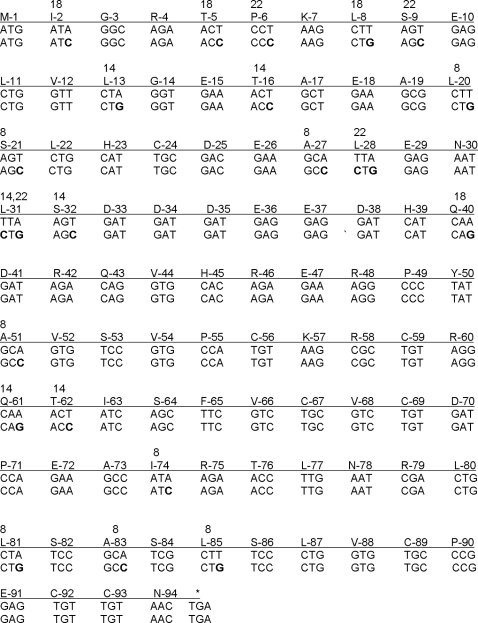
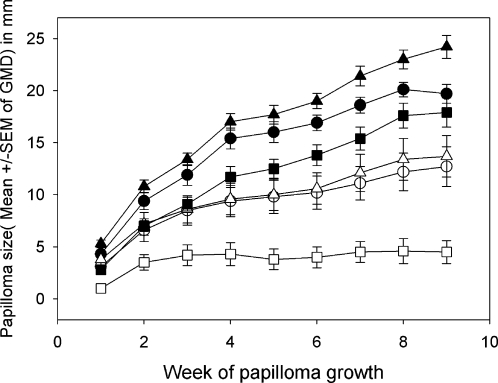
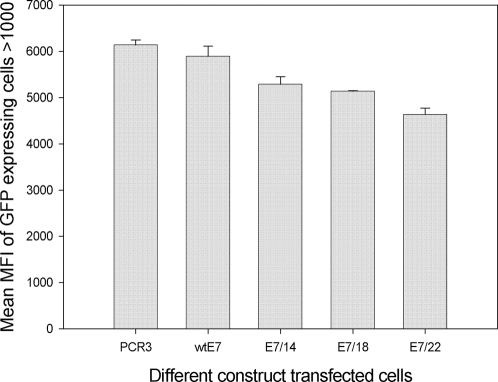
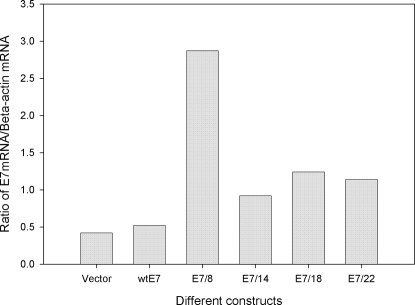
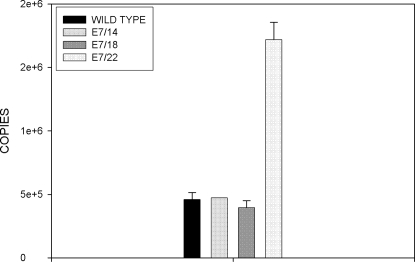
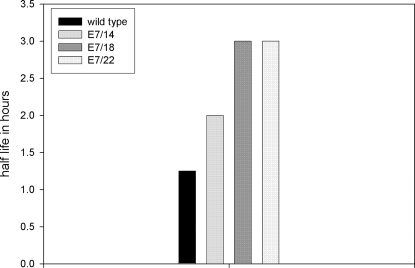
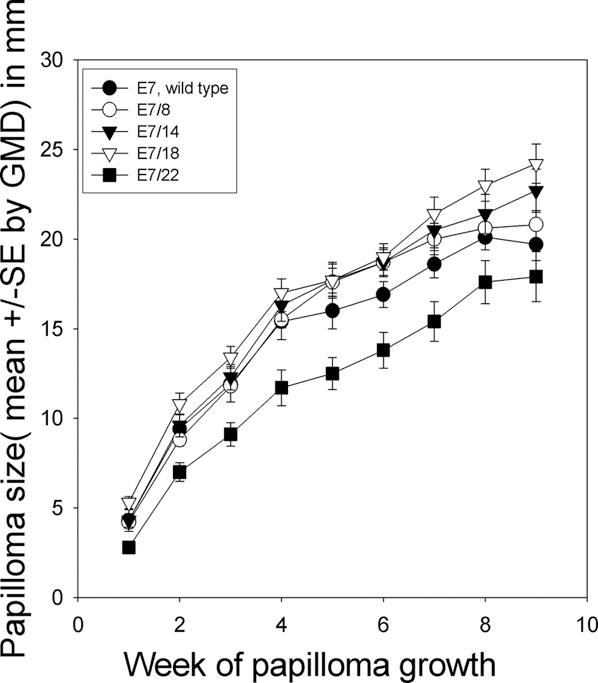
Papillomaviruses use rare codons relative to their hosts. Recent studies have demonstrated that synonymous codon changes in viral genes can lead to increased protein production when the codons are matched to those of cells in which the protein is being expressed. We theorized that the immunogenicity of the virus would be enhanced by matching codons of selected viral genes to those of the host. We report here that synonymous codon changes in the E7 oncogene are tolerated in the context of the cottontail rabbit papillomavirus (CRPV) genome. Papilloma growth rates differ depending upon the changes made indicating that synonymous codons are not necessarily neutral. Immunization with wild type E7 DNA yielded significant protection from subsequent challenge by both wild type and codon-modified genomes. The reduction in growth was most dramatic with the genome containing the greatest number of synonymous codon changes.
乳头瘤病毒相对于其宿主使用稀有密码子。最近的研究表明,当病毒基因中的同义密码子与蛋白质表达所在细胞的密码子相匹配时,可导致蛋白质产量增加。我们推测,通过将选定病毒基因的密码子与宿主的密码子相匹配,病毒的免疫原性将得到增强。我们在此报告,在棉尾兔乳头瘤病毒(CRPV)基因组背景下,E7癌基因中的同义密码子变化是可耐受的。乳头瘤的生长速率因所做的变化而异,这表明同义密码子不一定是中性的。用野生型E7 DNA免疫可显著保护机体免受野生型和密码子修饰基因组随后的攻击。含同义密码子变化数量最多的基因组导致的生长减少最为显著。