Melzer Itshak, Elbar Ori, Tsedek Irit, Oddsson Lars Ie
Physical Therapy Department, Faculty of Health Sciences, Ben-Gurion University, Israel.
BMC Geriatr. 2008 Aug 17;8:19. doi: 10.1186/1471-2318-8-19.
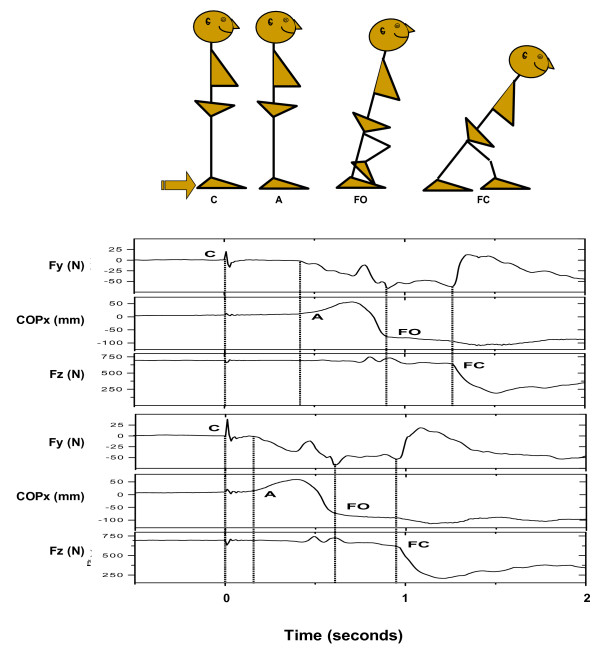
Gait and balance impairments may increase the risk of falls, the leading cause of accidental death in the elderly population. Fall-related injuries constitute a serious public health problem associated with high costs for society as well as human suffering. A rapid step is the most important protective postural strategy, acting to recover equilibrium and prevent a fall from initiating. It can arise from large perturbations, but also frequently as a consequence of volitional movements. We propose to use a novel water-based training program which includes specific perturbation exercises that will target the stepping responses that could potentially have a profound effect in reducing risk of falling. We describe the water-based balance training program and a study protocol to evaluate its efficacy (Trial registration number #NCT00708136).
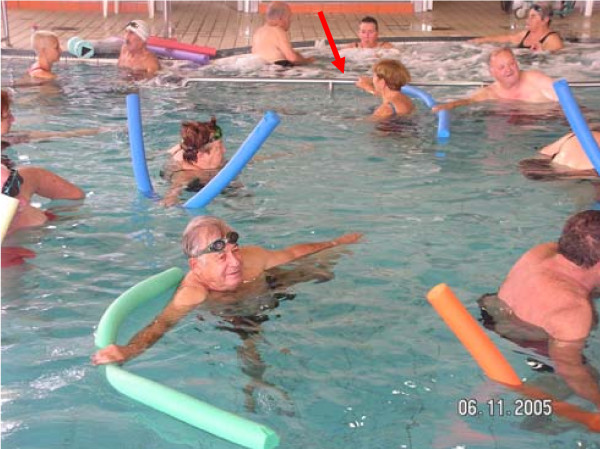
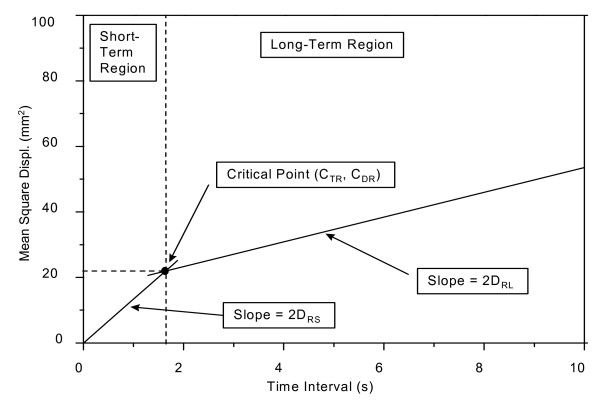
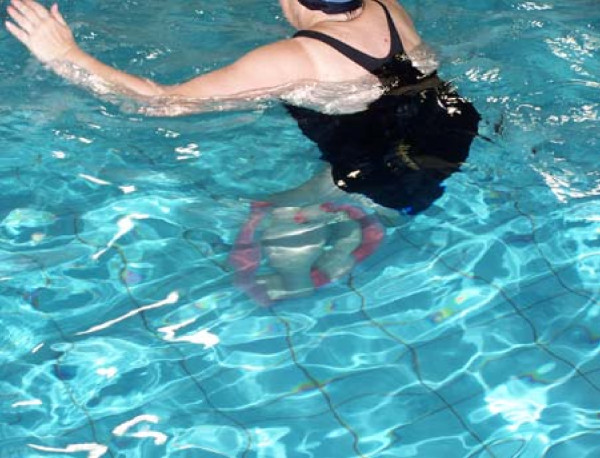
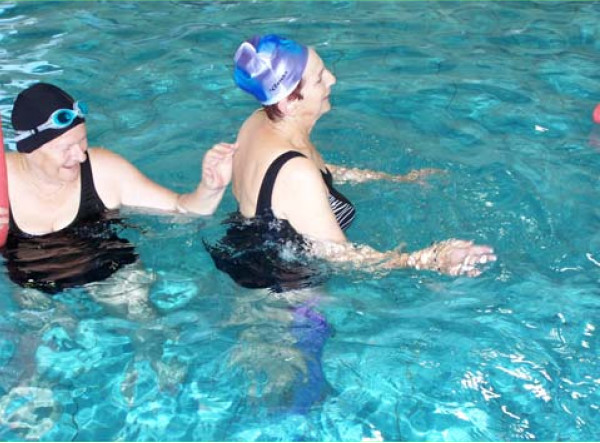
METHODS/DESIGN: The proposed water-based training program involves use of unpredictable, multi-directional perturbations in a group setting to evoke compensatory and volitional stepping responses. Perturbations are made by pushing slightly the subjects and by water turbulence, in 24 training sessions conducted over 12 weeks. Concurrent cognitive tasks during movement tasks are included. Principles of physical training and exercise including awareness, continuity, motivation, overload, periodicity, progression and specificity were used in the development of this novel program. Specific goals are to increase the speed of stepping responses and improve the postural control mechanism and physical functioning. A prospective, randomized, cross-over trial with concealed allocation, assessor blinding and intention-to-treat analysis will be performed to evaluate the efficacy of the water-based training program. A total of 36 community-dwelling adults (age 65-88) with no recent history of instability or falling will be assigned to either the perturbation-based training or a control group (no training). Voluntary step reaction times and postural stability using stabiliogram diffusion analysis will be tested before and after the 12 weeks of training.
This study will determine whether a water-based balance training program that includes perturbation exercises, in a group setting, can improve speed of voluntary stepping responses and improve balance control. Results will help guide the development of more cost-effective interventions that can prevent the occurrence of falls in the elderly.
步态和平衡障碍可能会增加跌倒风险,而跌倒是老年人群意外死亡的主要原因。与跌倒相关的伤害构成了一个严重的公共卫生问题,给社会带来高昂成本并造成人类痛苦。快速跨步是最重要的保护性姿势策略,其作用是恢复平衡并防止跌倒发生。它可能由大幅度扰动引起,但也经常是自主运动的结果。我们提议使用一种新型的水基训练计划,该计划包括特定的扰动练习,这些练习将针对跨步反应,这可能对降低跌倒风险产生深远影响。我们描述了水基平衡训练计划以及评估其效果的研究方案(试验注册号 #NCT00708136)。
方法/设计:提议的水基训练计划包括在小组环境中使用不可预测的多方向扰动,以引发补偿性和自主性跨步反应。在为期12周的24次训练课程中,通过轻轻推受试者以及利用水的湍流来产生扰动。运动任务期间包括同时进行的认知任务。在开发这个新计划时运用了体育训练和锻炼的原则,包括意识、连续性、动机、超负荷、周期性、进展和特异性。具体目标是提高跨步反应速度,改善姿势控制机制和身体功能。将进行一项前瞻性、随机、交叉试验,采用隐蔽分配、评估者盲法和意向性分析来评估水基训练计划的效果。总共36名没有近期不稳定或跌倒史的社区居住成年人(年龄65 - 88岁)将被分配到基于扰动的训练组或对照组(无训练)。在12周训练前后,将测试自主步反应时间以及使用稳定图扩散分析来测试姿势稳定性。
本研究将确定在小组环境中包含扰动练习的水基平衡训练计划是否能提高自主跨步反应速度并改善平衡控制。研究结果将有助于指导开发更具成本效益的干预措施,以预防老年人跌倒事故的发生。