Flockhart R J, Diffey B L, Farr P M, Lloyd J, Reynolds N J
Institute of Cellular Medicine, Newcastle University, Framlington Pl., Newcastle upon Tyne NE2 4HH, UK.
FASEB J. 2008 Dec;22(12):4218-27. doi: 10.1096/fj.08-113076. Epub 2008 Aug 15.
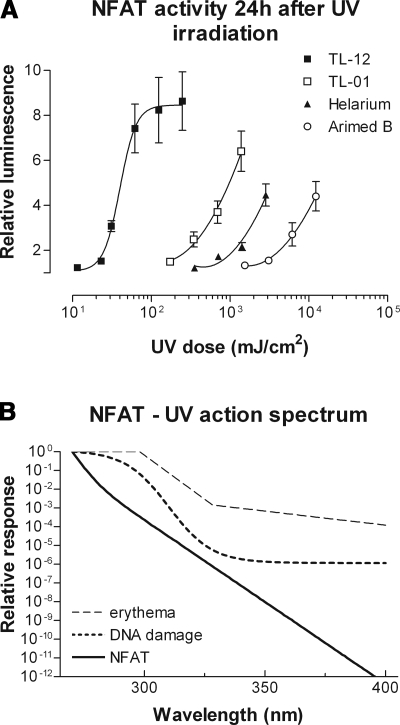
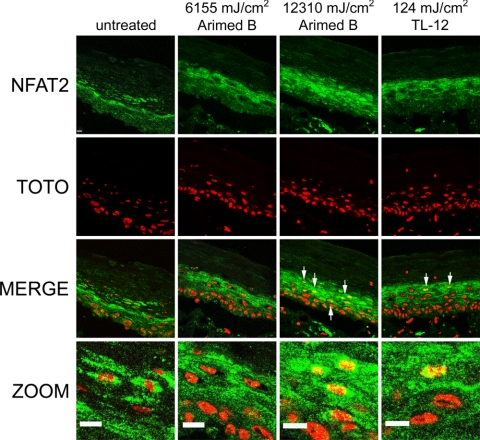
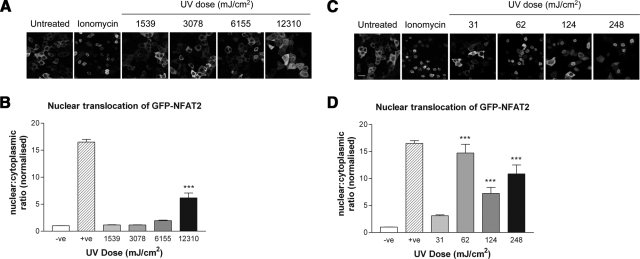
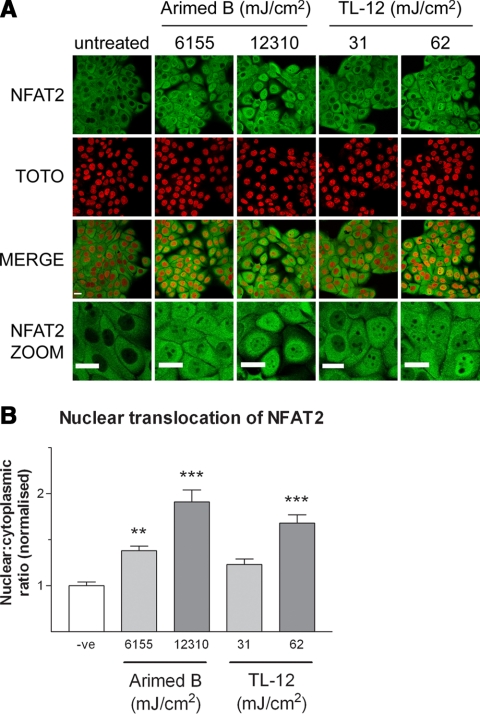
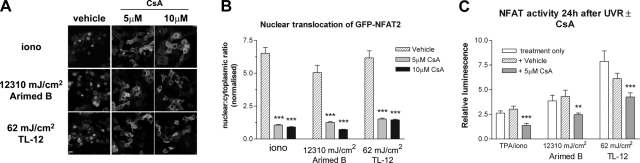
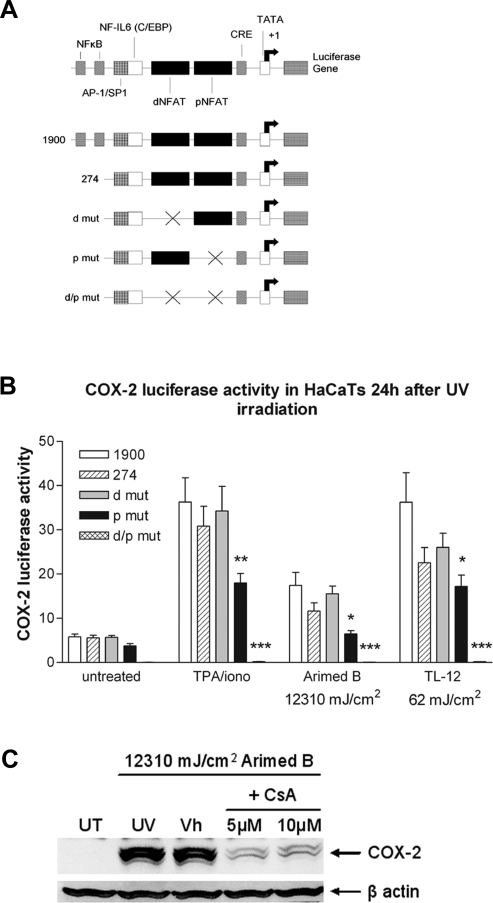
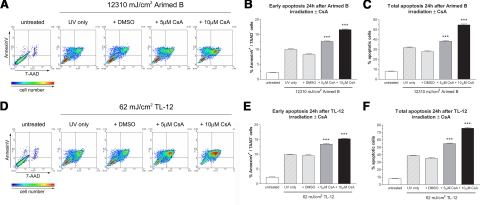
The nuclear factor of activated T cells (NFAT) transcription factors are regulated by calcium/calcineurin signals and play important roles in T cells, muscle, bone, and neural tissue. NFAT is expressed in the epidermis, and although recent data suggest that NFAT is involved in the skin's responses to ultraviolet radiation (UVR), the wavelengths of radiation that activate NFAT and the biological function of UV-activated NFAT remain undefined. We demonstrate that NFAT transcriptional activity is preferentially induced by UVB wavelengths in keratinocytes. The derived action spectrum for NFAT activation indicates that NFAT transcriptional activity is inversely associated with wavelength. UVR also evoked NFAT2 nuclear translocation in a parallel wavelength-dependent fashion and both transcriptional activation and nuclear translocation were inhibited by the calcineurin inhibitor cyclosporin A. UVR also evoked NFAT2 nuclear translocation in three-dimensional skin equivalents. Evidence suggests that COX-2 contributes to UV-induced carcinogenesis. Inhibiting UV-induced NFAT activation in keratinocytes, reduced COX-2 protein induction, and increased UV-induced apoptosis. COX-2 luciferase reporters lacking functional NFAT binding sites were less responsive to UVR, highlighting that NFAT is required for UV-induced COX-2 induction. Taken together, these data suggest that the proinflammatory, antiapoptotic, and procarcinogenic functions of UV-activated COX-2 may be mediated, in part, by upstream NFAT signaling.
活化T细胞核因子(NFAT)转录因子受钙/钙调神经磷酸酶信号调控,在T细胞、肌肉、骨骼和神经组织中发挥重要作用。NFAT在表皮中表达,尽管最近的数据表明NFAT参与皮肤对紫外线辐射(UVR)的反应,但激活NFAT的辐射波长以及紫外线激活的NFAT的生物学功能仍不明确。我们证明,在角质形成细胞中,NFAT转录活性优先由UVB波长诱导。NFAT激活的衍生作用光谱表明,NFAT转录活性与波长呈负相关。UVR还以平行的波长依赖性方式引起NFAT2核转位,并且钙调神经磷酸酶抑制剂环孢素A抑制转录激活和核转位。UVR在三维皮肤等效物中也引起NFAT-NFAT2核转位。有证据表明,COX-2促成紫外线诱导的致癌作用。抑制角质形成细胞中紫外线诱导的NFAT激活,可减少COX-2蛋白诱导,并增加紫外线诱导的细胞凋亡。缺乏功能性NFAT结合位点的COX-2荧光素酶报告基因对UVR的反应较弱,这突出表明NFAT是紫外线诱导的COX-2诱导所必需的。综上所述,这些数据表明,紫外线激活的COX-2的促炎、抗凋亡和促癌功能可能部分由上游NFAT信号介导。