Ang Xiaolu L, Seeburg Daniel P, Sheng Morgan, Harper J Wade
Department of Pathology, Harvard Medical School, Boston, Massachusetts 02115, USA.
J Biol Chem. 2008 Oct 24;283(43):29424-32. doi: 10.1074/jbc.M802475200. Epub 2008 Aug 22.
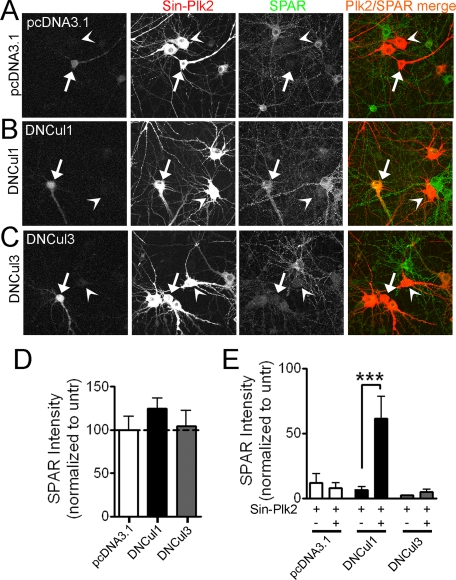
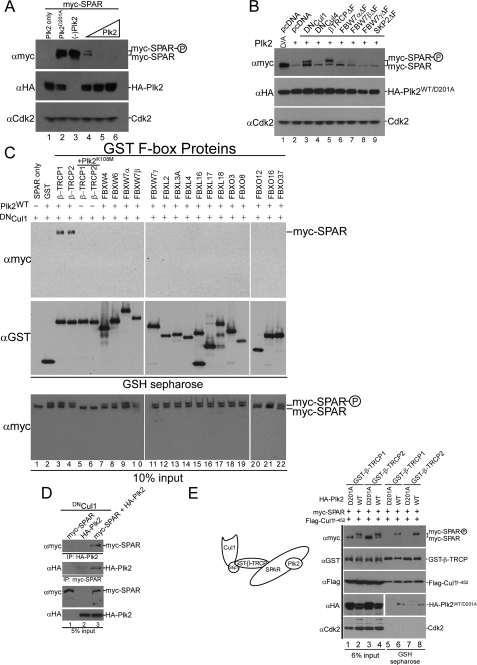
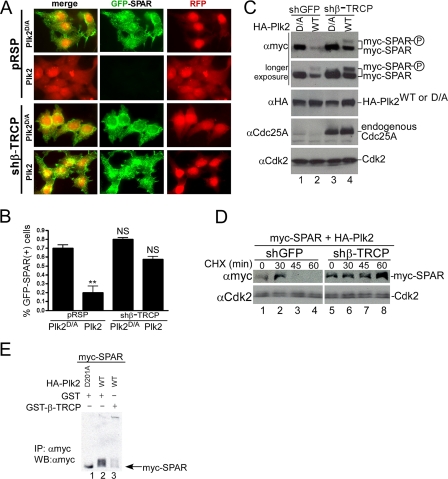
The ubiquitin-proteasome pathway (UPP) regulates synaptic function, but little is known about specific UPP targets and mechanisms in mammalian synapses. We report here that the SCF(beta-TRCP) complex, a multisubunit E3 ubiquitin ligase, targets the postsynaptic spine-associated Rap GTPase activating protein (SPAR) for degradation in neurons. SPAR degradation by SCF(beta-TRCP) depended on the activity-inducible protein kinase Polo-like kinase 2 (Plk2). In the presence of Plk2, SPAR physically associated with the SCF(beta-TRCP) complex through a canonical phosphodegron. In hippocampal neurons, disruption of the SCF(beta-TRCP) complex by overexpression of dominant interfering beta-TRCP or Cul1 constructs prevented Plk2-dependent degradation of SPAR. Our results identify a specific E3 ubiquitin ligase that mediates degradation of a key postsynaptic regulator of synaptic morphology and function.
泛素-蛋白酶体途径(UPP)调节突触功能,但对于哺乳动物突触中特定的UPP靶点和机制却知之甚少。我们在此报告,SCF(β-TRCP)复合物,一种多亚基E3泛素连接酶,靶向突触后棘突相关Rap GTP酶激活蛋白(SPAR),使其在神经元中降解。SCF(β-TRCP)介导的SPAR降解依赖于活性诱导蛋白激酶Polo样激酶2(Plk2)。在有Plk2存在的情况下,SPAR通过一个典型的磷酸降解基序与SCF(β-TRCP)复合物发生物理结合。在海马神经元中,通过过表达显性干扰β-TRCP或Cul1构建体破坏SCF(β-TRCP)复合物,可阻止Plk2依赖的SPAR降解。我们的结果确定了一种特定的E3泛素连接酶,它介导了对突触形态和功能的关键突触后调节因子的降解。