Dept of Physiological Sciences, University of Catania Catania, Italy.
Neuropsychiatr Dis Treat. 2008 Apr;4(2):371-87. doi: 10.2147/ndt.s2447.
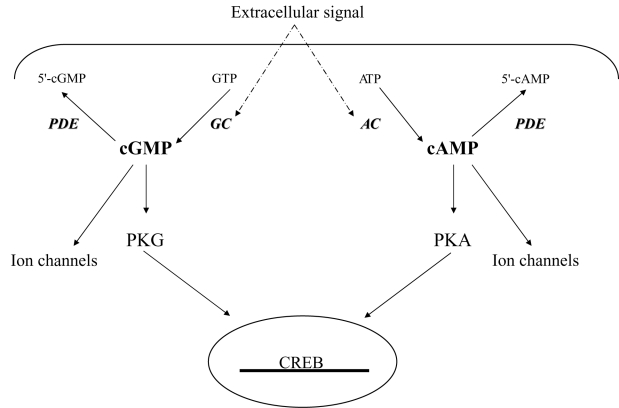
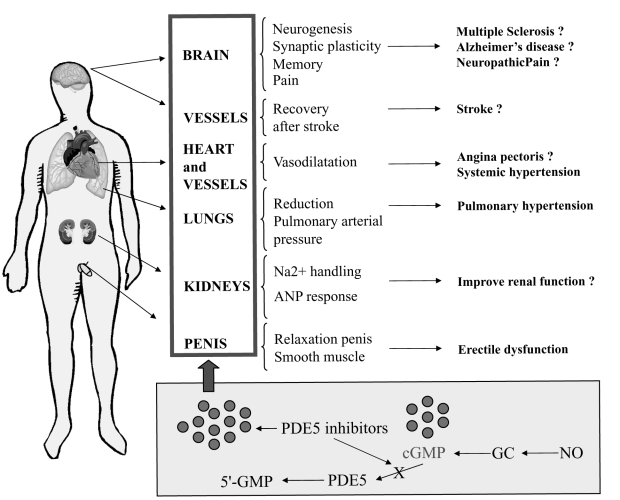
Phosphodiesterases (PDEs) are enzymes that break down the phosphodiesteric bond of the cyclic nucleotides, cAMP and cGMP, second messengers that regulate many biological processes. PDEs participate in the regulation of signal transduction by means of a fine regulation of cyclic nucleotides so that the response to cell stimuli is both specific and activates the correct third messengers. Several PDE inhibitors have been developed and used as therapeutic agents because they increase cyclic nucleotide levels by blocking the PDE function. In particular, sildenafil, an inhibitor of PDE5, has been mainly used in the treatment of erectile dysfunction but is now also utilized against pulmonary hypertension. This review examines the physiological role of PDE5 in synaptic plasticity and memory and the use of PDE5 inhibitors as possible therapeutic agents against disorders of the central nervous system (CNS).
磷酸二酯酶(PDEs)是一类能够分解环核苷酸(cAMP 和 cGMP)的磷酸二酯键的酶,它们是调节多种生物过程的第二信使。PDEs 通过精细调节环核苷酸来参与信号转导的调节,从而使细胞刺激的反应既具有特异性又能激活正确的第三信使。已经开发出几种 PDE 抑制剂并将其用作治疗剂,因为它们通过阻断 PDE 功能来增加环核苷酸的水平。特别是 PDE5 的抑制剂西地那非,主要用于治疗勃起功能障碍,但现在也用于治疗肺动脉高压。这篇综述探讨了 PDE5 在突触可塑性和记忆中的生理作用,以及 PDE5 抑制剂作为治疗中枢神经系统(CNS)疾病的潜在治疗剂的用途。