Turner Thomas L, von Wettberg Eric J, Nuzhdin Sergey V
Center for Population Biology, University of California Davis, Davis, California, United States of America.
PLoS One. 2008 Sep 11;3(9):e3183. doi: 10.1371/journal.pone.0003183.
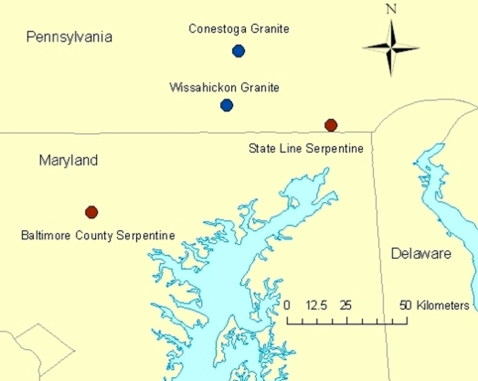
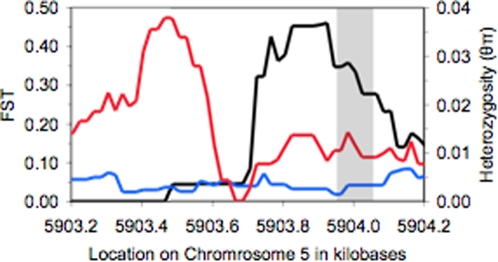
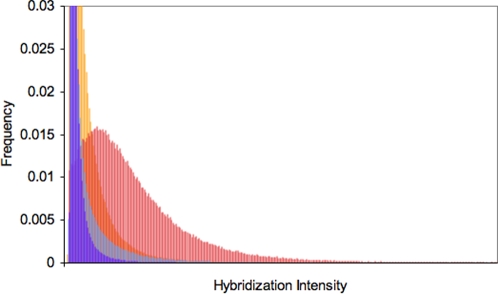
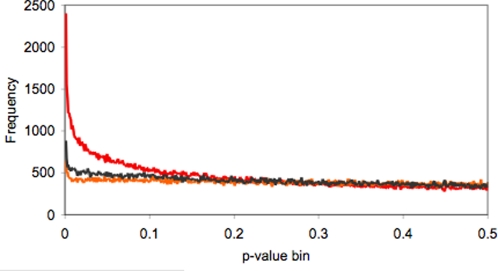
Serpentine soil, which is naturally high in heavy metal content and has low calcium to magnesium ratios, comprises a difficult environment for most plants. An impressive number of species are endemic to serpentine, and a wide range of non-endemic plant taxa have been shown to be locally adapted to these soils. Locating genomic polymorphisms which are differentiated between serpentine and non-serpentine populations would provide candidate loci for serpentine adaptation. We have used the Arabidopsis thaliana tiling array, which has 2.85 million probes throughout the genome, to measure genetic differentiation between populations of Arabidopsis lyrata growing on granitic soils and those growing on serpentinic soils. The significant overrepresentation of genes involved in ion transport and other functions provides a starting point for investigating the molecular basis of adaptation to soil ion content, water retention, and other ecologically and economically important variables. One gene in particular, calcium-exchanger 7, appears to be an excellent candidate gene for adaptation to low CaratioMg ratio in A. lyrata.
蛇纹石土壤重金属含量天然较高,钙镁比低,对大多数植物来说是一个恶劣的生长环境。有相当数量的物种是蛇纹石土壤特有的,并且已证明许多非特有植物类群能在当地适应这些土壤。找到在蛇纹石土壤和非蛇纹石土壤种群之间存在差异的基因组多态性,将为蛇纹石适应性提供候选基因座。我们使用了拟南芥平铺阵列,其在整个基因组中有285万个探针,来测量生长在花岗岩土壤和蛇纹石土壤上的琴叶拟南芥种群之间的遗传分化。参与离子运输和其他功能的基因显著过度表达,为研究适应土壤离子含量、保水性及其他生态和经济上重要变量的分子基础提供了一个起点。特别是一个名为钙交换蛋白7的基因,似乎是琴叶拟南芥适应低钙镁比的一个极佳候选基因。