Hohmann Nora, Schmickl Roswitha, Chiang Tzen-Yuh, Lučanová Magdalena, Kolář Filip, Marhold Karol, Koch Marcus A
Centre for Organismal Studies (COS) Heidelberg, Heidelberg University, Heidelberg, 69120, Germany.
Institute of Botany, Academy of Sciences of the Czech Republic, Průhonice, CZ-25243, Czech Republic.
BMC Evol Biol. 2014 Oct 27;14:224. doi: 10.1186/s12862-014-0224-x.
Wild relatives in the genus Arabidopsis are recognized as useful model systems to study traits and evolutionary processes in outcrossing species, which are often difficult or even impossible to investigate in the selfing and annual Arabidopsis thaliana. However, Arabidopsis as a genus is littered with sub-species and ecotypes which make realizing the potential of these non-model Arabidopsis lineages problematic. There are relatively few evolutionary studies which comprehensively characterize the gene pools across all of the Arabidopsis supra-groups and hypothesized evolutionary lineages and none include sampling at a world-wide scale. Here we explore the gene pools of these various taxa using various molecular markers and cytological analyses.
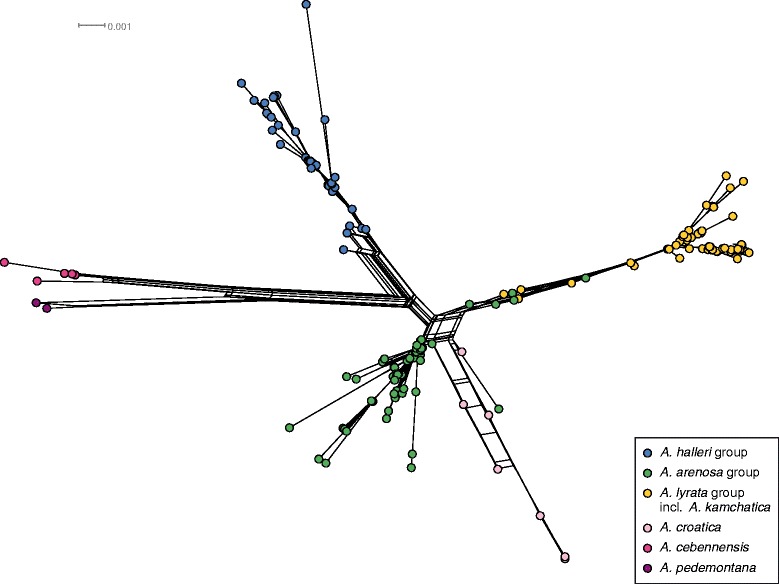
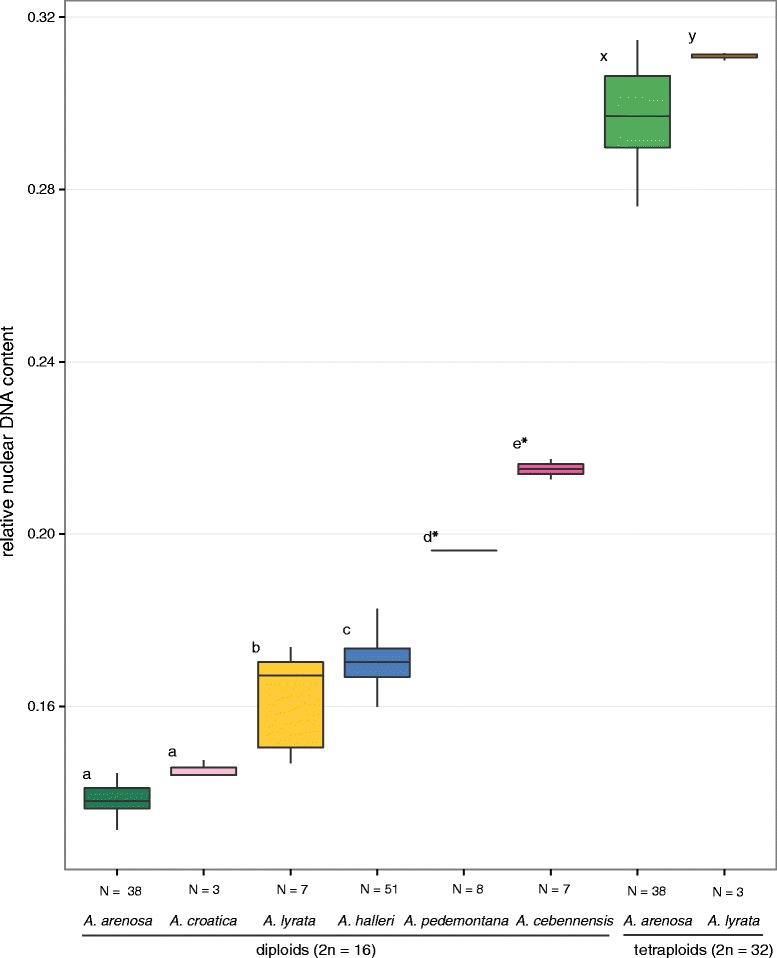
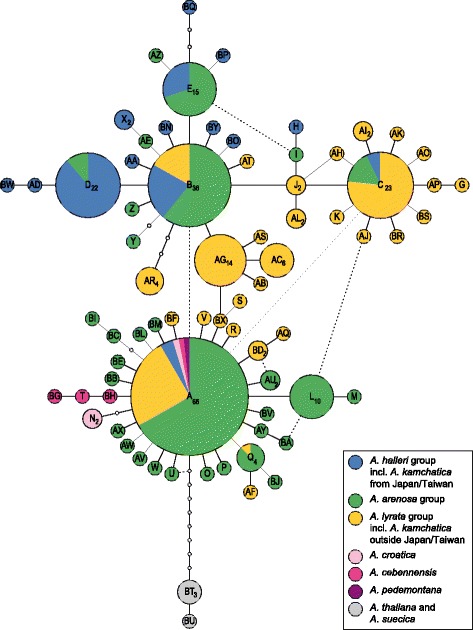
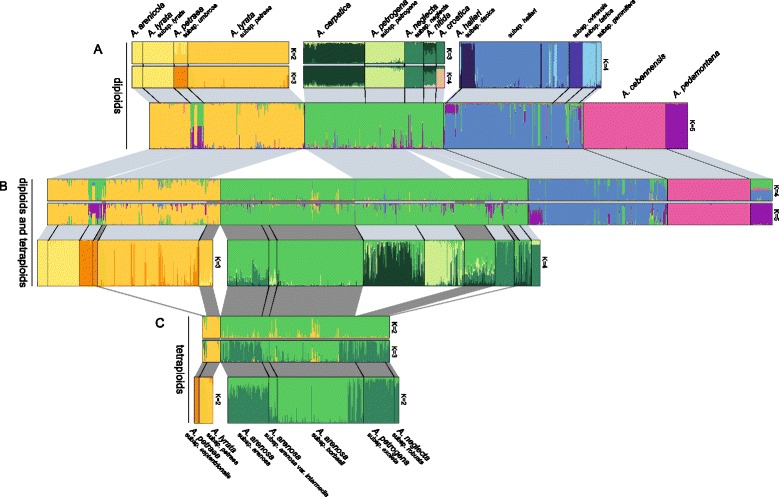
Based on ITS, microsatellite, chloroplast and nuclear DNA content data we demonstrate the presence of three major evolutionary groups broadly characterized as A. lyrata group, A. halleri group and A. arenosa group. All are composed of further species and sub-species forming larger aggregates. Depending on the resolution of the marker, a few closely related taxa such as A. pedemontana, A. cebennensis and A. croatica are also clearly distinct evolutionary lineages. ITS sequences and a population-based screen based on microsatellites were highly concordant. The major gene pools identified by ITS sequences were also significantly differentiated by their homoploid nuclear DNA content estimated by flow cytometry. The chloroplast genome provided less resolution than the nuclear data, and it remains unclear whether the extensive haplotype sharing apparent between taxa results from gene flow or incomplete lineage sorting in this relatively young group of species with Pleistocene origins.
Our study provides a comprehensive overview of the genetic variation within and among the various taxa of the genus Arabidopsis. The resolved gene pools and evolutionary lineages will set the framework for future comparative studies on genetic diversity. Extensive population-based phylogeographic studies will also be required, however, in particular for A. arenosa and their affiliated taxa and cytotypes.
拟南芥属中的野生近缘种被认为是研究异交物种性状和进化过程的有用模型系统,而这些性状和过程在自交且一年生的拟南芥中往往很难甚至无法进行研究。然而,作为一个属,拟南芥充斥着许多亚种和生态型,这使得挖掘这些非模式拟南芥谱系的潜力变得困难重重。相对而言,全面描述所有拟南芥超组和假定进化谱系的基因库的进化研究较少,且没有一项研究在全球范围内进行采样。在此,我们利用各种分子标记和细胞学分析方法来探索这些不同分类群的基因库。
基于ITS、微卫星、叶绿体和核DNA含量数据,我们证明存在三个主要的进化组,大致可分为琴叶拟南芥组、盐芥组和砂生拟南芥组。所有这些组都由更多的物种和亚种组成更大的集合。根据标记的分辨率,一些亲缘关系较近的分类群,如皮埃蒙特拟南芥、塞文拟南芥和克罗地亚拟南芥,也是明显不同的进化谱系。ITS序列和基于微卫星的群体筛选结果高度一致。通过ITS序列鉴定出的主要基因库,其单倍体核DNA含量通过流式细胞术估计也存在显著差异。叶绿体基因组提供的分辨率低于核数据,目前尚不清楚分类群之间明显广泛的单倍型共享是由于基因流还是源于这个起源于更新世的相对年轻物种组中的不完全谱系分选。
我们的研究全面概述了拟南芥属不同分类群内部和之间的遗传变异。解析后的基因库和进化谱系将为未来关于遗传多样性的比较研究奠定框架。然而,还需要进行广泛的基于群体的系统地理学研究,特别是针对砂生拟南芥及其附属分类群和细胞型。