Laterre Pierre-François, Macias William L, Janes Jonathan, Williams Mark D, Nelson David R, Girbes Amand R J, Dhainaut Jean-François, Abraham Edward
St Luc University Hospital, Avenue Hippocrate 10, 1200 Brussels, Belgium.
Crit Care. 2008;12(5):R117. doi: 10.1186/cc7011. Epub 2008 Sep 11.
We performed a study to determine whether an enrollment sequence effect noted in the PROWESS (recombinant human activated Protein C Worldwide Evaluation in Severe Sepsis) trial exists in the ADDRESS (Administration of Drotrecogin Alfa [Activated] [DrotAA] in Early Stage Severe Sepsis) trial.
We evaluated prospectively defined subgroups from two large phase 3 clinical trials: ADDRESS, which included 516 sites in 34 countries, and PROWESS, which included 164 sites in 11 countries. ADDRESS consisted of patients with severe sepsis at low risk of death not indicated for treatment with DrotAA. PROWESS consisted of patients with severe sepsis with one or more organ dysfunctions. DrotAA (24 microg/kg per hour) or placebo was infused for 96 hours.
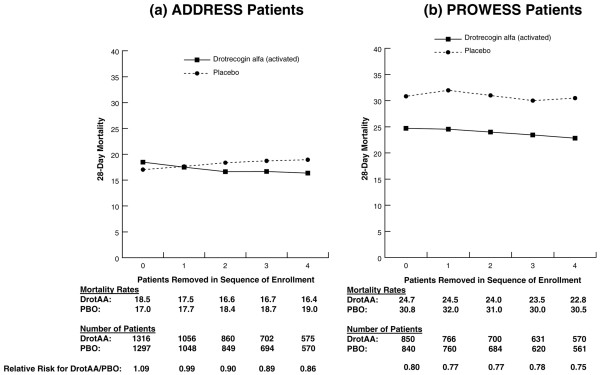
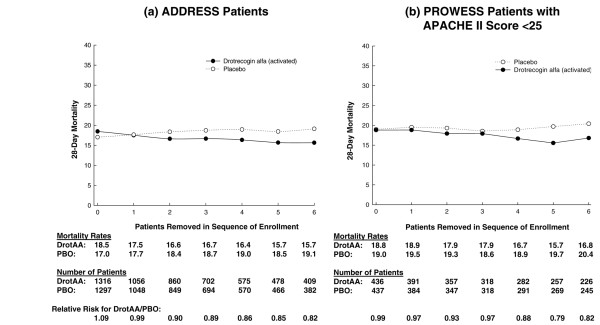
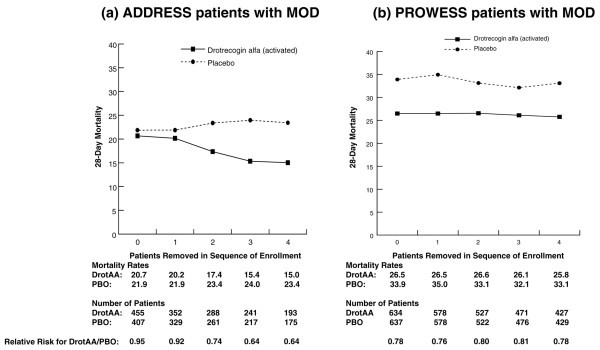
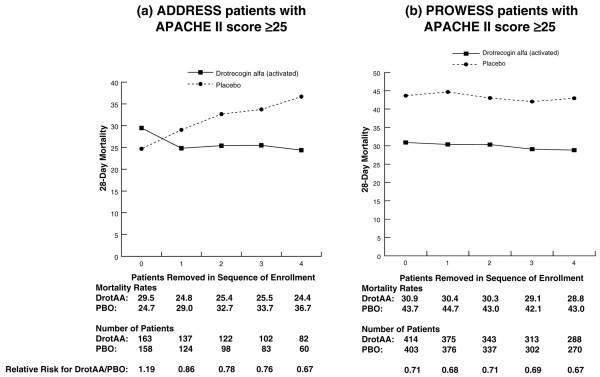
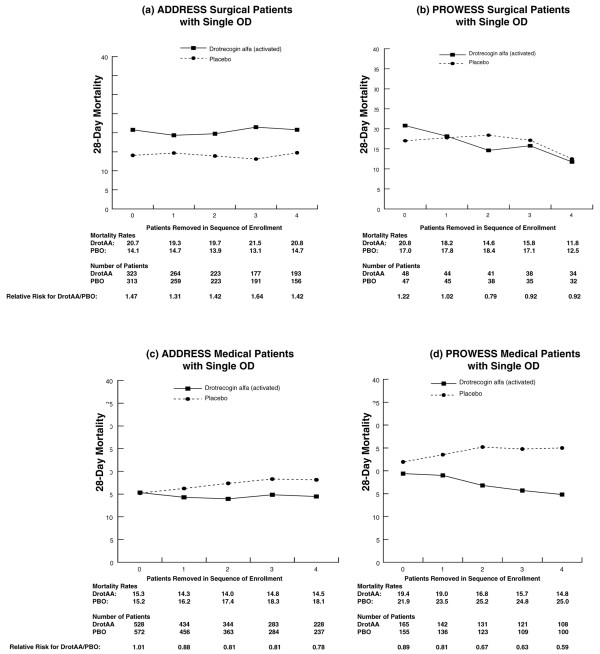
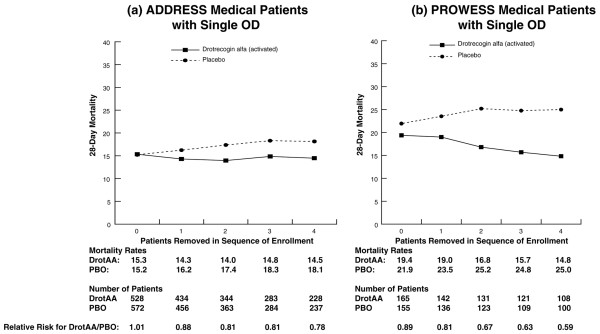
In ADDRESS and PROWESS, there was a statistically significant interaction between the DrotAA treatment effect and the sequence in which patients were enrolled. In both trials, higher mortality was associated with DrotAA use in the subgroup of patients enrolled first at study sites. Compared with placebo, PROWESS mortality was lower with DrotAA treatment for the second and subsequent patients enrolled, whereas in ADDRESS, mortality remained higher for the second patient enrolled but thereafter was lower for DrotAA-treated patients. Comparison of patients enrolled first with subsequent patients enrolled indicated that the characteristics of patients changed. Subsequently enrolled patients were treated earlier, were less likely to suffer nonserious bleeds (ADDRESS), and experienced fewer protocol violations (PROWESS).
Analyses suggest that an enrollment sequence effect was present in the ADDRESS and PROWESS trials. Analysis of this effect on outcomes suggests that it is most apparent in patients at lower risk of death. In PROWESS, this effect appeared to be associated with a reduction of the DrotAA treatment effect for the first patients enrolled at each site. In ADDRESS, this effect may have contributed to early termination of the study. The finding of an enrollment sequence effect in two separate trials suggests that trial designs, site selection and training, data collection and monitoring, and statistical analysis plans may need to be adjusted for these potentially confounding events.
ADDRESS trial registration number: NCT00568737. PROWESS was completed before trial registration was required.
我们开展了一项研究,以确定在PROWESS(重组人活化蛋白C全球严重脓毒症评估)试验中发现的入组顺序效应是否存在于ADDRESS(早期严重脓毒症中活化蛋白C的应用)试验中。
我们对两项大型3期临床试验中预先定义的亚组进行了评估:ADDRESS试验在34个国家的516个地点开展,PROWESS试验在11个国家的164个地点开展。ADDRESS试验纳入的是死亡风险较低、不适合接受活化蛋白C治疗的严重脓毒症患者。PROWESS试验纳入的是患有严重脓毒症且伴有一个或多个器官功能障碍的患者。给予活化蛋白C(24微克/千克/小时)或安慰剂静脉输注96小时。
在ADDRESS和PROWESS试验中,活化蛋白C治疗效果与患者入组顺序之间存在统计学上的显著交互作用。在两项试验中,研究地点首批入组的患者亚组中,使用活化蛋白C与较高的死亡率相关。与安慰剂相比,在PROWESS试验中,第二批及后续入组患者接受活化蛋白C治疗后的死亡率较低,而在ADDRESS试验中,第二批入组患者的死亡率仍然较高,但此后接受活化蛋白C治疗的患者死亡率较低。首批入组患者与后续入组患者的比较表明,患者特征发生了变化。后续入组的患者接受治疗更早,发生非严重出血的可能性更小(ADDRESS试验),违反方案的情况更少(PROWESS试验)。
分析表明,ADDRESS和PROWESS试验中存在入组顺序效应。对该效应的结果分析表明,其在死亡风险较低的患者中最为明显。在PROWESS试验中,这种效应似乎与每个地点首批入组患者的活化蛋白C治疗效果降低有关。在ADDRESS试验中,这种效应可能导致了该研究的提前终止。在两项独立试验中均发现入组顺序效应,这表明试验设计、地点选择与培训、数据收集与监测以及统计分析计划可能需要针对这些潜在的混杂事件进行调整。
ADDRESS试验注册号:NCT00568737。PROWESS试验在要求进行试验注册之前已完成。