Ollinger Rupert, Childs Andrew J, Burgess Hannah M, Speed Robert M, Lundegaard Pia R, Reynolds Nicola, Gray Nicola K, Cooke Howard J, Adams Ian R
MRC Human Genetics Unit, Western General Hospital, Edinburgh, United Kingdom.
PLoS Genet. 2008 Sep 19;4(9):e1000199. doi: 10.1371/journal.pgen.1000199.
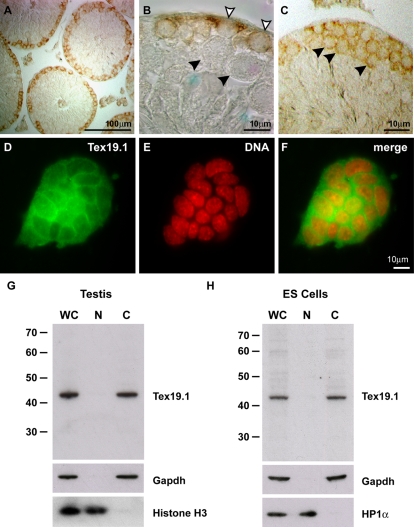
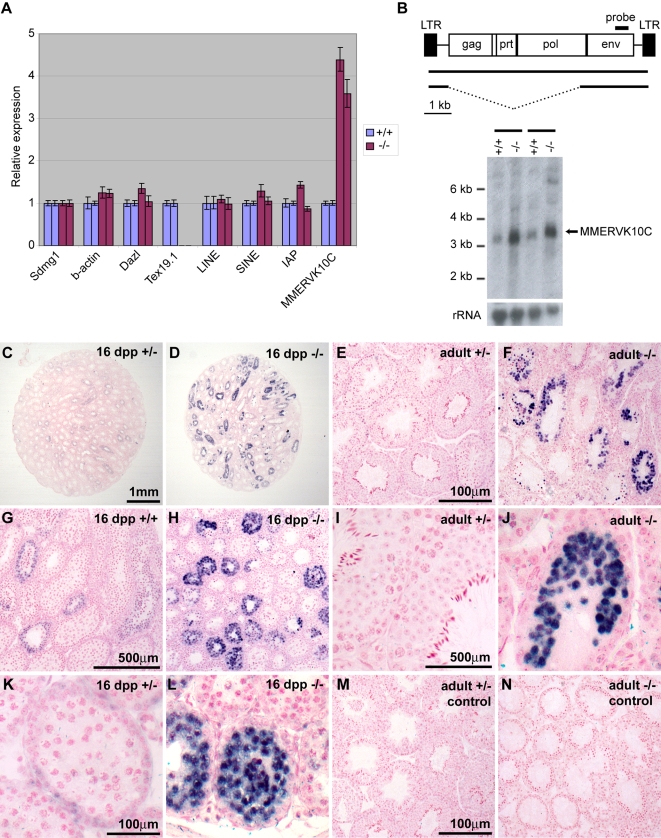
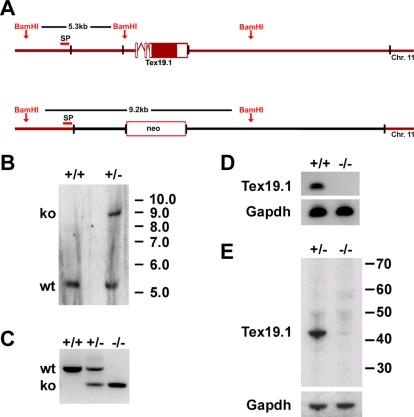
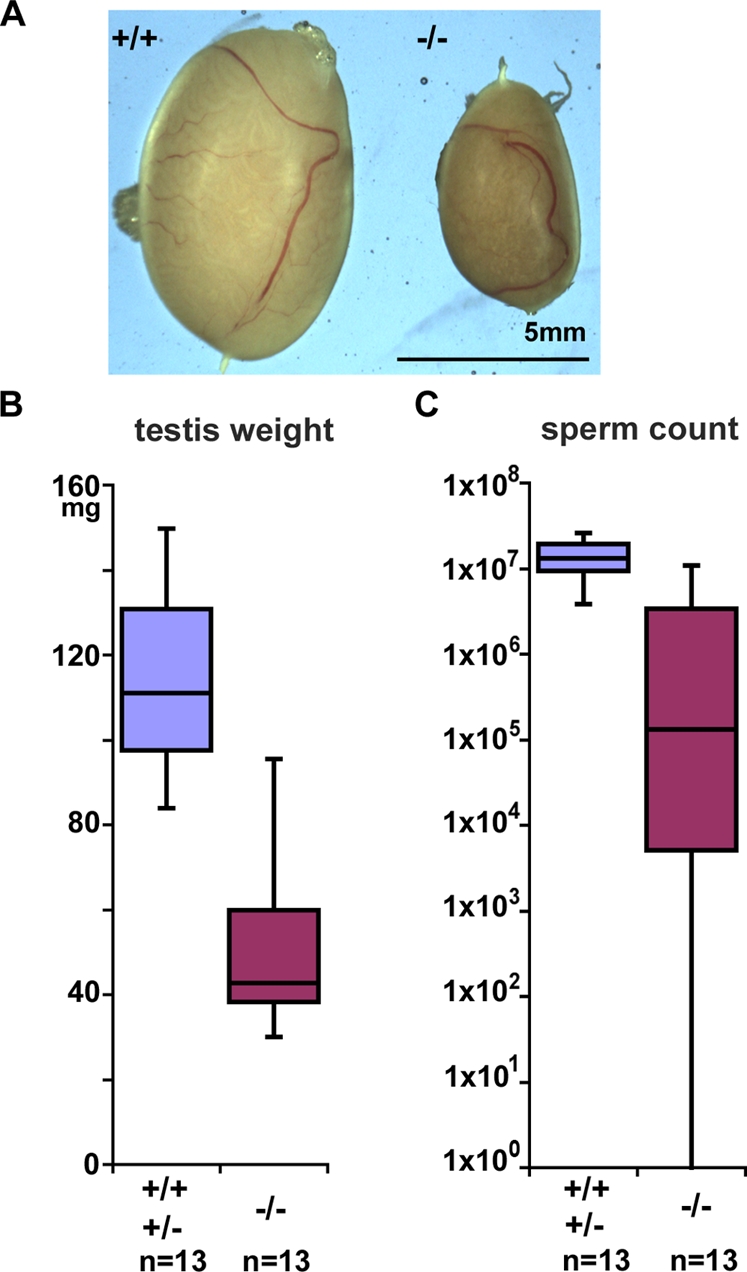
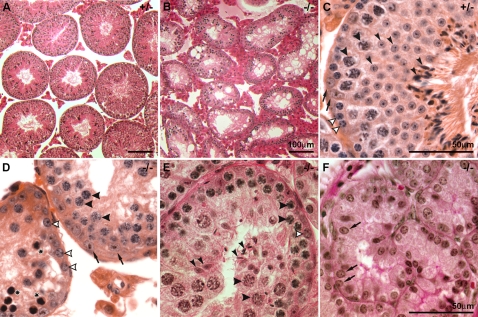
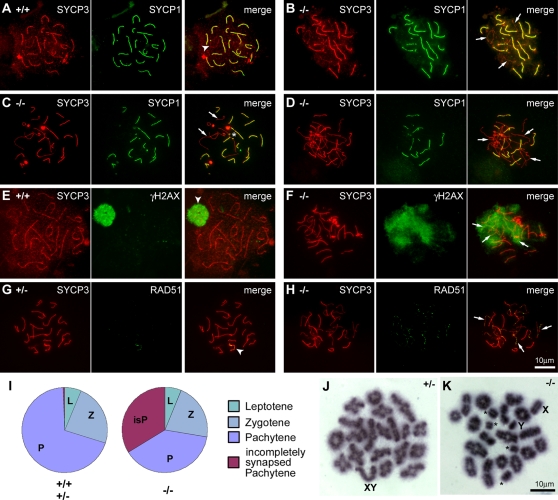
As genetic information is transmitted through successive generations, it passes between pluripotent cells in the early embryo and germ cells in the developing foetus and adult animal. Tex19.1 encodes a protein of unknown function, whose expression is restricted to germ cells and pluripotent cells. During male spermatogenesis, Tex19.1 expression is highest in mitotic spermatogonia and diminishes as these cells differentiate and progress through meiosis. In pluripotent stem cells, Tex19.1 expression is also downregulated upon differentiation. However, it is not clear whether Tex19.1 has an essential function in germ cells or pluripotent stem cells, or what that function might be. To analyse the potential role of Tex19.1 in pluripotency or germ cell function we have generated Tex19.1(-/-) knockout mice and analysed the Tex19.1(-/-) mutant phenotype. Adult Tex19.1(-/-) knockout males exhibit impaired spermatogenesis. Immunostaining and histological analysis revealed defects in meiotic chromosome synapsis, the persistence of DNA double-strand breaks during meiosis, and a loss of post-meiotic germ cells in the testis. Furthermore, expression of a class of endogenous retroviruses is upregulated during meiosis in the Tex19.1(-/-) testes. Increased transposition of endogenous retroviruses in the germline of Tex19.1(-/-) mutant mice, and the concomitant increase in DNA damage, may be sufficient to disrupt the normal processes of recombination and chromosome synapsis during meiosis and cause defects in spermatogenesis. Our results suggest that Tex19.1 is part of a specialised mechanism that operates in the germline to repress transposable genetic elements and maintain genomic stability through successive generations.
随着遗传信息在世代间传递,它在早期胚胎中的多能细胞与发育中的胎儿及成年动物的生殖细胞之间传递。Tex19.1编码一种功能未知的蛋白质,其表达仅限于生殖细胞和多能细胞。在雄性精子发生过程中,Tex19.1在有丝分裂的精原细胞中表达最高,随着这些细胞分化并进入减数分裂,其表达会减少。在多能干细胞中,Tex19.1的表达在分化时也会下调。然而,尚不清楚Tex19.1在生殖细胞或多能干细胞中是否具有重要功能,以及该功能可能是什么。为了分析Tex19.1在多能性或生殖细胞功能中的潜在作用,我们构建了Tex19.1(-/-)基因敲除小鼠并分析了Tex19.1(-/-)突变体表型。成年Tex19.1(-/-)基因敲除雄性小鼠表现出精子发生受损。免疫染色和组织学分析揭示了减数分裂染色体联会缺陷、减数分裂过程中DNA双链断裂的持续存在以及睾丸中减数分裂后生殖细胞的丢失。此外,在Tex19.1(-/-)睾丸的减数分裂过程中,一类内源性逆转录病毒的表达上调。Tex19.1(-/-)突变小鼠生殖系中内源性逆转录病毒转座增加以及随之而来的DNA损伤增加,可能足以破坏减数分裂过程中重组和染色体联会的正常过程,并导致精子发生缺陷。我们的结果表明,Tex19.1是一种专门机制的一部分,该机制在生殖系中发挥作用,以抑制转座遗传元件并在世代间维持基因组稳定性。