Crichton James H, Read David, Adams Ian R
MRC Human Genetics Unit, MRC Institute of Genetics and Molecular Medicine, University of Edinburgh, Western General Hospital, Crewe Road, Edinburgh, EH4 2XU, UK.
Chromosoma. 2018 Dec;127(4):437-459. doi: 10.1007/s00412-018-0674-9. Epub 2018 Jun 16.
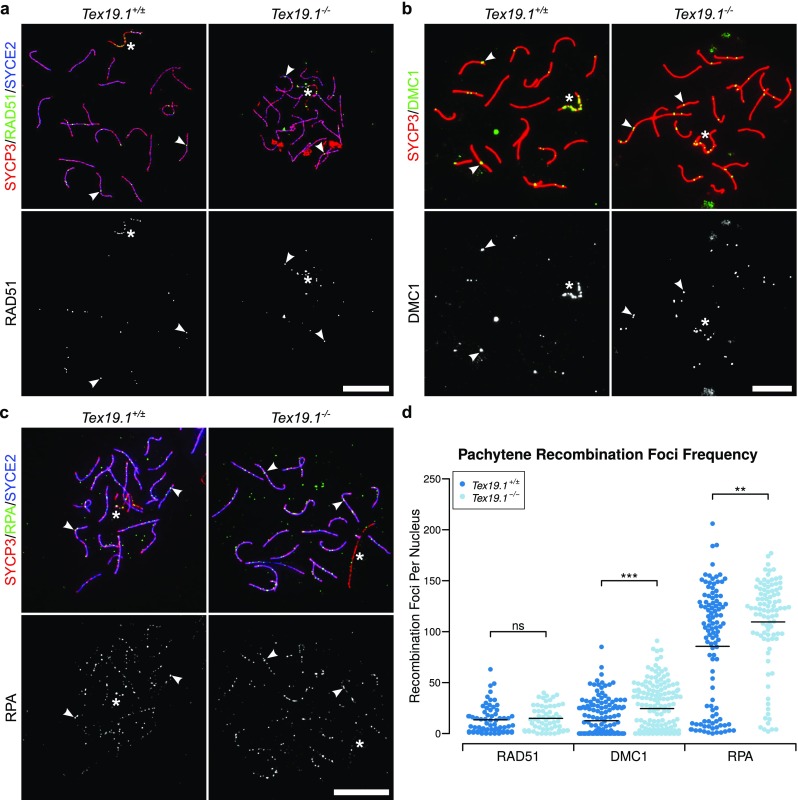
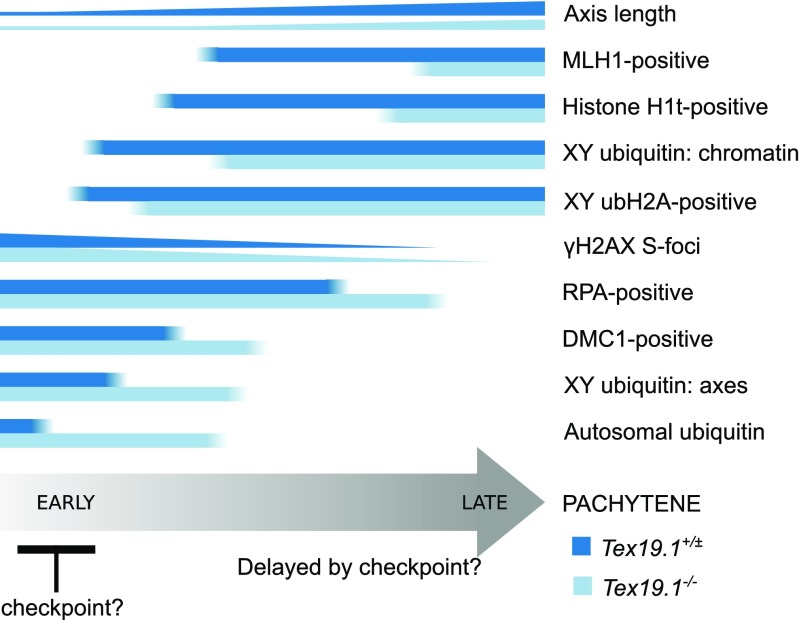
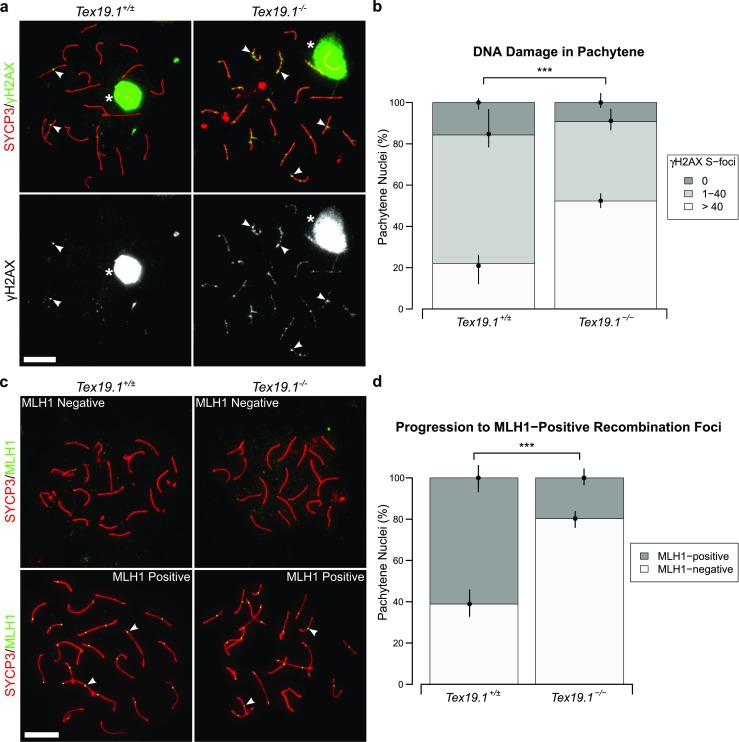
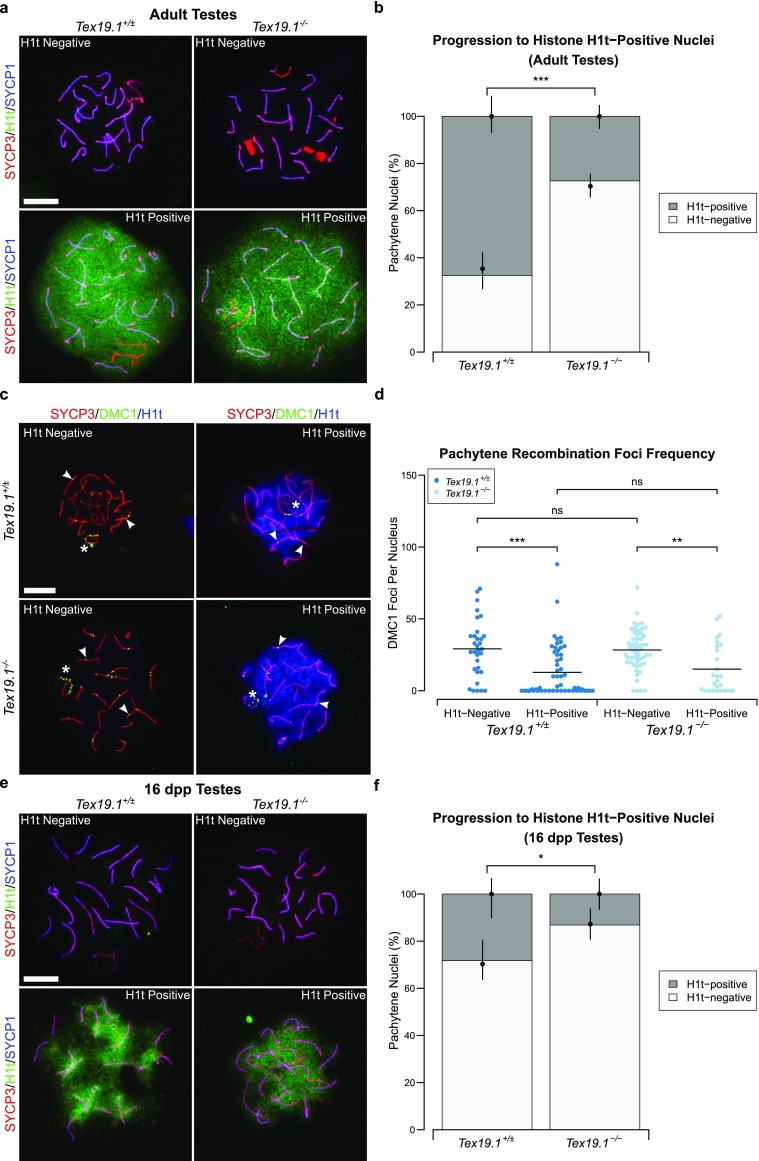
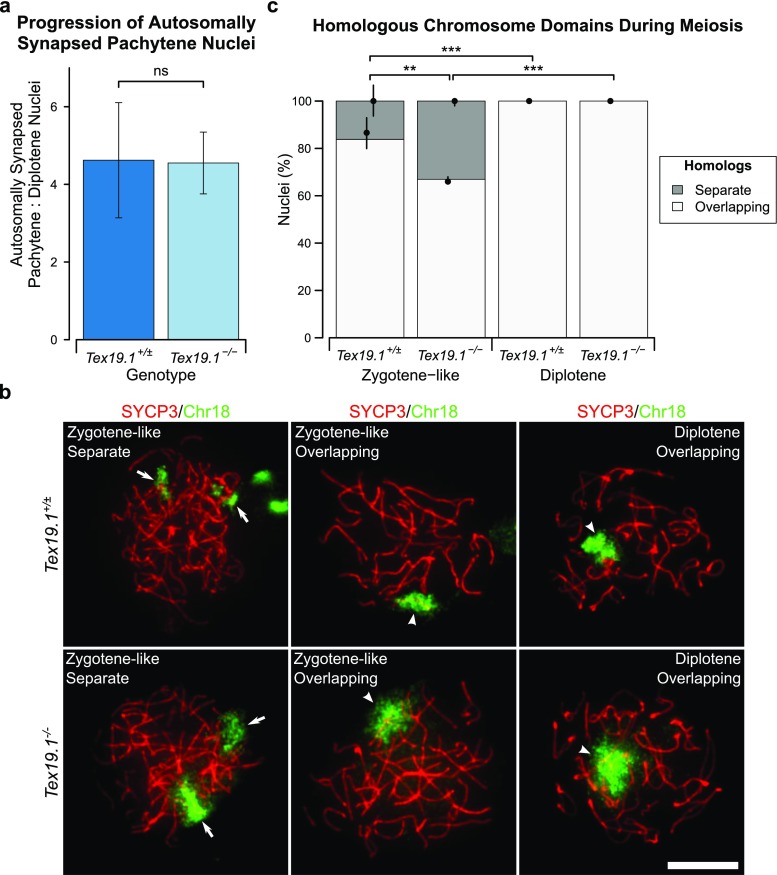
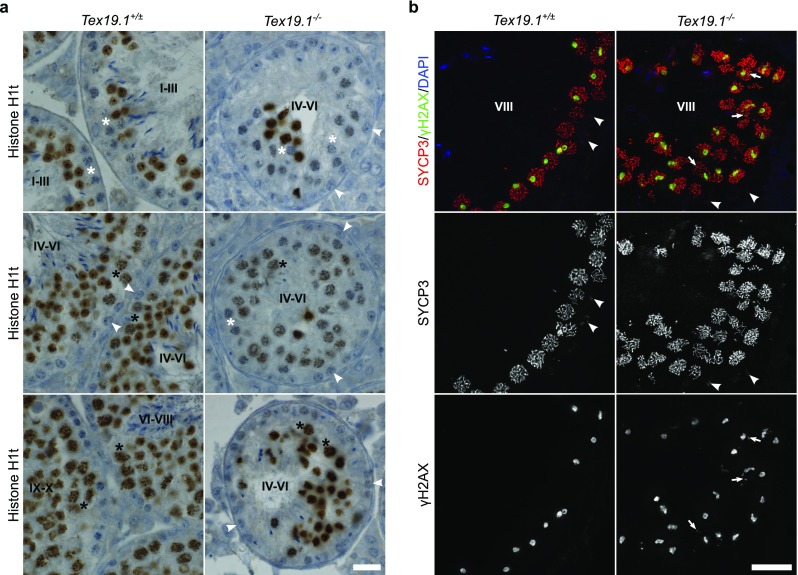
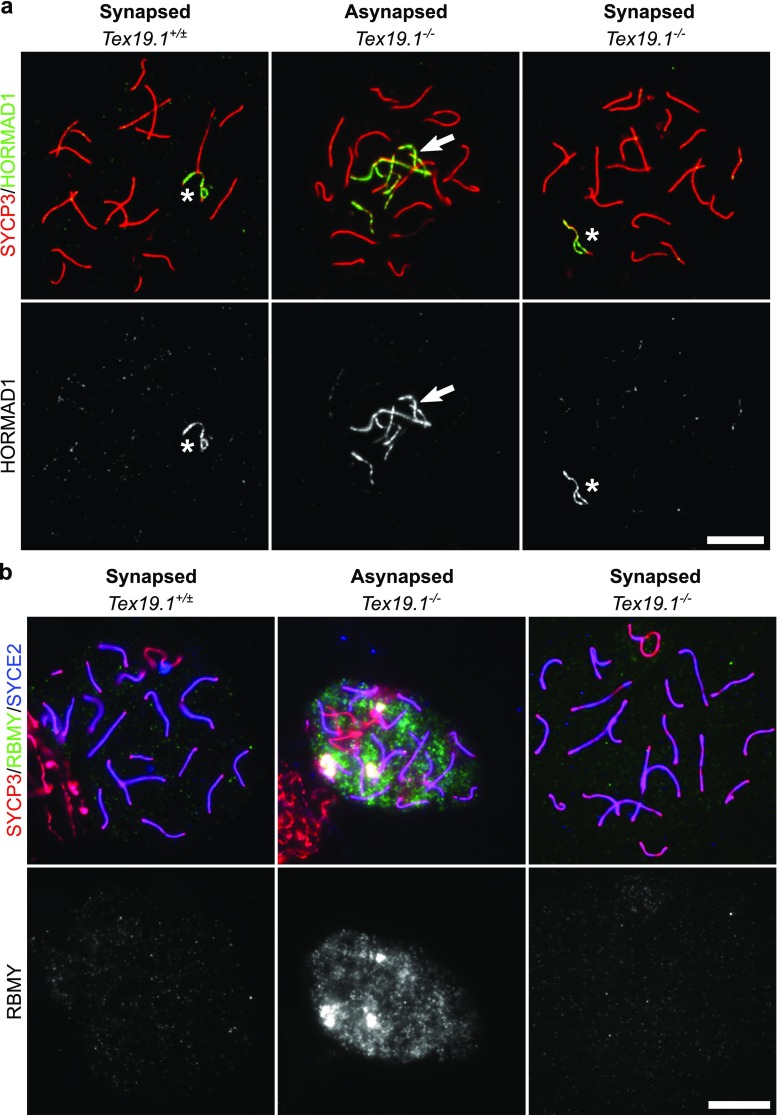
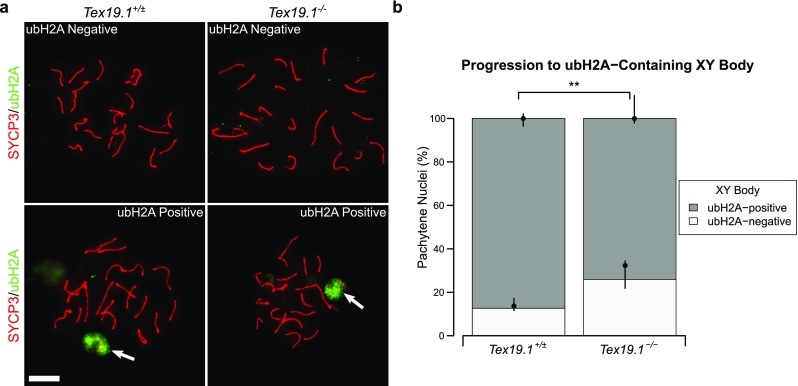
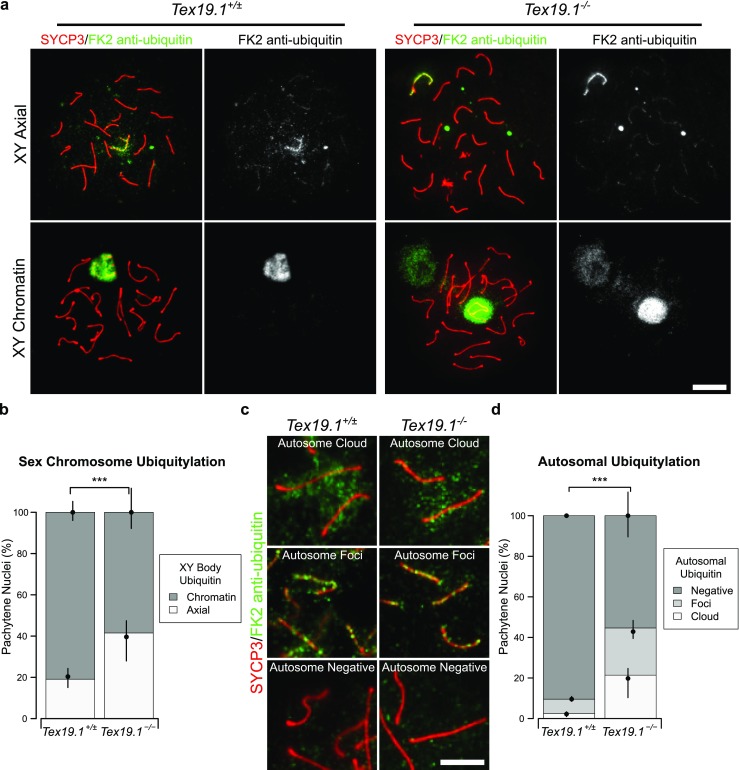
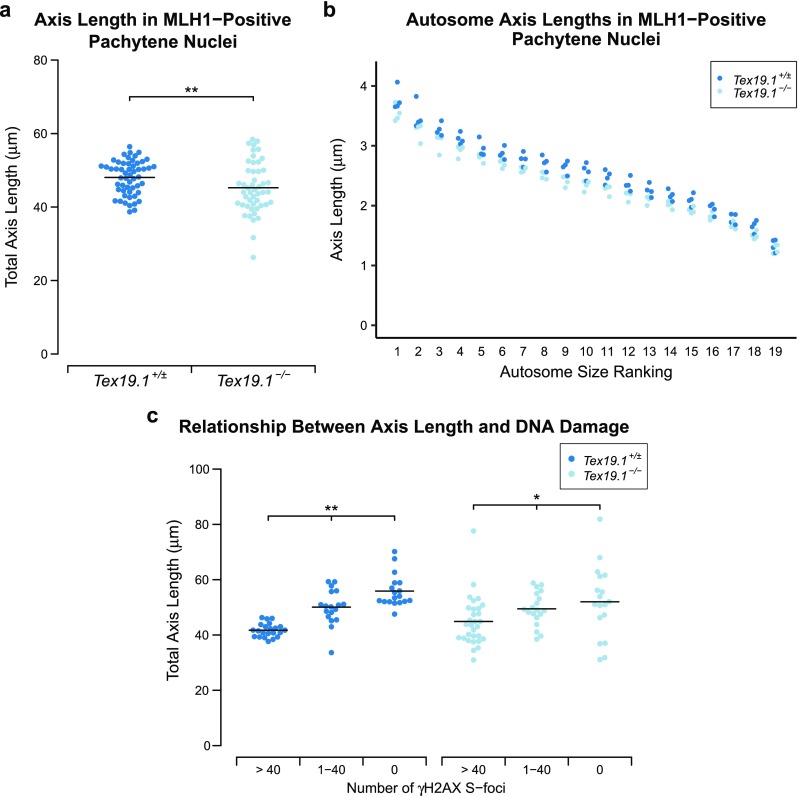
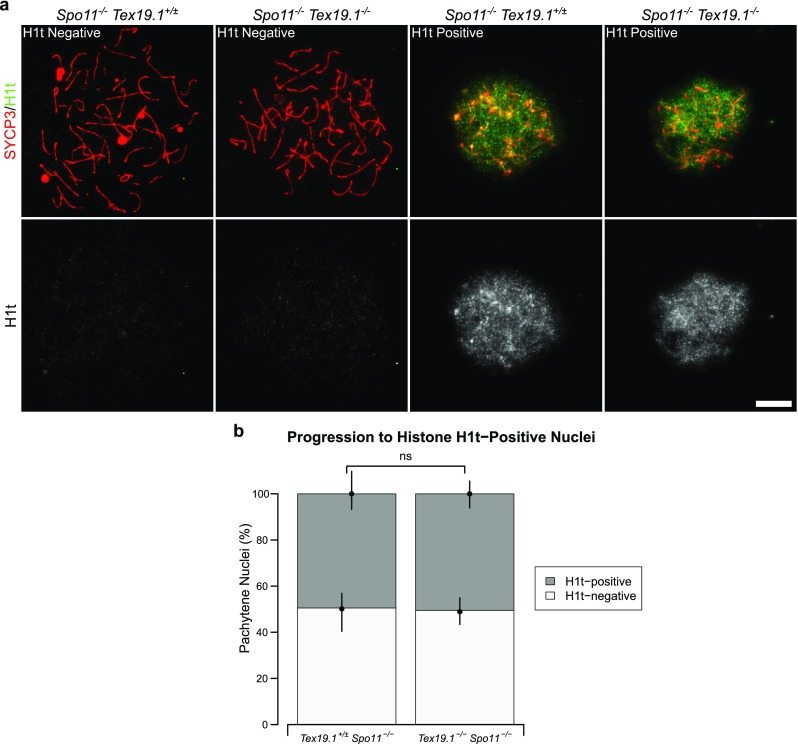
Recombination, synapsis, chromosome segregation and gene expression are co-ordinately regulated during meiosis to ensure successful execution of this specialised cell division. Studies with multiple mutant mouse lines have shown that mouse spermatocytes possess quality control checkpoints that eliminate cells with persistent defects in chromosome synapsis. In addition, studies on Trip13 mice suggest that pachytene spermatocytes that successfully complete chromosome synapsis can undergo meiotic arrest in response to defects in recombination. Here, we present additional support for a meiotic recombination-dependent checkpoint using a different mutant mouse line, Tex19.1. The appearance of early recombination foci is delayed in Tex19.1 spermatocytes during leptotene/zygotene, but some Tex19.1 spermatocytes still successfully synapse their chromosomes and we show that these spermatocytes are enriched for early recombination foci. Furthermore, we show that patterns of axis elongation, chromatin modifications and histone H1t expression are also all co-ordinately skewed towards earlier substages of pachytene in these autosomally synapsed Tex19.1 spermatocytes. We also show that this skew towards earlier pachytene substages occurs in the absence of elevated spermatocyte death in the population, that spermatocytes with features of early pachytene are present in late stage Tex19.1 testis tubules and that the delay in histone H1t expression in response to loss of Tex19.1 does not occur in a Spo11 mutant background. Taken together, these data suggest that a recombination-dependent checkpoint may be able to modulate pachytene progression in mouse spermatocytes to accommodate some types of recombination defect.
在减数分裂过程中,重组、联会、染色体分离和基因表达受到协同调控,以确保这一特殊细胞分裂的成功执行。对多个突变小鼠品系的研究表明,小鼠精母细胞具有质量控制检查点,可消除染色体联会存在持续性缺陷的细胞。此外,对Trip13小鼠的研究表明,成功完成染色体联会的粗线期精母细胞可因重组缺陷而发生减数分裂停滞。在此,我们使用不同的突变小鼠品系Tex19.1,为减数分裂重组依赖性检查点提供了额外支持。在细线期/偶线期,Tex19.1精母细胞中早期重组焦点的出现延迟,但一些Tex19.1精母细胞仍成功地使其染色体联会,并且我们表明这些精母细胞富含早期重组焦点。此外,我们表明,在这些常染色体联会的Tex19.1精母细胞中,轴伸长、染色质修饰和组蛋白H1t表达模式也都协同偏向粗线期的早期亚阶段。我们还表明,这种向粗线期早期亚阶段的偏向在群体中不存在精母细胞死亡升高的情况下发生,具有早期粗线期特征的精母细胞存在于晚期Tex19.1睾丸小管中,并且在Spo11突变背景下不会发生因Tex19.1缺失而导致的组蛋白H1t表达延迟。综上所述,这些数据表明,重组依赖性检查点可能能够调节小鼠精母细胞中的粗线期进程,以适应某些类型的重组缺陷。