Basha Genc, Lizée Gregory, Reinicke Anna T, Seipp Robyn P, Omilusik Kyla D, Jefferies Wilfred A
Biomedical Research Centre, Michael Smith Laboratories, Department of Microbiology and Immunology, University of British Columbia, Vancouver, British Columbia, Canada.
PLoS One. 2008 Sep 19;3(9):e3247. doi: 10.1371/journal.pone.0003247.
Cross-presentation by dendritic cells (DCs) is a crucial prerequisite for effective priming of cytotoxic T-cell responses against bacterial, viral and tumor antigens; however, this antigen presentation pathway remains poorly defined.
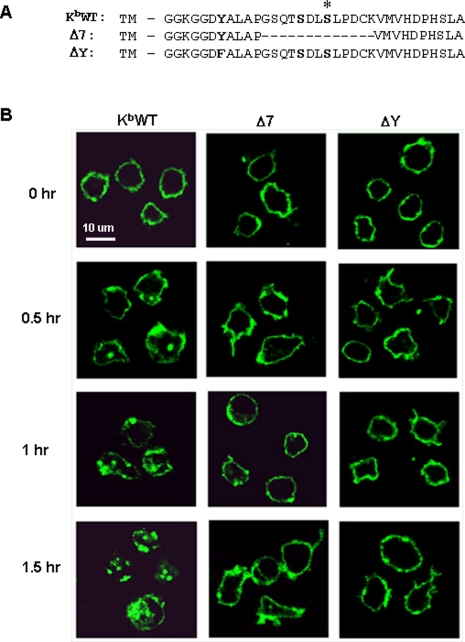
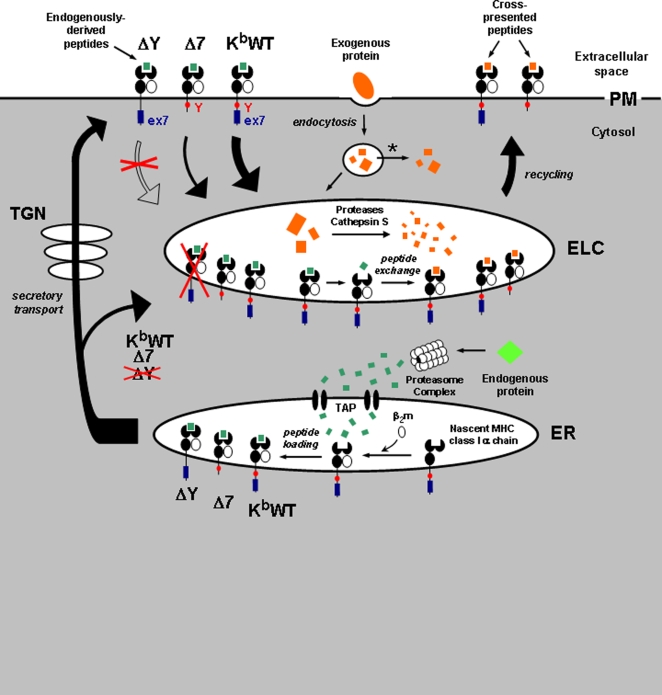
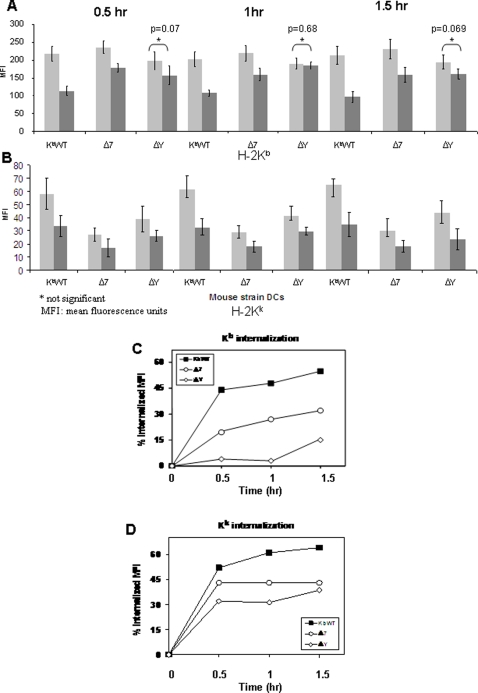
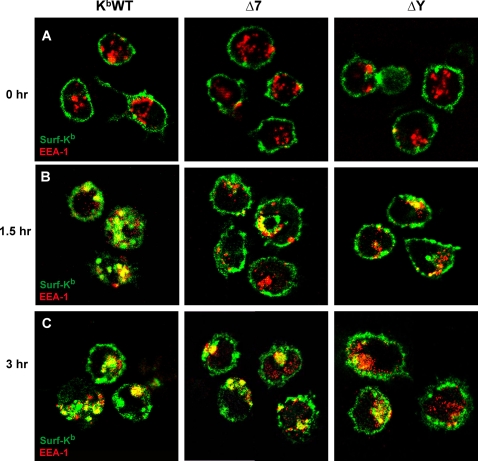
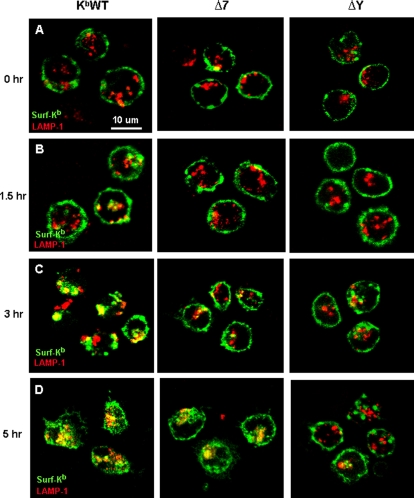
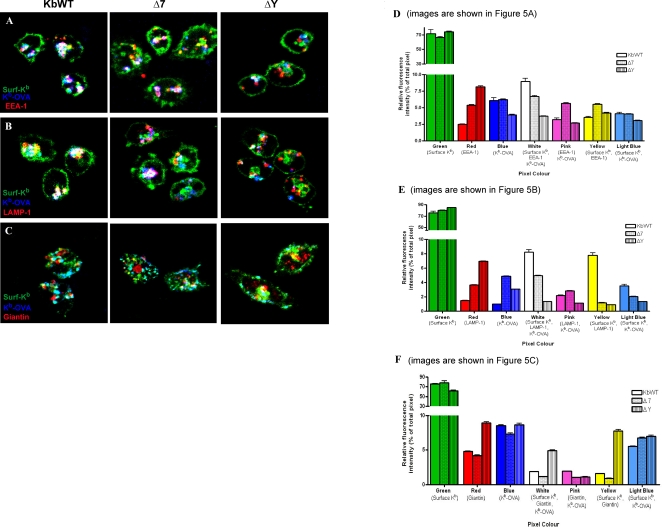
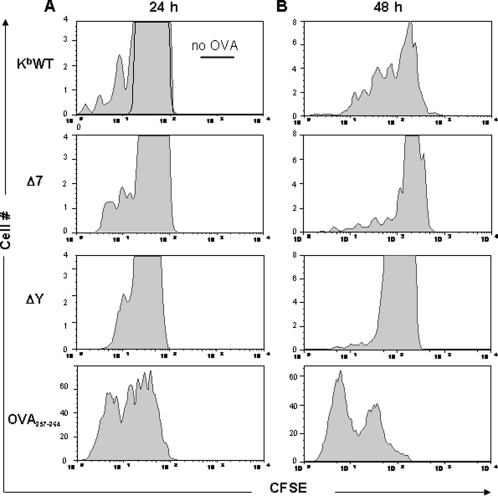
METHODOLOGY/PRINCIPAL FINDINGS: In order to develop a comprehensive understanding of this process, we tested the hypothesis that the internalization of MHC class I molecules (MHC-I) from the cell surface is directly involved in cross-presentation pathway and the loading of antigenic peptides. Here we provide the first examination of the internalization of MHC-I in DCs and we demonstrate that the cytoplasmic domain of MHC-I appears to act as an addressin domain to route MHC-I to both endosomal and lysosomal compartments of DCs, where it is demonstrated that loading of peptides derived from exogenously-derived proteins occurs. Furthermore, by chasing MHC-I from the cell surface of normal and transgenic DCs expressing mutant forms of MHC-I, we observe that a tyrosine-based endocytic trafficking motif is required for the constitutive internalization of MHC-I molecules from the cell surface into early endosomes and subsequently deep into lysosomal peptide-loading compartments. Finally, our data support the concept that multiple pathways of peptide loading of cross-presented antigens may exist depending on the chemical nature and size of the antigen requiring processing.
CONCLUSIONS/SIGNIFICANCE: We conclude that DCs have 'hijacked' and adapted a common vacuolar/endocytic intracellular trafficking pathway to facilitate MHC I access to the endosomal and lysosomal compartments where antigen processing and loading and antigen cross-presentation takes place.
树突状细胞(DCs)的交叉呈递是有效启动针对细菌、病毒和肿瘤抗原的细胞毒性T细胞反应的关键前提;然而,这种抗原呈递途径仍未得到充分阐明。
方法/主要发现:为了全面了解这一过程,我们检验了以下假设,即细胞表面MHC I类分子(MHC-I)的内化直接参与交叉呈递途径和抗原肽的加载。在这里,我们首次检测了DCs中MHC-I的内化情况,并证明MHC-I的胞质结构域似乎作为一种地址素结构域,将MHC-I导向DCs的内体和溶酶体区室,在那里证明了源自外源性蛋白质的肽的加载。此外,通过追踪正常DCs和表达突变形式MHC-I的转基因DCs细胞表面的MHC-I,我们观察到基于酪氨酸的内吞运输基序是MHC-I分子从细胞表面组成性内化到早期内体并随后深入到溶酶体肽加载区室所必需的。最后,我们的数据支持这样一种概念,即根据需要加工的抗原的化学性质和大小,可能存在多种交叉呈递抗原的肽加载途径。
结论/意义:我们得出结论,DCs “劫持” 并改造了一种常见的液泡/内吞细胞内运输途径,以促进MHC I进入内体和溶酶体区室,在那里进行抗原加工、加载和抗原交叉呈递。